
SIMULIA リソース・センター
SIMULIA に関する必要な情報すべてが見つかります
検索条件に一致する項目が1509件あります
Coupled Thermomechanical Forging Simulations and the Effect of Material Constitutive Laws
Correct hot forming design relies on accurate prediction of forming loads, material deformation, and material properties. This is particularly true for coupled thermomechanical analyses, where die/workpiece contact will change local deformations and temperatures. These strains and thermal histories can change the material microstructures and resulting product properties. This presentation examines the influence of different material and contact models within a hot forging simulation and discusses the consequences on ultimate product performance. We use rate-independent plasticity and compare the results with the Anand internal variable, viscoplastic model available within Abaqus. We also use different contact conditions with varying pressure sensitivity for heat transfer. The simulations demonstrate that constitutive model selection has a strong effect on the final predicted properties of the forging.
Customer Papers
Mechanisms-Based Fracture Model for Geological Materials
Over the past decade, hydraulic fracturing has become an industry-changing technology that enables commercial production of hydrocarbons from previously non-productive lowpermeability shale formations. R&D efforts focus on the development of economically efficient production protocols, where the selection of engineering solutions is guided by numerical simulations. Typically, the simulations are based on phenomenological fracture models that are adapted for the prediction of fluid-driven fracture processes at depth. These models rely on a longterm trial-and-error approach and offer reliable material response at conditions that have previously been experimentally investigated. For this reason, an extrapolation of such phenomenological models into untested regimes is not always successful.
Customer Papers
Flow-Induced Vibration Modeling
The current work pertains to a re-closeable annular flow valve oil completion tool (XAFV) with high gas flow passing through the valve, causing pressure oscillation due to flow separation and high turbulence energy. The objective is to assess the vibration level to protect the tool from damage. The first step was to perform CFD simulation by using Fluent on The valve port region. The power spectral density (PSD) of pressure fluctuations at the high turbulence region was obtained. The next step of the work was to extract natural frequencies of the tool by using Abaqus. The last step was to utilize random vibration analysis (RVA) to obtain the PSD and root mean square of stresses to assess the random vibration effect by using CFD predicted PSD of excitation pressure.
Customer Papers
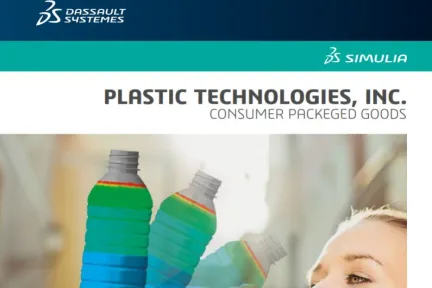
PLASTIC TECHNOLOGIES, INC. CONSUMER PACKEGED GOODS
PLASTIC TECHNOLOGIES, INC. CONSUMER PACKEGED GOODS
Customer Stories
Cylinder Head Valve Guide Wear Analysis of Internal Combustion Engine
An analytical process was developed to study the root cause of the exhaust valve guide wear in the gasoline engine from a high mileage accumulation vehicle test. A thermo-structural model was created to determine maximum cam bore misalignment based on engine thermal structural analysis. Then a valve train dynamic model was developed as a submodel based on cylinder head thermal deformation, the cam axis was adjusted based on the maximum cam bore misalignment in this dynamic model and valve tip side load from cam and rocker arm was calculated. Normal and reversed spin of cam was performed to study its effect on rocker motion between left and right bank cylinder heads. Valve and guide contact was monitored during the dynamic analysis and the resulting valve and guide deformation from this dynamic analysis was input to a tribology model to calculate the guide wear rate. Abaqus/Standard was used in thermo-structural analysis, and Abaqus/Explicit was used for valve train dynamic analysis. Based on this study, the root cause of the guide wear was verified.
Customer Papers
Simplifying Composites Process Modelling in Abaqus with COMPRO
Simulation of the manufacture of composite materials, commonly known as composites process modelling, has been gaining acceptance in industry since the mid-1990s. Starting from the early simple 1D and 2D representations of composite parts, process modelling of complex, fully configured 3D composite parts is now performed on a regular basis. Until recently, creating and running such simulations has required a high level of expertise not only in the manufacture of composite materials, but also in 3D finite element analysis.
Customer Papers
Quality Control of PipeLay and Riser Dynamic Analysis
The increasing frequency in the use of Engineering Criticality Assessments (ECA) to determine weld quality in the installation of offshore pipelines and risers has put an increased focus on the importance of accurate predictions in dynamic stresses during installation and service. Over-predictions impose constrains to the installation campaign with high cost and safety implications. The response predictions of a pipe profile suspended from a vessel in random sea state with environmental loading and interaction with the seabed is a complex nonlinear problem. From a dynamic structural in place perspective the pipe catenary presents a near continuous spectrum of frequencies and modes of vibration. This has important dynamic numerical and structural relevance, implying excellent resonance transmissibility for any input forcing oscillation frequency.
Customer Papers
Bond Model Development for Pretensioned Concrete Crossties with User Materials in Abaqus
Pretensioned concrete crossties are increasingly employed in railroad heavy haul and high speed lines. The bond between steel reinforcements and concrete affects several important performance measures of concrete ties, and bond modeling is a critical component in the analysis of concrete tie behavior using the finite element (FE) method. This paper summarizes the bond models developed at the Volpe Center for pretensioned concrete crossties and their implementation as user materials for cohesive elements in Abaqus. The bond models are macroscale or phenomenological and developed within the elasto-plastic framework. The steel reinforcement-concrete interface is homogenized and represented with a thin layer of cohesive elements sandwiched between steel and concrete elements.
Customer Papers
MUNICH UNIVERSITY OF APPLIED SCIENCES LIFE SCIENCES
MUNICH UNIVERSITY OF APPLIED SCIENCES LIFE SCIENCES
Tech Notes
Finite Element Analysis for Understanding Oil and Gas Well Deformation Mechanisms
This paper presents several FEA models used to analyze different modes of casing deformation including casing collapse, buckling and shear. Analysis examples are presented to demonstrate the use of the FEA models together with available caliper survey data in investigating the loading conditions and mechanisms responsible for causing such casing deformations in a number of actual wells.
Customer Papers
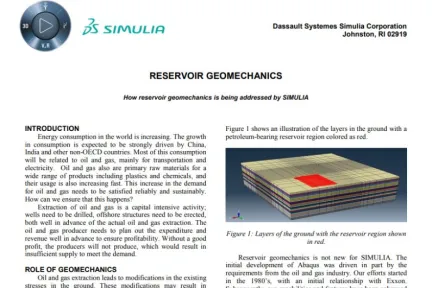
RESERVOIR GEOMECHANICS
Energy consumption in the world is increasing. The growth in consumption is expected to be strongly driven by China, India and other non-OECD countries. Most of this consumption will be related to oil and gas, mainly for transportation and electricity. Oil and gas also are primary raw materials for a wide range of products including plastics and chemicals, and their usage is also increasing fast. This increase in the demand for oil and gas needs to be satisfied reliably and sustainably. How can we ensure that this happens?
White Papers
e セミナー
検索条件に一致する項目が278件あります
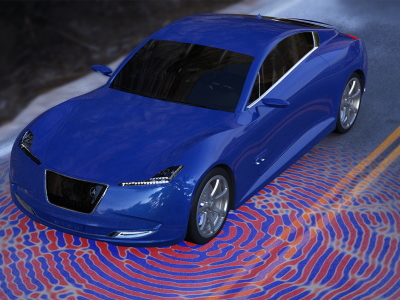
Designing Vehicles for Noise & Vibration | Dassault Systèmes
Watch the replay as we explore how to use digital solutions to diagnose noise & vibration issues early in the vehicle development process and optimize shapes and materials to address noise sources and paths.
E-seminar
On demand
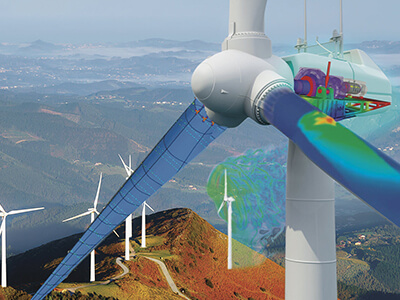
Wind Turbine Dynamics | Dassault Systèmes
The Wind Turbine Dynamics e-seminar covers the wide range and necessity of current MBS applications within the wind turbine sector.
E-seminar
On demand
Future of Manufacturing with Virtual Twins | Dassault Systèmes
Watch the digital event organized by Dassault Systèmes & IDC and discover the opportunities you can have with an innovative product development strategy supported with virtual twins.
E-seminar
On demand
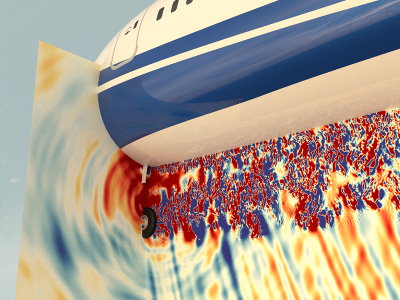
Simulation of Aircraft Aeroacoustics | Dassault Systèmes
Watch the replay to discover how aeroacoustic simulations are performed for aircraft using the PowerFLOW software. Specific applications covered include noise generated by landing gear and high-lift configurations.
E-seminar
On demand
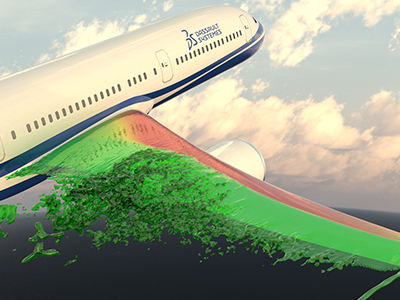
Overview of Lattice-Boltzmann based CFD for External Aerodynamics | Dassault Systèmes
Numerical flow simulations using the lattice Boltzmann method (LBM) evolved over the past 30 years to become a widely used CFD tool in industry.
E-seminar
On demand
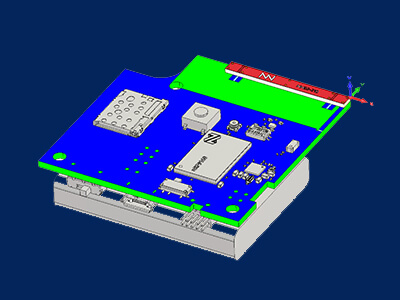
Embedding Virtual AntennaTM in IoT Devices with CST Studio Suite | Dassault Systèmes
The e-seminar will show how easy is to design IoT devices embedding Virtual AntennaTM with CST Studio Suite.
E-seminar
On demand
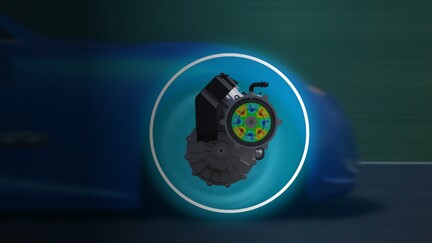
Electric Drive Engineering | Dassault Systèmes
Watch the replay to learn how multi-disciplinary workflows can be used to simulate the complexity of an electric drive and evaluate multiple design variants quickly and efficiently.
E-seminar
On demand
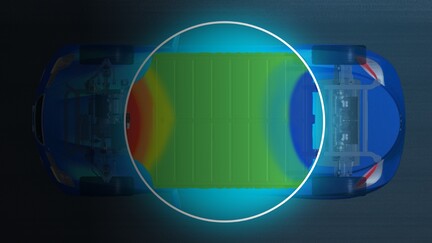
Battery Module and Pack Engineering | Dassault Systèmes
Watch the replay to learn how to find the best trade-offs for range, safety, and durability, while balancing cost and performance, with battery module and pack engineering.
E-seminar
On demand
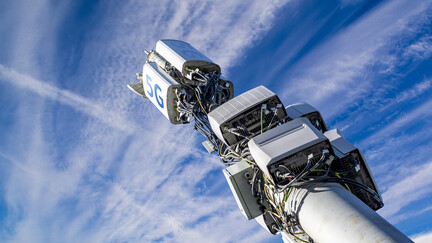
5G Small-Cell Base Station Antenna Array Design | Dassault Systèmes
In this e-seminar we will explore state-of-the-art simulation approaches for antenna array design, with a particular focus on 5G small-cell base station antennas.
E-seminar
On demand
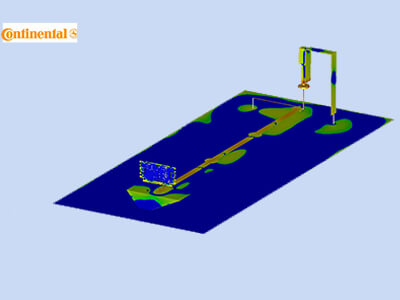
SIMULIA Champion Series: ESD Coupling into Cables Based on ISO 10605 – From Modeling, Analyzing to Solving | Dassault Systèmes
In the first episode of the Champion e-seminar series, Lin Biao WANG from Continental Automotive Singapore will present how he uses CST Studio Suite to model and analyze ESD field coupling from the harness to the DUT. Through the visualization of 2D field plots and 3D field animations, the root cause of the problem was identified.
E-seminar
On demand
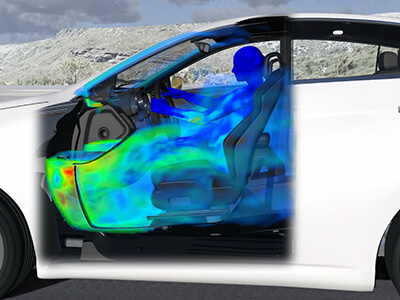
Balancing cabin comfort and performance with simulation-driven design | Dassault Systèmes
As consumers are looking for refreshing and comfortable experiences, cabin design is taking center stage as a dominant selling factor for the automotive, aerospace and industrial equipment industries.
E-seminar
On demand
Driving Resilience in Automotive & Transportation | Dassault Systèmes
Join this event replay to get key insights on how to enable remote-office collaborative engineering, accelerate affordable virtual simulation & testing and ramp up production safely with higher agility.
E-seminar

On demand
お客様活用事例
検索条件に一致する項目が153件あります
コミュニティより
イベント
検索条件に一致する項目が4件あります
SIMULIA 自己学習
ダッソー・システムズでは、それぞれのご都合に合わせて継続的に学習できるよう、さまざまな自己学習モジュールをご用意しています
ブログ
ダッソー・システムズの技術者が最新ニュースやイノベーションについて書いている SIMULIA ブログをご覧ください。
検索条件に一致する項目が763件あります
Women in Technology: Lori Bonynge
In celebration of International Women’s Day 2023 we’re kicking off a new blog series, Women In Technology. Learn more about Lori Bonynge and her inspiring story!
Article

Design Quiet and Efficient Fans for Acoustic Comfort
Simulation can help design quieter and more efficient fans for HVAC, ensuring healthy and comfortable indoor environmental quality.
Article
Simulating the DCDC Converter by Considering the Spread Spectrum Clock Generation
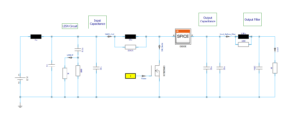
This article shows how the simulation of the DCDC converter with CST Studio Suite can be used to predict the electromagnetic compatibility (EMC) performance. By considering the spread spectrum clock generation and an EMI receiver in the simulation, more realistic results can be achieved.
Article
Accelerating Concept Design with PowerFLOW and NVIDIA GPU Computing
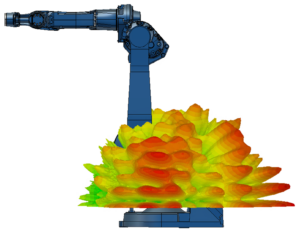
Most industrial scale problems need large HPC (high-performance computing) clusters to tackle their biggest problems. These competing demands have inspired the development of PowerFLOW GPU (graphics processing unit) solver.
Article

Design Private Agile 5G Networks for IIoT with Simulation
There is another application for 5G which analysts expect will grow to become a major market by the 2030s: private 5G networks for the Industrial Internet of Things (IIoT).
Article
Automated Model Build with Operations Templates and Precise Wrap Increases Productivity with High Fidelity PowerFLOW Simulations
SIMULIA’s newly released PowerDELTA 6-2022 enables automation through Operations Templates and Precise wrap.
Article
Introducing the 2023 SIMULIA Champions!
SIMULIA is proud to announce the 2023 group of SIMULIA Champions! The SIMULIA Champions is a selected group of our most passionate and talented users who work every day to share their expertise on simulation. We’re already in the fourth year of recognizing our new class of experts and influencers and are delighted to call over 100 individuals SIMULIA Champions!
Article

Meet Benoît Cousin from Eccus
At the EuroCentral Regional User Meeting, we spoke to Benoît Cousin, an engineer at Swiss startup firm ECCUS, which is focused on underground storage and production solutions, to find out why simulation is so important in his line of work.
Article
Take it to the Next Level with 2022 Tech Talks!
Did you miss any of our Tech Talks from 2022? Check out the most popular talks from last year by discipline.
Article

Tire Engineering: Cleat Impact | Advanced Methods Development
Industry Analysts are predicting that vehicle miles traveled globally will double to 20 trillion miles by 2030. Advanced methods for Cleat Impact will enable tire manufacturers to comply with increasing regulations.
Article
Drive Sustainable Product Development & Manufacturing with Virtual Twins
The Lenovo circular economy approach helps you be environmentally and socially responsible, as well as maximize the recoverable value for all your technology assets. In addition, you get outstanding performance and scale by running the SIMULIA portfolio and other complementary AI/ML applications on Lenovo HPC systems with 3rd generation Intel Xeon Scalable Processors.
Article

PowerFLOW 2022 Comprehensive Focus on Simulation-Driven Product Design
Discover the new capabilities of PowerFLOW 2022, including alignment with and seamless transition from CAD product design on the 3DEXPERIENCE platform, rapid meshing of highly complex geometry, the first PowerFLOW GPU Solver, and more!
Article

SIMULIA とつながる
SIMULIA のソリューションの詳細
組織の規模の大小を問わず、シームレスなコラボレーションと持続可能なイノベーションに、当社のソリューションがどう役立つかについて、SIMULIA のエンジニアがご説明します。
始める
学生、教育機関、専門家、企業向けに、さまざまなトレーニング・コースをご提供しています。お客様に最適な SIMULIA トレーニングを受講してください。
サポートを利用する
ソフトウェアおよびハードウェアの認証情報、ソフトウェアのダウンロード、ユーザー・ドキュメント、サポート窓口、ならびに提供サービスに関する情報はこちらから。