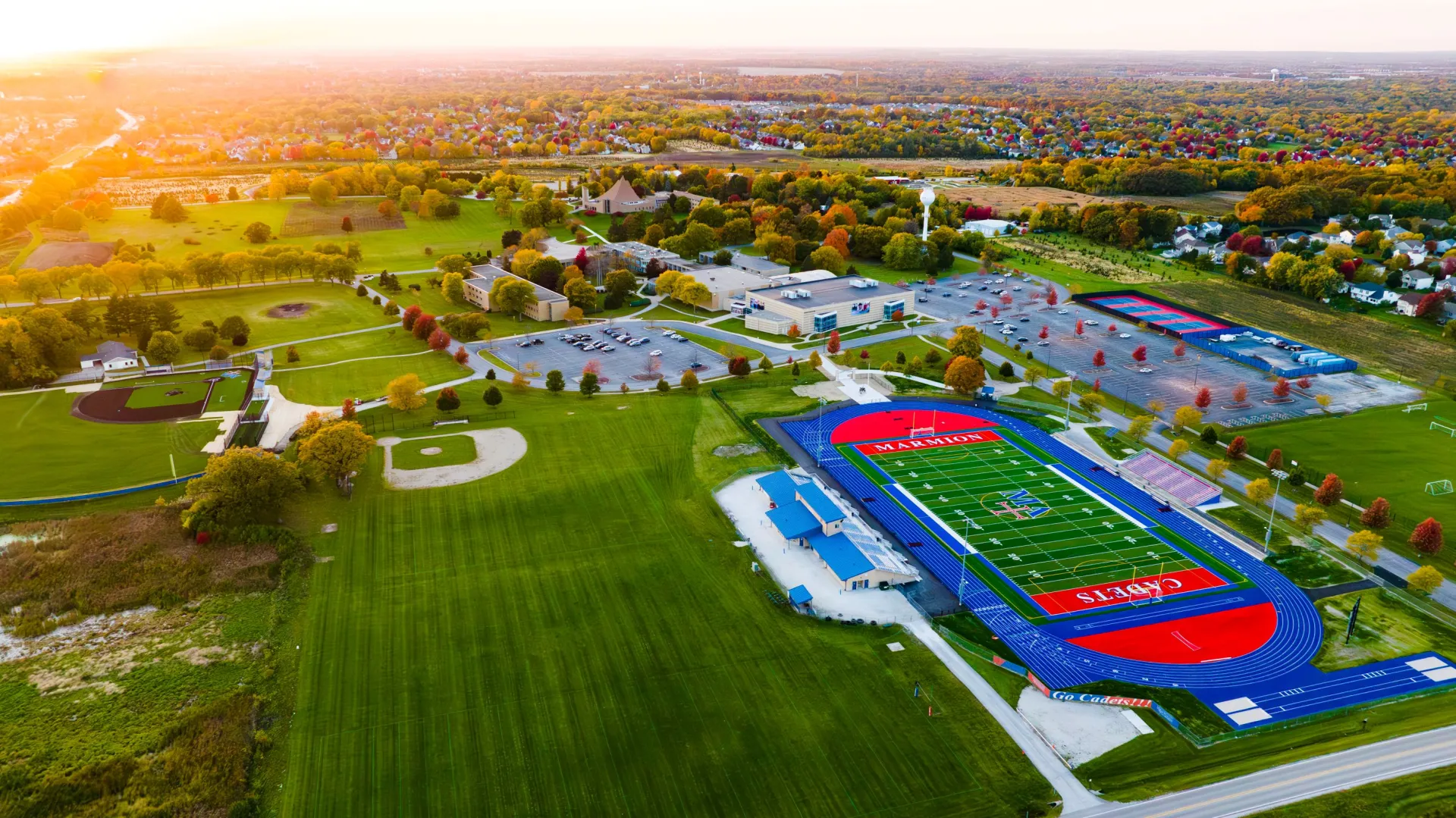
Marmion Academy
By using the 3DEXPERIENCE platform for real-world engineering projects, Marmion Academy equips students with industry-ready skills and hands-on simulation experience.
A High School Research Program Solving Real-World Challenges
Teenagers don’t usually spend their afternoons investigating molecular behavior for Fortune 500 engineering companies. But step inside Marmion Academy’s Computational Prototyping and Research Center (CPARC) in Illinois, and that’s exactly what you’ll find.
At CPARC, high school students contribute to authentic engineering projects – from advanced simulation studies to complex manufacturing challenges.
“We only work on real projects,” said Victor Pinks II, CPARC’s founder and director. “We don’t do anything watered down for high school. Students are learning how to think in the context of real problems, using real technology used by industry.”
Establishing a Different Kind of Engineering Classroom
Pinks has taught at Marmion Academy since 2000. CPARC emerged from the convergence of his doctoral work in computational science and molecular simulation, the growing accessibility of engineering simulation tools, and authentic engineering problems brought forward by local industry.
“My doctoral research gave me a strong foundation in computational modeling and scientific software,” he said. “When simulation capabilities became accessible through SOLIDWORKS, I recognized that students could begin applying those methods to real engineering problems. I contacted a local Dassault Systèmes reseller to see if they could help.”
In 2013, Pinks was given the formal go-ahead to build CPARC, and the center has run successfully ever since – with Dassault Systèmes’ technologies at its core. Today, students use multiple simulation capabilities within the 3DEXPERIENCE platform, including SIMULIA for simulating complex fluid dynamics and interactions and BIOVIA for exploring material properties.
Dassault Systèmes has provided valued support from the outset. “CPARC would not exist in its current form without Dassault Systèmes,” Pinks said. “Back in those early days, I reached out to a mechanical engineer to show him the first flow simulation work. He was so impressed that he began tutoring CPARC students remotely himself.”
Over the years, many more of the Dassault Systèmes senior team followed the same path, dedicating their time to help Marmion’s students succeed. “Our relationship has always been personal, rather than transactional,” Pinks said. “The Dassault team has seen us grow, and they’ve seen our struggles – and they’ve stayed by our side throughout.”
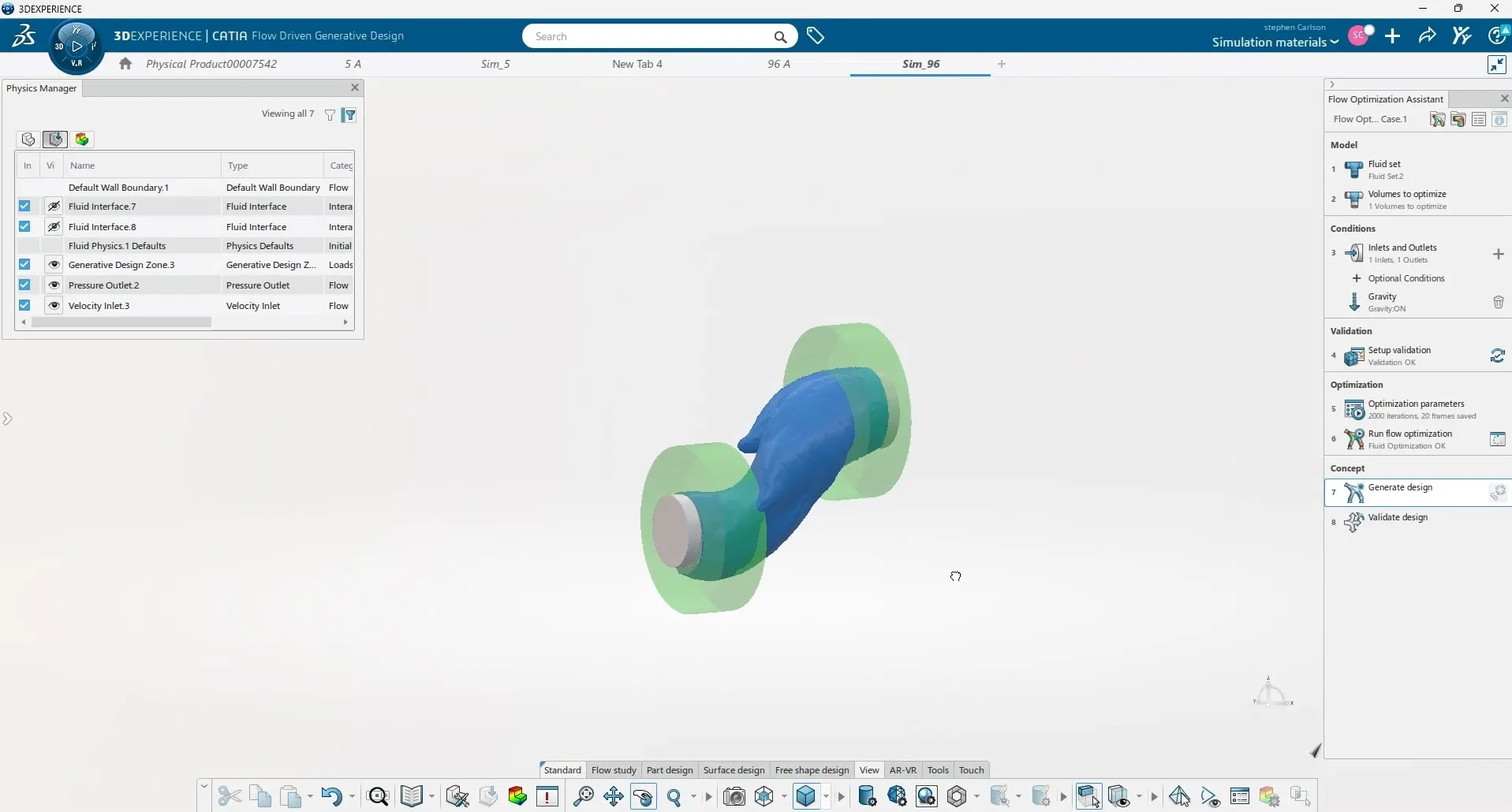
Students at CPARC use computational simulation to explore complex fluid dynamics and engineering challenges on the 3DEXPERIENCE platform.
How Teenagers Learn to Think Like Engineers
While some educators might think giving high school students live industry problems to work on would be too complex, Pinks always thought otherwise. Watching students build powerful gaming computers and navigate complex digital environments, he realized they were already comfortable exploring sophisticated interactive systems.
“I owe gamers a big thank you,” Pinks said. “They are driving advances in both software and computing hardware. I remember looking at the gaming machines my students were using and thinking, these are more powerful than the computers I use! That was the moment I realized there had to be a way to channel that enthusiasm and technical confidence into engineering.”
That observation shaped how CPARC teaches. Instead of treating simulation as intimidating professional software, students approach it like another complex interactive environment, one where curiosity counts for more than experience. “I call it ‘the real video game’,” Pinks said. “It’s more learning to think than learning about things.”
Modern engineering cannot be taught as a collection of isolated disciplines. You need scientists involved with engineers. You need all these perspectives working on a project. That’s why we like the 3DEXPERIENCE platform so much. It brings all these tools together.

Breaking Down Engineering Silos
CPARC’s “learning to think” philosophy is crucial at a time when industry is undergoing significant change. “One of the things we’ve seen over the years is that many companies are struggling,” Pinks said. “A lot of them downsized and eliminated their R&D departments. When that happens, you lose some of the scientific perspective that helps organizations look ahead.”
That’s why Pinks believes modern industry increasingly needs engineers who can work across disciplines rather than within a single technical silo. It’s for this reason that CPARC’s students are encouraged to move between CAD, computational fluid dynamics (CFD), finite element analysis and molecular-level simulation, learning how each discipline influences the others.
“Modern engineering cannot be taught as a collection of isolated disciplines,” Pinks said. “You need scientists involved with engineers. You need all these perspectives working on a project. That’s why we like the 3DEXPERIENCE platform so much. It brings all these tools together. Thus, you get this integrated learning, and that develops vision – the vision that you need to be an engineer and to solve problems.”
Pinks believes this is where innovation truly comes from. “It’s not about learning more and more separate silo processes,” he said. “It’s about seeing how it’s all connected.”
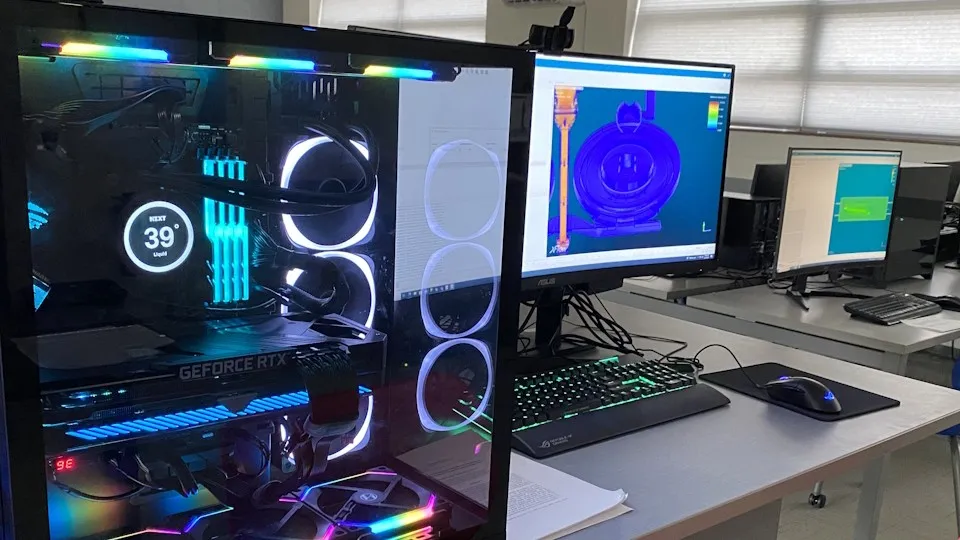
CPARC students use the 3DEXPERIENCE platform on high-performance workstations to develop, simulate and analyze engineering solutions.
Proving the Value of an Integrated Approach
CPARC’s work demonstrates the value of combining engineering disciplines rather than treating each simulation method in isolation. Students learn to examine a problem at multiple physical scales and to connect the resulting evidence into a more complete engineering understanding.
A design question may begin with geometry, loading or fluid behavior at the system level, but the assumptions used in that analysis can depend on material behavior at much smaller scales. CPARC teaches students to recognize when those connections matter and to investigate them systematically.
Using SIMULIA, students can study system-level behavior through computational fluid dynamics, finite element analysis and other physics-based simulation methods. These models help them identify the variables and assumptions that most strongly influence performance.
When material properties require deeper examination, students can extend the analysis to the molecular level rather than treating those properties as fixed inputs. Using BIOVIA, students explore molecular behavior and translate relevant findings into refined properties for larger-scale simulations. The updated simulation results then provide stronger evidence for evaluating designs, testing assumptions and guiding the next engineering question.
“The value comes from connecting the methods,” Pinks said. “Students learn to move from molecular behavior to system performance and back again, using each scale of analysis to improve the engineering evidence.”
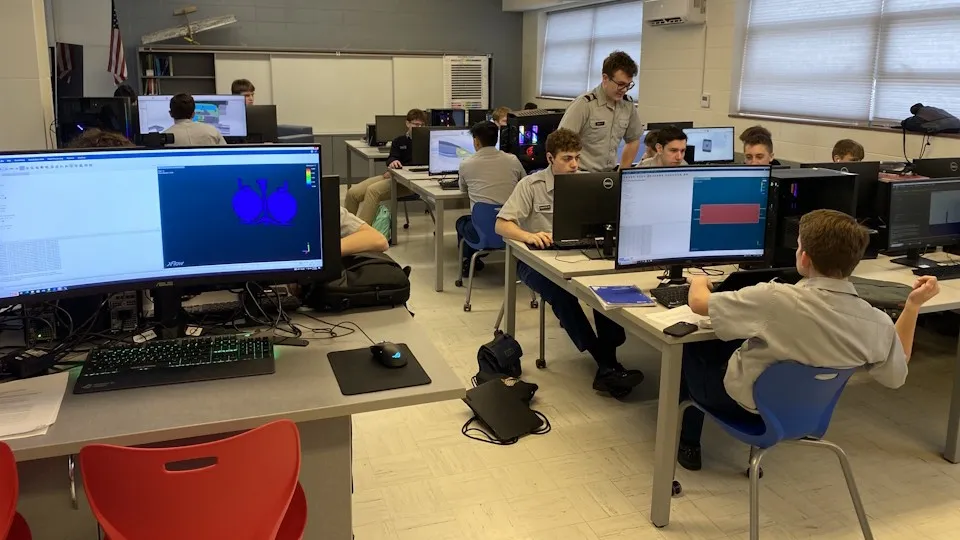
Hands-on engineering experiences with the 3DEXPERIENCE platform help CPARC students develop the skills needed for future careers in industry.
Projects that Shape Students' Futures
Technical expertise is only one part of what students gain at CPARC. Every learner gets practice in communicating with industry, presenting ideas professionally and responding confidently.
“I don’t tell them what to say,” Pinks said. “I tell them, ‘Be yourself. If you don’t know the answer, say you’ll find out.’” Former students have written back after graduating to say those lessons proved just as valuable as the engineering knowledge itself.
Pinks remembers one student who arrived with an indifferent attitude until he saw SIMULIA’s capabilities for the first time. The student became fascinated by modeling sharkskin on an aircraft surface, to understand why sharks outswim other fish of the same size, and eventually built out a full simulation of the structure. “He spent so much time on the detail,” Pinks said. “I heard he just got hiredby a major aerospace and defense technology company.”
Another student, Henry Medernach, recently accepted a full-time offer in the engineering division of a major global automotive manufacturer, secured through a paid internship before he had even graduated. “I came into high school knowing I wanted to try engineering,” Medernach said. “In CPARC, I pushed myself. I learned to set my own goals, led fellow cadets, and worked with real companies. I even turned a few ideas sketched on a napkin into a modern computer model I can use to run professional-level tests.”
Pinks sees this as proof of his approach. “We embed students in the environment where real engineering work is performed,” he said. “Companies need people who can design, simulate and solve problems. That’s what our students learn to do.”

Focus on Marmion Academy
Founded in 1933, Marmion Academy is a Catholic-Benedictine college preparatory school where young people are challenged academically, formed spiritually and supported by a close-knit community that feels like home. Within Marmion, the Computational Prototyping and Research Center (CPARC) enables students to gain technical expertise in simulation, prototyping and engineering software, working on a portfolio of real projects so they can build the skills that will help them advance their careers.
For more information: https://marmion.org

Marmion Academy
Discover how Marmion Academy’s high school research program gives students hands-on engineering experience with 3DEXPERIENCE simulation tools.
Customer Story
University of Southern Queensland
UniSQ researchers use Cleared to Operate and Co-Design to Target solutions to digitally transform composite materials' repair in aircraft.
Customer Story
The University of Sheffield / AMRC
Boosting transformational approaches for aircraft manufacturing.
Customer Story
University of Moncton
University of Moncton uses Virtual Twins for smart city planning in Moncton and Dieppe, balancing density, housing and biodiversity.
Customer Story

TECHNICAL UNIVERSITY OF MELAKA MALAYSIA
Technical University of Melaka Malaysia wants to ensure the success of its graduating students by providing training on industry-leading product development software.
Customer Story
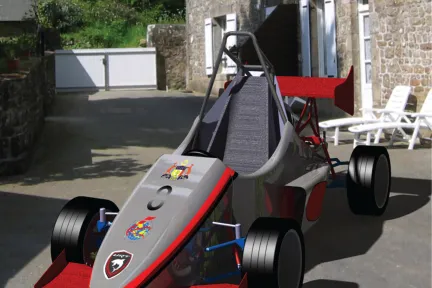
Polytechnic University of Turin
The adoption of the 3DEXPERIENCE platform provided students with a cloud-based, collaborative environment, mirroring the integrated systems used by today's top industrial innovators.
Customer Story
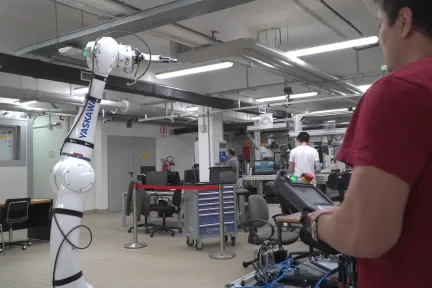
Delft University of Technology Racing
As a testing ground for the next generation of world-class engineers, Formula Student ranks high. In 2012, 468 universities and colleges from all over the world took part in this challenging and highly competitive event. The Delft University of Technology (DUT) racing team once again repeated history, finishing first in the electric car category of the Formula Student Germany (FSG) race in Hockenheim, Germany.
Customer Story
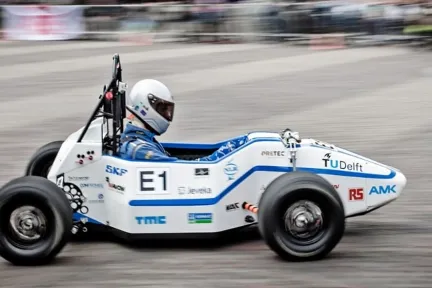
Wichita State University
National Institute for Aviation Research (NIAR) at Wichita State University (WSU) partnered with Dassault Systèmes’ to create the first 3DEXPERIENCE Center as part of its newly created Innovation Campus with the 3DEXPERIENCE platform at its heart.
Customer Story

EPFL Racing Team
Get to know how the EPFL Racing Team conducts comprehensive lifecycle assessments (LCA) of their electric race car using the 3DEXPERIENCE platform.
Customer Story