1495개의 결과가 있습니다.
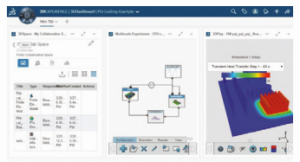
Fluid Structure Interaction simulation of wind turbine blade using 3DEXPERIENCE platform

Numerical prediction of wind turbine pose number of challenges such as the flow is fully turbulent, presence of fluid boundary layer and long and slender blade with complex distribution of composite material properties. Fluid Structure Interaction (FSI) simulations are essential for accurate prediction of structural forces. 3 dimensional single blade composite models is designed using CATIA Composite Design workbench. Simulation is carried out using fully coupled FSI procedure from SIMULIA Fluid Scenario Creation workbench to predict safety of composite blade for two load cases. This study demonstrates the effectiveness of 3DEXPERIENCE platform to carry out integrated flow and composite structural simulations for wind turbine blade application.

Customer Papers
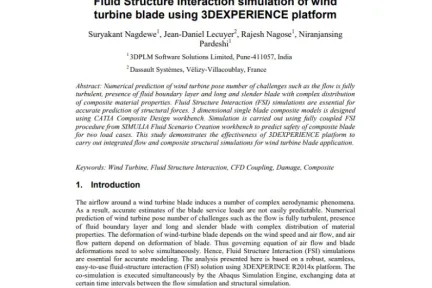
Fluid Structure Interaction simulation of wind turbine blade using 3DEXPERIENCE platform
Jumping the Iteration Train: Using Isight to Advance Downhole Seal Design

In the oilfield, market segments are driven by the next profound “unreachable” payzone. In the last few decades, we have gone through various design levels attempting to reach the operators latest requests. The common term to designate these extreme conditions is High Pressure/High Temperature (HP/HT). Under the HP moniker, there are multiple Tiers: Tier 1 up to 15,000 psi, Tier 2 up to 20,000 psi, Tier 3 up to 30,000 psi, and Tier 4 beyond 35,000 psi. BHI currently has a Liner Top Packer that covers Tier 1 rated for 15,000 psi. This paper will show the path we took with Isight and Abaqus to conceptually achieve higher Tiers for a Liner Top Packer, and will show how we “jumped the iteration train” with surprising results.

Customer Papers

Jumping the Iteration Train: Using Isight to Advance Downhole Seal Design
Large Scale Prototyping in the Oil & Gas Industry: The Use of FEA in the Structural Capacity Rating of a Deep Sea Pipeline Clamping System

Freudenberg Oil & Gas Technologies (FO>) in Port Talbot, UK, provides complex metal to metal sealing solutions for the oil & gas and energy industries. FO> is supplying two of its largest Optima subsea connectors for use just inside the Arctic Circle. These will be the deepest of their kind anywhere in the world. The FEA simulation results of the Optima will be used to support experimental test data obtained during factory trials, prequalifying these components to the most extreme subsea loading conditions.

Customer Papers

Large Scale Prototyping in the Oil & Gas Industry: The Use of FEA in the Structural Capacity Rating of a Deep Sea Pipeline Clamping System
Innovative High Pressure Vessel Seal design and Optimisation

A detailed Finite Element Analysis (FEA) was carried out to evaluate the seal and the initial conclusion was that it required complete re-design. In this work, analysis and interpretation was used to establish the modelling method for the seal. The FEA model that was developed for seal optimisation contained elasto-plastic material response, frictional contact modelling, advanced pressure field application and thermal modelling. To maintain sealing contact pressure, the seal has to overcome differential radial movement between the vessel and the end cap during pressure loading. The optimisation process developed a novel profiled seal contact that reduced contact stresses by 48%, eliminating seat damage occurring during pressure loadings.

Customer Papers

Innovative High Pressure Vessel Seal design and Optimisation
Design Knowledge Exploration for the Conceptual Design of Tire Contours

The importance of the rule of simulation at a conceptual design stage is pointed out recently. The methodology using multi-objective design optimization and data mining, which is called MODE (Multi-Objective Design Exploration), is helpful to find out design knowledge. In this study, we show that the design knowledge found by MODE is fruitful for decision making at a conceptual design stage of real world example i.e. contour design of a fuel efficient tire. Our procedure of MODE consists of nonlinear FEA to predict tire performance, evolutional computation to get desirable solutions including Pareto solution, and data mining to find out design knowledge. SOM (Self-Organizing Map) and decision tree are used to obtain appropriate design variables and their threshold.

Customer Papers

Design Knowledge Exploration for the Conceptual Design of Tire Contours
Application of Fracture Mechanics for Evaluation and Improvement of Downhole Perforating Tools

At times, oil and gas wells require workover operations to repair or replace corroded downhole equipment. During these maintenance operations, a single hole may be required to allow kill fluids to be circulated to maintain well control. Traditionally, the hole would be made via explosives and mechanical hole-punching methods, which frequently fail to perforate. To improve these operations, slickline-deployed electro-mechanical downhole power unit perforating tools were developed by a major oilfield engineering company and successfully applied in the field for perforating 41⁄2-in. size, J-55 grade steel tubing.

Customer Papers

Application of Fracture Mechanics for Evaluation and Improvement of Downhole Perforating Tools
Integrated Workflow for Analyzing Composite Gas Turbine Components

Advanced composite materials are being used in an increasing number of gas turbine engine products where their unique combination of properties such as low density, high strength and fatigue resistance help to increase performance. High temperature composites are currently being investigated in many components of gas turbines where load and high temperature capability are critical. Development of efficient, accurate modeling methodologies is critical. This presentation focuses on two methods to create a plylevel finite element model using the integrated Dassault Systèmes (DS) product suite. This includes CATIA Composites Part Design, Composites Link, and Composites Modeler for Abaqus and Abaqus.

Customer Papers

Integrated Workflow for Analyzing Composite Gas Turbine Components
Load Path Optimization for Hydroforming Process Using 3DEXPERIENCE Platform

In tube hydroforming process, the load path which is the relation between axial feed and internal pressure plays a major role in deciding the quality of hydro formed components. This study demonstrates how to arrive at optimal load path curve to achieve maximum bulge height keeping thickness reduction within limit and ensuring that the component does not get tear off during the manufacturing process. The hydroforming process is simulated using explicit dynamic procedure in structural simulation application. The DOE process is defined using simulation process modeling, to identify optimum load path. 3DEXPERIENCE platform works as an effective integration and automation platform for such studies.

Customer Papers

Load Path Optimization for Hydroforming Process Using 3DEXPERIENCE Platform
Using Explicit Finite Element Analysis to Simulate Blast Loading on Hazardous Chemical Storage Tanks

Accurately simulating the blast wave associated with an accidental explosion is extremely valuable in assessing the structural response and potential failure modes of critical process equipment such as storage tanks, piping, or pressure vessels in chemical and petrochemical facilities. Furthermore, assessing the potential damage from a blast wave can provide valuable information about protecting structures from external explosions and developing designs that improve blast damage mitigation. This paper discusses the underlying theory and examines the practical application of multiple finite element based explicit computational techniques for simulating the load acting on a structure due to a chemical explosion.

Customer Papers
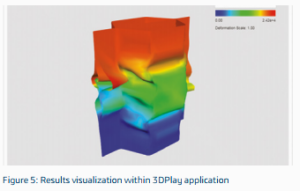
Using Explicit Finite Element Analysis to Simulate Blast Loading on Hazardous Chemical Storage Tanks
ADVANS - A Strategic Collaboration for Airbus to Develop Advanced Numerical Simulation Capabilities

Advanced non-linear and vulnerability analyses are used today to support all phases of Airbus aircraft structures, especially the design and certification phases, by providing an understanding and an ever better prediction level of structural behavior. On the A350XWB program, numerical predictions have become key to ensuring a risk free major static test campaign. In the coming years, with the increased number of flying aircraft, the use of numerical capabilities will also grow to help resolve or prevent potential in-service issues. This paper presents an overview of selected ADVANS achievements reached so far and perspectives of the future.

Customer Papers
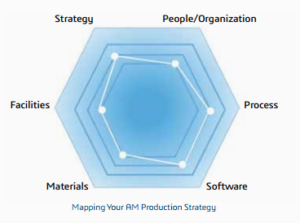
ADVANS - A Strategic Collaboration for Airbus to Develop Advanced Numerical Simulation Capabilities
Material Modeling for Dynamic Modulus Degradation using Abaqus

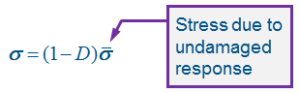
Real life mechanical failures can be predominantly attributed to three factors: uncertainty in magnitude and character of loads, insufficient consideration to in-service behavior of material, unreasonable assumptions in design. FEA Simulation can provide valuable inputs to avoid risk of failures. Realistic material modeling has an important role in this regards. In Practical engineering analysis, modeling material damage through degradation of Elastic modulus is one of the effective techniques. Using relevant amongst several theories, constitutive equations and empirical formulations characterizing this phenomenon, creates a plausibly realistic FE Model. However these models are approximate, not generically applicable and are not mathematically well posed.

Customer Papers
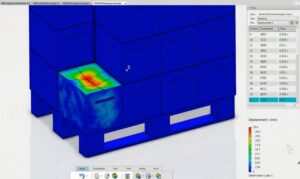
Material Modeling for Dynamic Modulus Degradation using Abaqus
Eulerian-Domain shape optimization for airbag deployment

The Coupling-Eulerian-Lagrange (CEL) method used in Abaqus/Explicit allows fluids to interact with solid structure. Interdisciplinary studies in FEM, combined with CFD simulation, have a great performance in the automotive industry - for cockpit and airbag development, especially in the early stage of the airbag deployment. The CEL methods help to get a more realistic airbag unfolding, by injecting inflator gas into the airbag chambers. Compared with the common Abaqus Uniform-Pressure-Method (UPM), the CEL method delivers a more precise airbag deployment. This is necessary for an easier interpretation of load levels, outgoing from the inflator gas pressure on surrounding components, like the headliner or the airbag-cover.

Customer Papers

Eulerian-Domain shape optimization for airbag deployment
260개의 결과가 있습니다.

고객 사례

150개의 결과가 있습니다.
3개의 결과가 있습니다.

SIMULIA 자기 주도 학습

학습자가 편리하게 학습을 꾸준히 이어갈 수 있도록 수백 개의 자기 주도 학습 모듈을 제공합니다.

블로그

SIMULIA 블로그에서 당사 전문가들이 전하는 최신 뉴스와 혁신에 대해 알아보세요.

775개의 결과가 있습니다.
Focus On Simulation

Bringing Innovation and Industry into the Classroom 3DEXPERIENCE for Academia is an...

Article

Focus On Simulation
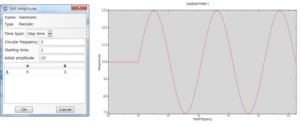
[기능소개] Abaqus 의 Amplitude (2)

이번 포스팅에서는 지난 포스팅에 이어 ABAQUS 에서 많이 사용하는 Amplitude 에 대하여 설명드리고자 합니다. PeriodicPeriodic 은 SIN 함수나 COS 함수와 같은 주기 함수가 필요할 때 사용합니다. 주로,

기사

[기능소개] Abaqus 의 Amplitude (2)

SIMULIA의 지원 서비스 알아보기

SIMULIA 전문가와 상담하여 당사의 솔루션이 모든 규모의 조직에서 원활한 협업과 지속 가능한 혁신을 실현하는 방법에 대해 알아보세요.

시작하기

학생, 교육, 전문가 및 회사를 위한 교육 과정과 강의가 제공됩니다. 당신에게 맞는 SIMULIA 교육을 찾아보세요. 

도움받기

소프트웨어 및 하드웨어 인증, 소프트웨어 다운로드, 사용자 설명서, 지원 연락처 및 서비스 제공에 대한 정보를 확인하세요.