

Aerospace & Defense
Bridge the gap between the virtual and real world to accelerate from concept to operations.
Industry
The ePlane Company uses the 3DEXPERIENCE platform’s cloud-based, integrated environment to develop an eVTOL aircraft for urban air mobility built specifically for the challenges of urban traffic.
It’s rush hour in Bangalore. Horns blare, bikes weave past packed buses and cars inch forward on packed roads. Bangalore has the third slowest traffic in the world, according to the Tomtom Traffic Index, where it takes, on average, 35 minutes to crawl a 10km distance. This is the reality of urban travel for millions across the world’s booming cities, where simply getting across town can feel like a daily battle. Yet, high above the gridlock, a different kind of journey is taking flight. The ePlane Company’s electric vertical takeoff and landing (eVTOL) aircraft promises a faster, cleaner and more efficient alternative.
As urban populations grow and traffic conditions worsen, India’s transportation systems are nearing tipping point. Rather than adding to an already overwhelmed infrastructure, The ePlane Company plans to rise above it with its urban air mobility solution. The homegrown startup is developing an eVTOL tailored for cities, with an eye towards short, frequent, and affordable trips.
“In India and beyond, infrastructure is a huge challenge,” said Professor Satya Chakravarthy, founder of The ePlane Company. “Most cities are extremely crowded, and people spend a huge amount of time stuck in traffic. This presents a prime opportunity for us to fly instead of being stuck on the ground.”
Practicality drives The ePlane Company’s mission. Its flying taxis must withstand real-world conditions and daily wear, from extreme heat to high usage. This means that efficient battery performance and low operational downtime are essential.
“The ultimate goal is to create an air taxi system suited for India and similar markets in the world,” Chakravarthy said. “With the intellectual property we’ve developed, our aircraft can complete multiple short trips of about 30 km each on a single battery charge, which covers a significant distance within a city.”
Dassault Systèmes’ solutions are the gold standard in this field. We can handle CAD modeling, engineering drawings, computational fluid dynamics meshing, finite element analysis, antenna design and simulations and more, all within the same platform.
To turn this bold vision into reality, The ePlane Company is combining the aerospace expertise of its founding team with Dassault Systèmes’ 3DEXPERIENCE platform – a comprehensive solutions suite that supports everything from design to manufacturing and beyond in a unified environment. This integrated approach helps the team move quickly and stay aligned.
“Dassault Systèmes’ solutions are the gold standard in this field,” Chakravarthy said. “We can handle CAD modeling, engineering drawings, computational fluid dynamics meshing, finite element analysis, antenna design and simulations and more, all within the same platform.”
Cloud access makes product development agile and cost effective. Instead of investing in setting up and maintaining its own expensive server infrastructure and high-performance computing hardware, The ePlane Company relies on the cloud-based platform to handle complex simulations and achieve real-time collaboration across its teams.
“The cloud also brings version control, which lets multiple engineers work simultaneously without losing track of changes,” Chakravarthy said.
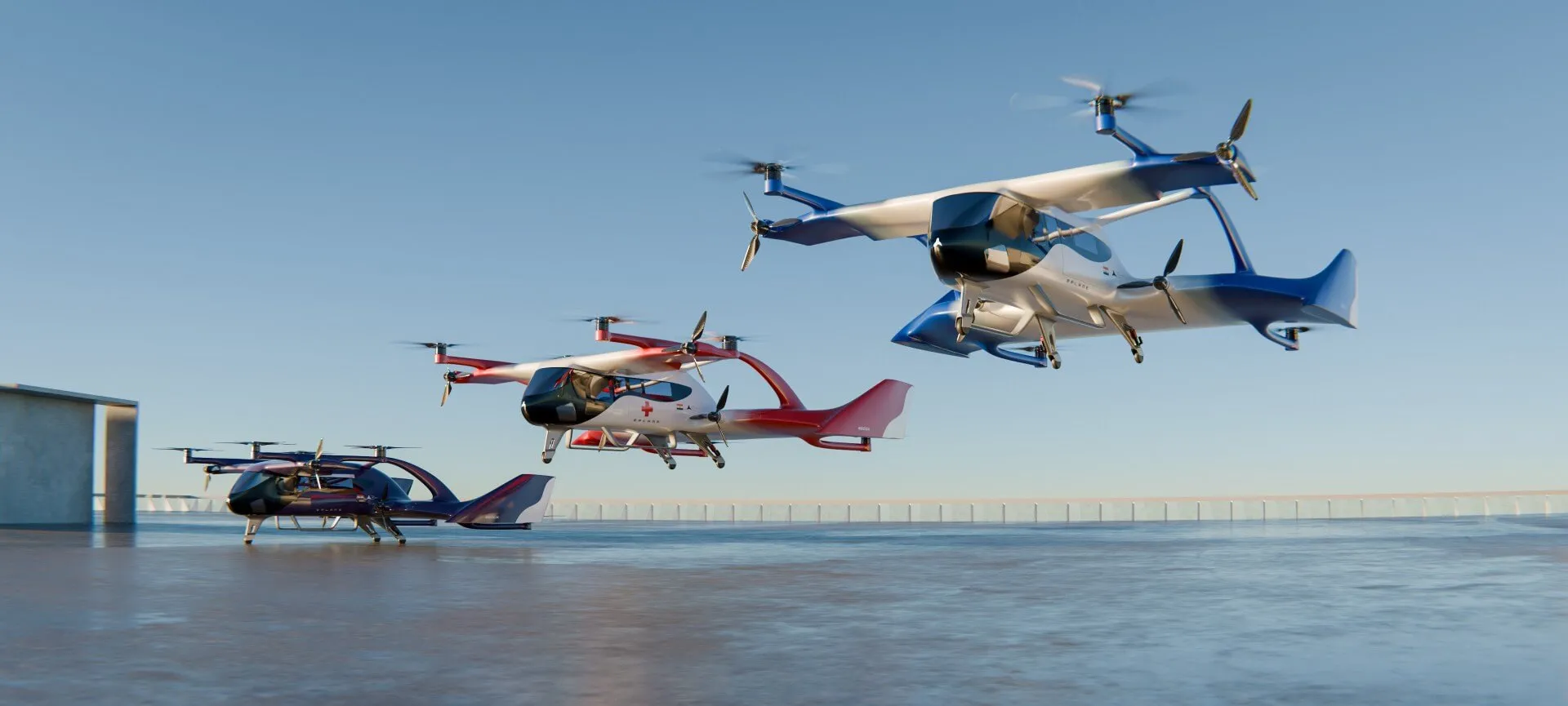
Designing aircraft for cities means navigating tight spaces, hot and cold climates, different terrain conditions and high population density. The ePlane Company’s eVTOL combines fixed-wing and rotary aircraft design features, so it can take off and land vertically without the need for a runway. Its noise-reduction technologies make it ideal for urban neighborhoods, and its propulsion systems are fine-tuned for humid environments. Sleek and futuristic, the aircraft’s lightweight carbon fiber body is complemented by a striking canopy window that stretches across the cockpit, offering passengers and pilots an unobstructed, panoramic view. With one of the world’s most compact wingspans at just eight meters, the design is suitable for landing in tight spaces and taking advantage of existing infrastructure that meets modern urban air mobility requirements.
“Our three-seater aircraft needs to fit within an 8x10 meter footprint,” said Mukundhan Dakshnamoorthy, design and simulation engineer lead at The ePlane Company. “This allows us to operate from rooftops, which is a unique aspect of our design.”
To perfect all these design features, the team uses CATIA’s advanced 3D modeling capabilities to iterate quickly, fine-tune performance, and optimize the aircraft’s compact structure. This includes addressing unique challenges like enabling low-speed flight with small wings – a major hurdle in eVTOL design that The ePlane Company has solved through patented innovations. With CATIA, engineers have been able to test multiple configurations and optimize performance on the fly, directly within the digital environment.
“CATIA’s aerospace specific design capabilities allow us to handle complex geometries and speed up iterations,” Mukundhan said. “In one instance, with Dassault Systèmes’ help, we were able to prepare one of the models that would normally take three to four weeks to complete in just one and a half weeks. Overall, we’ve reduced the time needed to develop complex models by 30 to 40%.”
The ePlane Company's design team uses CATIA’s advanced 3D modeling capabilities to turnaround iterations quickly.
Before The ePlane Company commits to building physical prototypes, the team first refines the aircraft design virtually and puts it through rigorous virtual testing. Using SIMULIA, engineers create highly detailed models that replicate the aircraft’s geometry and simulate its performance in flight. This allows the team to identify potential issues and fine-tune the design and all avionics integration long before moving to the workshop.
The ePlane Company then pushes this digital prototype to its limits in a variety of simulated environments. The goal is to see how the aircraft responds under real-world operating conditions and stressors.
“We prepare the CAD geometry, which then feeds into the simulation software,” Mukundhan said. “Every stage of flight is virtually modeled to see how the aircraft will behave, from takeoff to transition, cruising, climbing, and landing. We simulate environmental conditions, such as various altitudes, temperature, pressure, and forward velocity. Then, based on this data, we develop control systems to ensure the aircraft performs optimally.”
We’re working on multiple versions of our aircraft... Each version has different interior configurations, such as seating for passengers, stretchers for patients or space for cargo transport. We use ENOVIA to track these variants.
In aircraft development, even minor design changes can have a significant effect across the entire system. The ePlane Company relies on Dassault Systèmes’ product lifecycle management capabilities in ENOVIA to track and manage hundreds of design updates, achieving full traceability and regulatory compliance.
“One of our biggest challenges is version control,” Mukundhan said. “We receive feedback from various teams on continuous functional improvements during the development stage, which sometimes involves redesigning parts of the aircraft. ENOVIA helps us track these modifications to maintain compliance. Regulators require full traceability of every change, and our system makes sure that we meet those standards.”
As part of the flight safety certification process, The ePlane Company must comply with a large variety of regulatory requirements. For example, when working on the antenna design (the device used for all air traffic communication), the team must generate comprehensive analysis reports to prove that every aspect of the antenna installation meets strict aviation criteria. To achieve this, The ePlane Company uses SIMULIA’s electromagnetic analysis application for all antenna testing and performance reports. The ePlane Company is also working on different aircraft design variants, including air taxis, ambulances, and tourist transport. Balancing these unique demands calls for a smart, well-organized configuration management approach.
“We’re working on multiple versions of our aircraft, like the E200, which will serve as a taxi, air ambulance, tourist and cargo transport,” Mukundhan said. “Each version has different interior configurations, such as seating for passengers, stretchers for patients or space for cargo transport. We use ENOVIA to track these variants and check that each one is correctly configured.”
The ePlane Company manages the E200 variants on the 3DEXPERIENCE platform.


CATIA plays a key role in The ePlane Company’s eVTOL development because it lets the team define, validate and trace all electrical and fluid networks, spanning requirements to 3D routing, within a single data model.
In an eVTOL, wiring, high‑voltage power distribution, low‑voltage avionics, cooling circuits and environmental control must be architected together rather than in silos. CATIA provides a multidisciplinary schematic environment (covering wire harness, cabling, tubing, piping and HVAC) so these networks are captured consistently in one place at every stage of design, including principle diagrams and fully detailed schematics.
On the 3DEXPERIENCE platform, schematic objects are stored in a common database and linked to the logical and physical definitions of the aircraft, preserving the RFLP (Requirement–Functional–Logical–Physical) chain. This means electrical and fluid nets defined in schematics can directly drive 3D harness routing, tube runs and equipment placement in the compact eVTOL fuselage, while change propagation and consistency checks between 2D and 3D keep everything aligned.
The 3DEXPERIENCE platform is comprehensive, adaptable, and modern, providing full lifecycle support, integrating across disciplines, and continuously innovating with cloud-based solutions and AI-driven simulations.
With detailed design accomplished and approved, The ePlane Company is at the threshold of starting ground testing of its first full scale aircraft, ready for flight tests in 2026. Throughout this next phase and beyond, the startup will continue to rely on Dassault Systèmes’ solutions.
“Since we’re building a fully composite aircraft, we’ll rely on Dassault Systèmes’ applications across every stage, from engineering to assembly,” Chakravarthy said. “Looking ahead, we believe Dassault Systèmes will also support us in areas such as motor design, electromagnetic interference analysis, and even air traffic control concepts.”
India’s aerospace startup scene is gaining momentum and The ePlane Company is emerging as a frontrunner. Chakravarthy, who is actively involved in multiple deep-tech ventures, sees Dassault Systèmes as a vital partner in this evolving landscape, helping the company navigate a fast-paced development environment and set new industry benchmarks.
“Startups are playing a bigger role in the urban air mobility ecosystem, and Dassault Systèmes is adapting to that,” Chakravarthy said. “They offer flexible licensing options and strong startup programs. The difference between using Dassault Systèmes solutions versus not using them at all is significant. The 3DEXPERIENCE platform is comprehensive, adaptable, and modern, providing full lifecycle support, integrating across disciplines, and continuously innovating with cloud-based solutions and AI-driven simulations. I would definitely recommend Dassault Systèmes to anyone looking to build an engineering-focused startup.”
Discover more about the Reinvent The Sky industry solution experience.

Headquartered in Chennai, India, The ePlane Company designs and develops eVTOL aircraft for urban cities. Incubated at IIT Madras, the company’s aim is to revolutionizing urban mobility with its all-electric, zero-emission air taxi, air ambulance and air cargo, and address congestion and pollution in cities. The ePlane Company’s compact eVTOL design offers long-range flights at lower speeds using its synergistic lift patent (using powered-down vertical rotors to enhance lift), which has been awarded in 10 countries globally including the US.
For more information: https://www.eplane.ai
Bridge the gap between the virtual and real world to accelerate from concept to operations.
Industry
The 3DEXPERIENCE platform supports the India-based company in engineering over 100 unique intellectual property breakthroughs across robotics, aerospace and advanced materials.
Customer Story
Discover how IGeTECH designed the fully autonomous Hummingbird eVTOL air taxi using the cloud-based 3DEXPERIENCE platform for rapid, compliant innovation.
Customer Story
VAERIDION uses Dassault Systèmes’ 3DEXPERIENCE to accelerate electric aircraft design, certification, and development of its zero-emission Microliner.
Customer Story
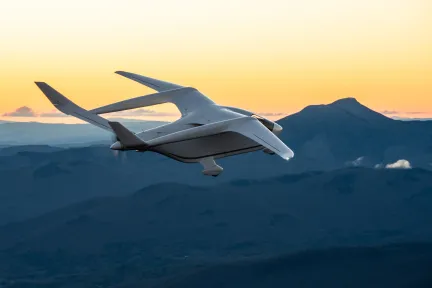
Discover why BETA Technologies chose the 3DEXPERIENCE platform to facilitate a more holistic approach to design and manufacturing.
Customer Story
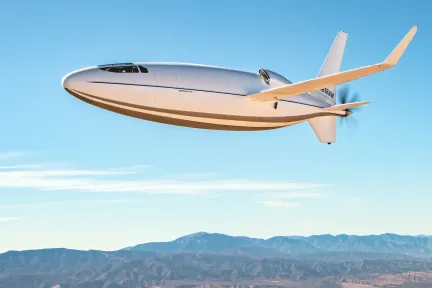
Discover how Otto Aviation will bring to market the world’s first transonic super-laminar aircraft.
Customer Story
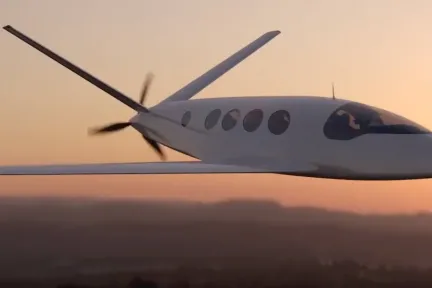
Eviation Aircraft wanted to design and build an all electric airplane for mid-range distances that is cost-effective and environmentally friendly on an aggressive time schedule by using the 3DEXPERIENCE platform on the cloud.
Customer Story
HeliAir uses the 3DEXPERIENCE platform on the cloud to design the self-developed KOKON interior concept to help build medical emergency helicopters.
Customer Story Video
Blue Spirit Aero uses the 3DEXPERIENCE platform to develop Dragonfly, a hydrogen-powered aircraft, with Virtual Twins for design, simulation, and certification.
Customer Story