
Generative Virtual Twins
Discover how generative virtual twins bring industrial AI to the realities of your business — from engineering and manufacturing to R&D, enterprise governance and lifecycle management.
INSIGHTS
NVIDIA uses Dassault Systèmes' Model-Based System Engineering to connect multidisciplinary engineering and support the development of virtual twins for scalable AI factory deployment.
Designing artificial intelligence (AI) factories at the scale required for next-generation accelerated computing demands close coordination across compute, networking, power and cooling. Decisions in one domain directly affect performance, energy consumption, reliability and operational flexibility in others. As AI infrastructure grows in scale and sophistication, the challenge is to engineer these interdependent systems together while accelerating deployment.
“The barrier to entry for an AI factory is high,” said Constant Sanciaume, director of Data Center Engineering at NVIDIA, headquartered in California, US. “You need thousands of qualified engineers, a lot of capital, and even then, you still need to figure out how to design, build and run it.”
To address this challenge, NVIDIA developed the Vera Rubin DSX AI Factory Reference Design. It provides a common, validated architectural foundation and engineering guidance for designing and deploying AI factories, covering compute and networking infrastructure alongside power, cooling and supporting facilities. Rather than starting from scratch, developers can build on this reference architecture and adapt it to their specific infrastructure and operational requirements.
“We build reference designs that industry can go out and build,” Sanciaume said. “NVIDIA DSX will democratize AI infrastructure and provide a blueprint that developers can adapt to their own projects, reducing the engineering effort required to design and deploy an AI factory.”
NVIDIA DSX will democratize AI infrastructure and provide a blueprint that developers can adapt to their own projects, reducing the engineering effort required to design and deploy an AI factory.
The NVIDIA DSX AI Factory Platform treats an AI factory’s power, networking, cooling, compute and software as one interconnected system. This co-design principle has been the engine of NVIDIA’s growth for years – applied first to individual chips, then to graphics cards that integrate packaging and cooling, then to entire server racks. Each one adds more disciplines to the design and engineering process, and NVIDIA DSX applies that same logic to the scale of an entire AI facility. “The challenge is making sure everything is designed together, so you’re managing trade-offs, optimizing for as many things as possible,” Sanciaume said.
Every AI factory design must balance goals that don’t always pull in the same direction. The first is getting maximum monetary output from every watt. “Anything using power that isn’t generating a token is wasteful,” Sanciaume said. “So, token-per-watt optimization is priority one.”
The second goal is speed: minimizing the time required to design, build and commission an AI factory so it can begin generating revenue sooner. The third is uptime and adaptability: ensuring that AI factories operate reliably and can accommodate future hardware upgrades without prolonged interruptions. These objectives must be balanced against the need for rapid deployment. “Optimize too heavily for futureproofing, and you can’t build as fast and you end up with waste,” Sanciaume said. “Build too fast with no thought for the future, and you’ll incur expensive downtime when it’s time to refresh.”
Managing these interdependencies requires more than isolated engineering models, spreadsheets and static drawings. By applying SysML-based model-based systems engineering (MBSE) on the 3DEXPERIENCE® platform, NVIDIA can connect system requirements and architecture with detailed engineering models, enabling design decisions to be assessed in the context of the entire AI factory.
“MBSE is a design discipline Dassault Systèmes has championed for over 20 years,” Sanciaume said. “It lets us abstract the complexity and validate, in real time as we design, that we’re optimizing for whatever design rules we choose.”
The partnership between the two companies predates AI factories by decades. As AI infrastructure became central to NVIDIA’s strategy, Dassault Systèmes presented a way to apply the same MBSE thinking proven in other industries to AI factories.
“When Dassault Systèmes pitched MBSE, their CATIA Magic solution and ways to integrate a system model into other parts of the 3DEXPERIENCE platform, it resonated with us and what we’re trying to achieve with NVIDIA DSX,” Sanciaume said. The collaboration also extends this MBSE approach into the NVIDIA Omniverse DSX Blueprint, a developer framework for building interactive, simulation-ready digital twins of AI factories.
To accelerate the development of a virtual twin of the Vera Rubin DSX Reference Design, NVIDIA chose Dassault Systèmes’ AI Factory Virtual Twin service. Through this approach, Dassault Systèmes delivers, maintains and evolves an online managed solution that encapsulates the NVIDIA experts’ user experience, the product and system virtual twins, and Dassault Systèmes’ specialist expertise in systems engineering, 3D design and simulation, taking responsibility for developing, deploying and managing the virtual twin environment. This enables NVIDIA to shortcut the value of virtual twin technology and move quickly from the reference architecture to an integrated engineering model while concentrating its own resources on advancing NVIDIA DSX.
For NVIDIA, the immediate value is a common engineering framework in which the different disciplines involved in AI factory design can develop their respective systems while maintaining alignment with the overall architecture. This supports coordination across subsystem interfaces and provides a consistent basis for evaluating design changes.
“It’s easy to see why solutions like AI Factory Virtual Twin are appealing to other companies who don’t have all the engineering know-how or staffing to design and operate everything themselves,” Sanciaume said. “Already, due to Dassault Systèmes’ support, everyone is working to a set framework, because all the subsystems created by different disciplines ultimately need to come together.”
Already, due to Dassault Systèmes’ support, everyone is working to a set framework, because all the subsystems created by different disciplines ultimately need to come together.
NVIDIA DSX brings together a broad ecosystem of semiconductor manufacturers, equipment suppliers, system integrators and AI factory developers. A consistent, model-based definition of the architecture can help these participants coordinate interfaces, interpret requirements and validate their contributions within the wider AI factory system.
“We design the architecture and get the likes of TSMC to manufacture the chips, Foxconn and other manufacturing partners to build the rack-scale products, and partners like Vertiv to build the power and cooling infrastructure,” Sanciaume said. “Requirements once travelled through documents, sketches and phone calls, but the system model now carries that information directly so it can be quickly shared and used by our partners to understand if their equipment meets our system requirements.”
Recently, Vertiv demonstrated a configurable virtual twin of its SmartRun infrastructure, developed using Dassault Systèmes' MBSE capabilities on the 3DEXPERIENCE platform and connected to NVIDIA Omniverse DSX Blueprint workflows. By capturing configuration rules and engineering dependencies, the demonstrator supports the evaluation and validation of physical infrastructure designs before deployment.
The immediate benefit is a more consistent exchange of engineering information across the ecosystem. Shared system requirements and architecture help participating companies understand how their equipment and subsystems must interact, reducing ambiguity during design and validation. “A company that’s never designed or built a data center or an AI factory is now able to successfully broker conversations with various partners, because they have the data they need,” Sanciaume said. “There are already early signals that it’s proving a highly effective way of packaging system requirements.”
Sanciaume expects the greatest long-term benefit to be faster engineering decisions and design iterations. By evaluating alternative configurations and identifying potential problems earlier, the model-based approach is intended to reduce late-stage rework during procurement, construction and commissioning. The same engineering continuity can subsequently support troubleshooting and upgrades throughout the AI factory's operational life.
“The big bet is genuinely dramatic acceleration of designs, decisions and iterations,” he said. “The hope is that engineers can focus on catching mistakes early, so they don’t carry through into construction, where they become far more expensive to fix.”
For NVIDIA, the immediate value of the virtual twin is a common engineering framework in which the different disciplines involved in AI factory design can develop their respective systems while maintaining alignment with the overall architecture.
As AI factories expand, power availability, energy efficiency and operational flexibility become central considerations in infrastructure design. Addressing them requires coordinated engineering across compute, cooling and electrical infrastructure, together with the ability to evaluate different operating conditions before deployment.
Alongside maximizing AI output per watt, NVIDIA is exploring how AI factories can operate more flexibly in response to grid constraints. Coordinating compute workloads with power and cooling systems could allow operators to adjust electricity demand when needed, supporting grid stability while minimizing disruption to users and researchers. “Energy is the most constrained resource right now,” he said. “It’s our duty, then, to make sure these factories are as efficient as possible and find ways for them to strengthen the grid. There’s a lot of clever innovation around waterless data centers, optimizing for energy, and how we integrate systems so that when we do curtail load, we minimize the impact on users and researchers.”
Looking further ahead, Sanciaume sees opportunities to extend the model-based approach beyond the AI factory itself. “MBSE is really only at the beginning of its journey, because the systems themselves are only going to become more complex,” he said. “It’s not impossible that eventually we will see small-scale nuclear reactors on these sites, and hopefully, one day, cross-pollination between existing system models of power-generating assets and AI factory systems.”
That longer-term vision builds on the engineering collaboration already underway. The Vera Rubin DSX Reference Design, Dassault Systèmes' MBSE and virtual twin capabilities, and the involvement of infrastructure partners such as Vertiv are establishing a common framework for coordinating complex engineering decisions. The approach also provides a foundation for extending model-based systems engineering across the wider AI factory ecosystem.
“We share close alignment on the mission, and the right resource is always available for whatever problem we’re solving,” Sanciaume said. “Everything at Dassault Systèmes is driven by a desire to understand the science and the engineering first, and the solutions are a means to that end. Some of the most complex engineering systems in the world – aerospace, cars, nuclear reactors – are designed through Dassault Systèmes’ 3DEXPERIENCE platform. I think that’s a testament in itself to their expertise.”
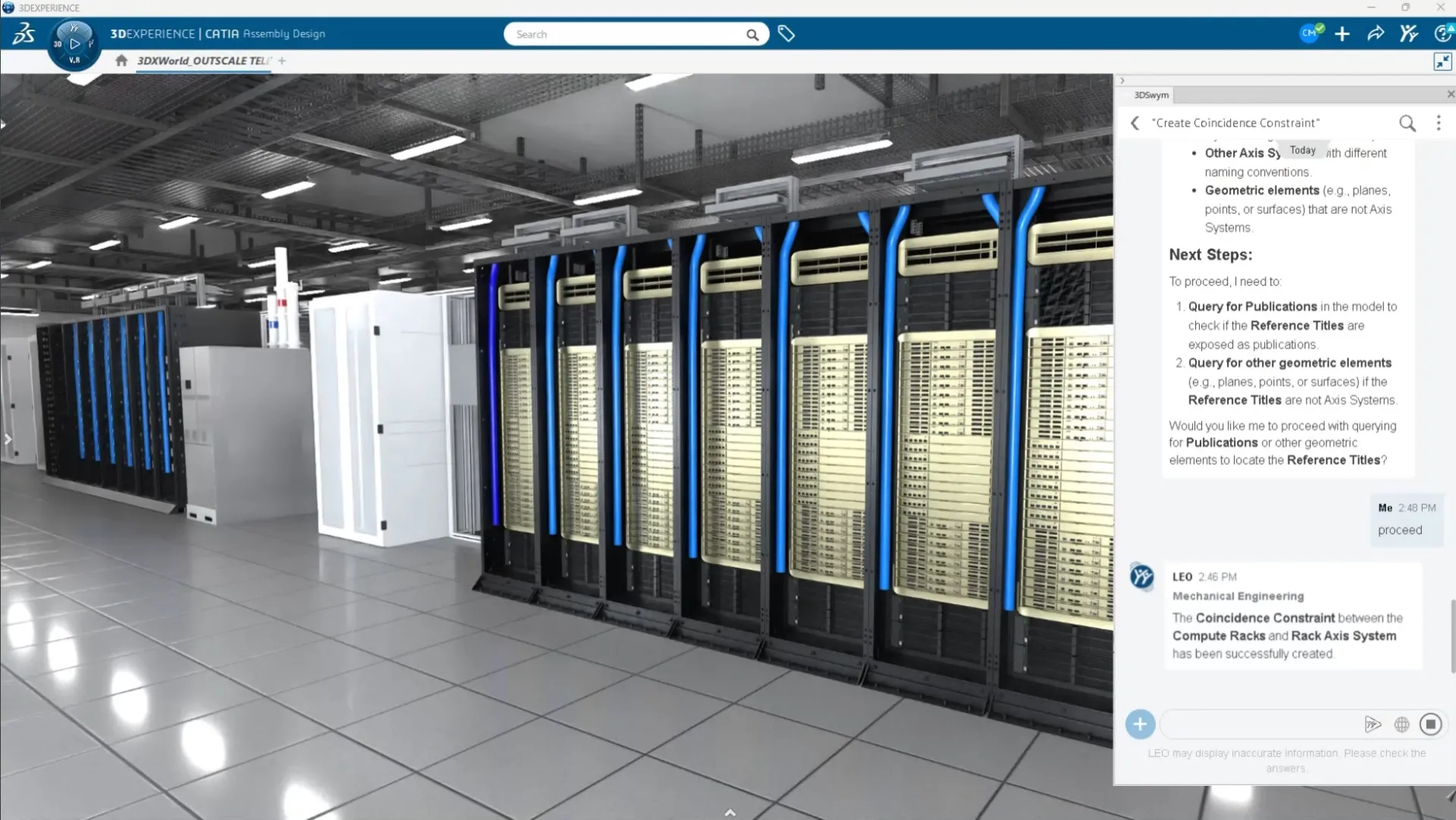
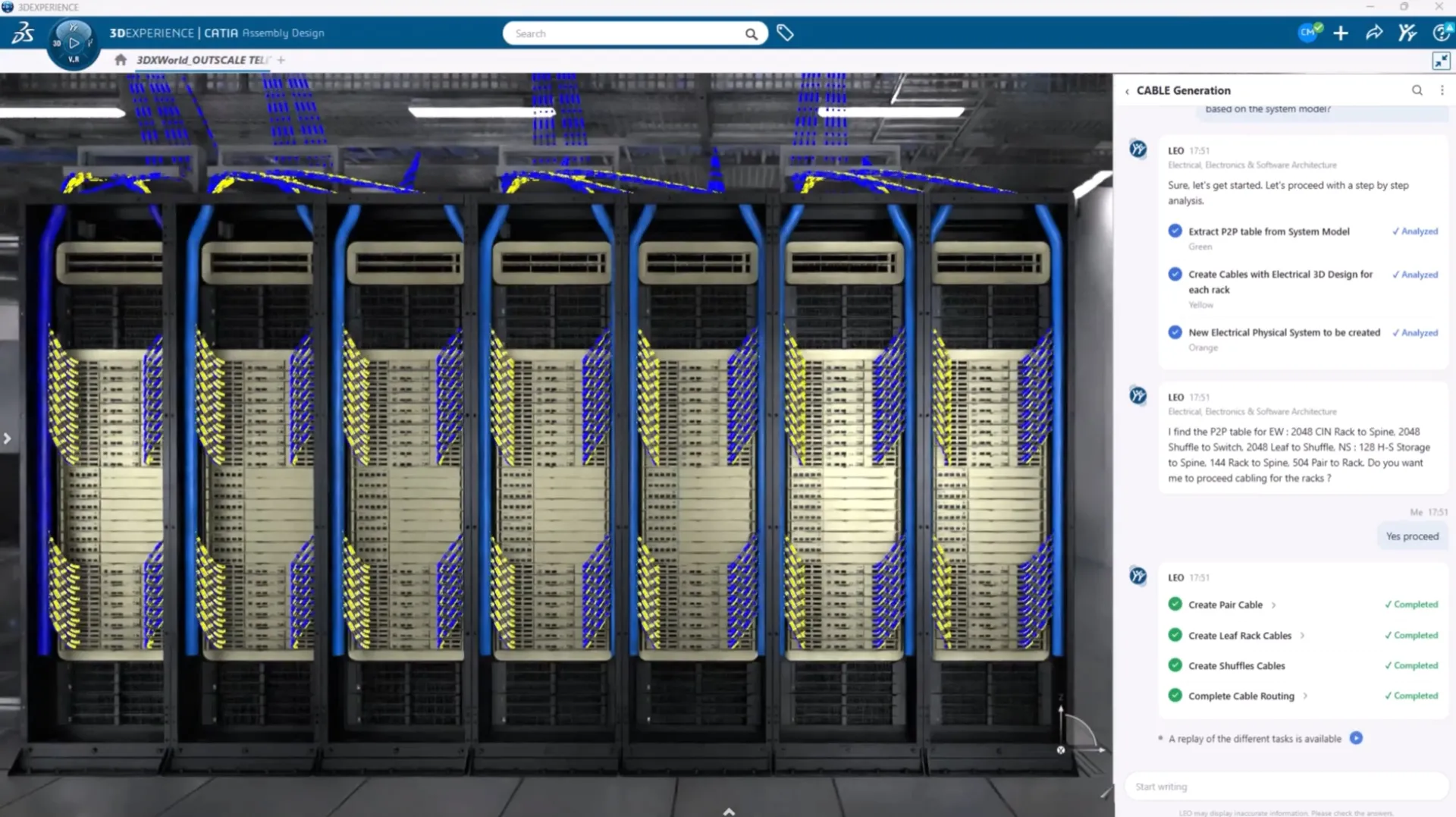
NVIDIA DSX covers every layer of what it takes to build an AI factory, spanning facilities, hardware and software. Dassault Systèmes’ support covers the first two layers, creating detailed virtual models of the physical building blocks that make up an AI factory. “That involves modeling racks, fiber, copper, switchgear, coolers, and how it all interacts,” Sanciaume said.
A single compute rack can have a couple of thousand network cables running out of it. Multiply that across thousands of racks per factory, add thousands more network racks on top, and the scale becomes staggering. “We’re talking hundreds of thousands, if not millions, of cables with different specs, lengths, connectors, optics,” Sanciaume said.
Dassault Systèmes’ 3DEXPERIENCE platform connects the system architecture to detailed physical models in CATIA, enabling engineers to define routing rules and manage the relationships between equipment, cables and their interfaces. ENOVIA provides product structure, configuration and change management, maintaining traceability between requirements, engineering definitions and bills of materials as the design evolves.
For operators on site, this level of traceability will make troubleshooting far easier to tackle. “Imagine someone tells you link number 764 is broken, go find it,” Sanciaume said. “With the virtual twin, you’ll be able to open the 3D model, click link 764, and it tells you exactly where it is, and can even tell you how to order the exact replacement part.”
The connected engineering framework also links system architecture to discipline-specific simulation. Engineers can evaluate the interaction between electrical infrastructure, cooling systems and physical equipment configurations before deployment. SIMULIA contributes relevant physics-based simulation capabilities, while specialized electrical engineering tools support power-system analysis. By connecting these analyses to the system architecture, engineering teams can assess design alternatives against system requirements and use the results to inform subsequent design iterations.
“They can look at stuff like whether they’ve sized the breakers or switchgear properly,” Sanciaume said. “That’s fairly basic, but it gets more complicated: what about transients, if everything goes up and down quickly? How does your design hold up against what other disciplines are working on? Through the same system model there’s a direct link to SIMULIA’s suite of simulation capabilities; that’s the beauty of being able to integrate, you get real-time validation in the loop at different levels of complexity throughout the design.”
Founded in 1993, NVIDIA is the world leader in AI and accelerated computing. Its invention of the GPU in 1999 sparked the growth of the PC gaming market, redefined computer graphics, revolutionized accelerated computing and ignited the era of modern AI. Today, NVIDIA is a full-stack AI infrastructure company powering the world’s AI factories.
For more information: www.nvidia.com
Discover how generative virtual twins bring industrial AI to the realities of your business — from engineering and manufacturing to R&D, enterprise governance and lifecycle management.
INSIGHTS
AI reasoning, grounded in scientific reality, built into the 3DEXPERIENCE platform.
INSIGHTS
Press Release
February 3, 2026
University of Moncton uses Virtual Twins for smart city planning in Moncton and Dieppe, balancing density, housing and biodiversity.
Customer Story
Model-based systems engineering has revolutionized complex system development by placing digital models at the core and enabling seamless integration.
technologies
Specializing in automotive cockpit technology, Clarion Malaysia is using the 3DEXPERIENCE platform to bring systems engineering, product lifecycle management, and manufacturing together in one seamless workflow.
Customer Story
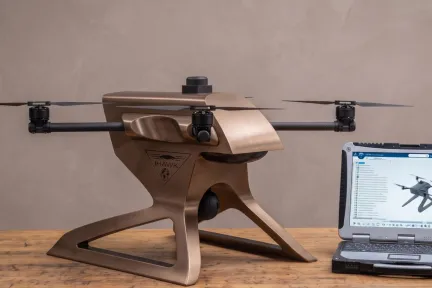
iHawk Global redefines container yard visibility with autonomous drones and ground robots which are designed using a simulation-first approach on the 3DEXPERIENCE platform.
Customer Story
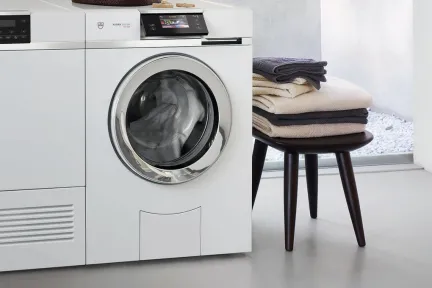
V-ZUG chose Dassault Systèmes’ 3DEXPERIENCE platform to manage its product development process in one single environment and to ensure data consistency from specifications through to production.
Customer Story
As part of their digitalization strategy, Miele wants to improve their product life cycle management by adopting the 3DEXPERIENCE platform. With this central anchor point for all information, mastering complexity of their products becomes easier.
Customer Story