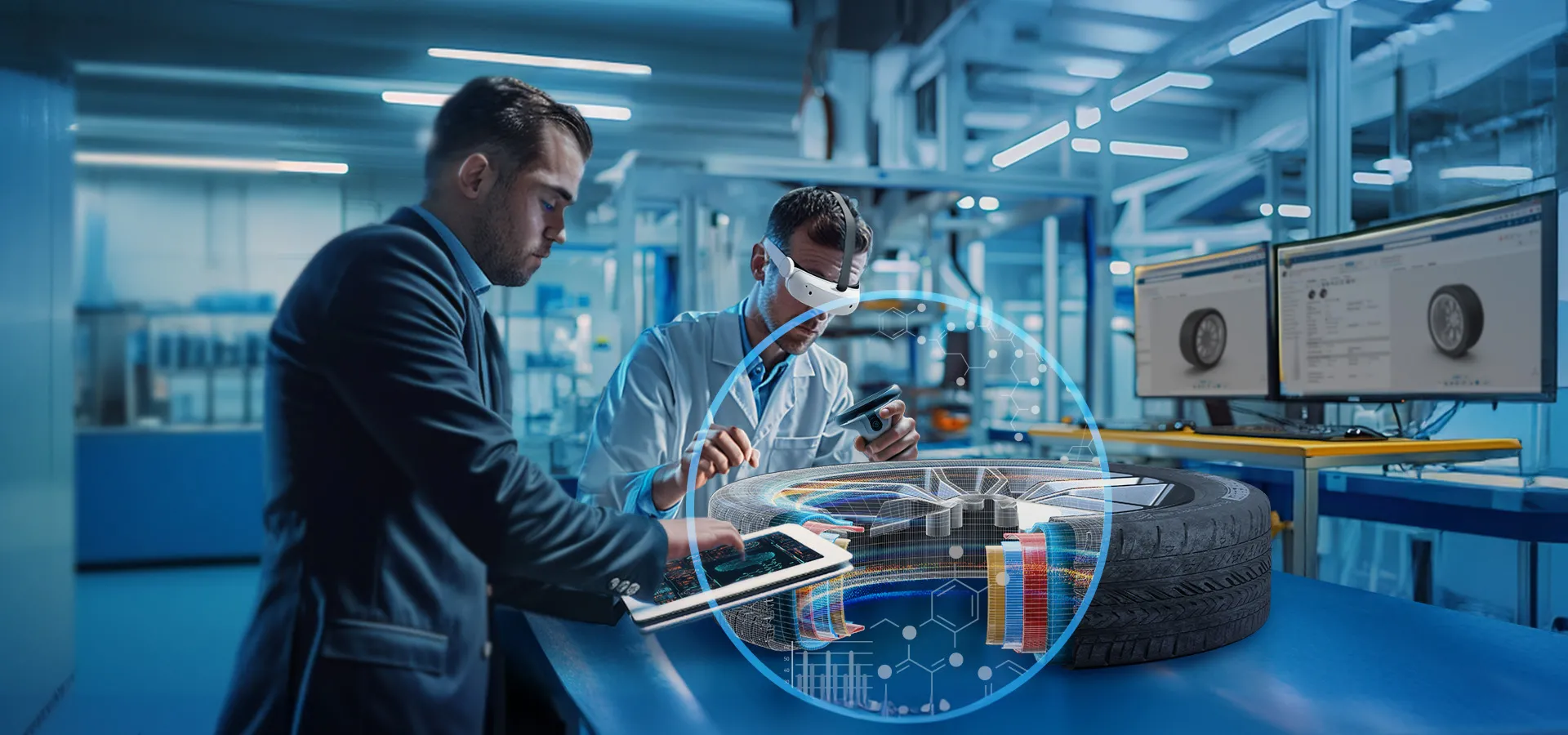
The world needs manufacturers-2
Our world is changing. Industries everywhere are increasingly global in footprint and digital in their operations. Your manufacturing business must be no exception.
Understanding and embracing new approaches, new materials, even new business models, is critical to building a company that can meet both the demands of today and the challenges of tomorrow.
iframe test
15 industrial trends shaping the planet's 2030 game plan
Our world is changing. Industries everywhere are increasingly global in footprint and digital in their operations. Your manufacturing business must be no exception.
Understanding and embracing new approaches, new materials, even new business models, is critical to building a company that can meet both the demands of today and the challenges of tomorrow.
Feature Trend
Trend 1: The pursuit of new business models
Our world is changing. Industries everywhere are increasingly global in footprint and digital in their operations. Your manufacturing business must be no exception. Understanding and embracing new approaches, new materials, even new business models, is critical to building a company that can meet both the demands of today and the challenges of tomorrow.
Top trends
- The pursuit of new business models
- Increased awareness of supply chain risk
- Transforming manufacturing technologies
- Growing focus on improving product lifecycles
- Identifying the materials of the future
- Rapidly-changing sustainability expectations

Humans: powering the heart of sustainable, digital factories of the future
What is the role of the worker as manufacturing becomes increasingly digital?
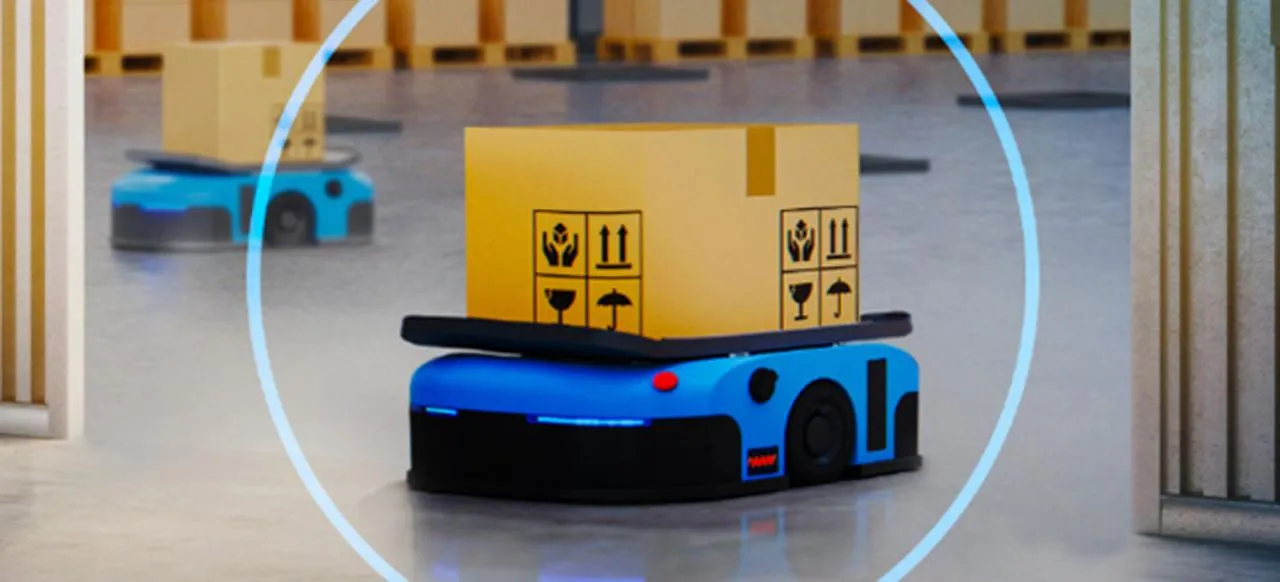
Lead the Charge Toward Industry 4.0 With Industrial Robots
Discover the power of industrial autonomous vehicles in smart factories and how an integrated approach maximizes the benefits for manufacturers.
Additive Manufacturing for Stronger, Lighter and Better Parts
Improve operational flexibility and agility with on-demand manufacturing.

Accelerate Sustainable Industrial Waste Management with Digitalization
Unlock the true value of industrial waste through digitalization for cost-saving opportunities and profitable revenue streams.

Closing the loop: the impact of enriched digitalization in accelerating circular value chains
Repurposing, recycling and reusing materials is a crucial challenge for companies making the move from a linear to a sustainable, circular supply chain economy
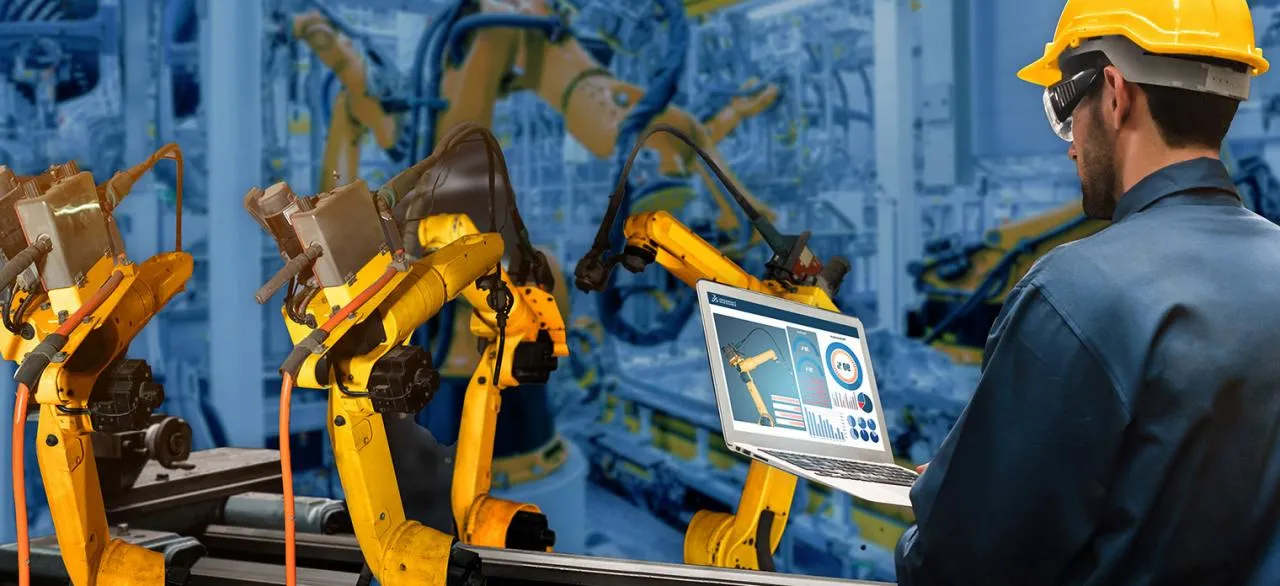
The importance of virtual design simulation in manufacturing robotics
Manufacturers can more accurately integrate robotics with their production lines using powerful simulation capabilities.
More trends
3DEXPERIENCITY is a 3d collaborative environment that federates all city data from sensor and systems. Officials use it as a 'cockpit' to analyze and manage city service and resource, as well to virtually simulate 'what if' scenarios to optimize domains such as infrastructure, logistics and security.

Manufacturing
Explore all the articles about the key challenges your company might face such as sustainability, connected industry, operational optimization, manufacturing workforce or future-proof systems.
Reshape Inventory Management with Data Visibility, Robotics and 3D Printing
Reshape Inventory Management with Data Visibility, Robotics and 3D Printing
“A digital warehouse helps a company be future-ready.”
– Mike Bradford
Delmia’s Strategic Business Development Director
Make the shift now towards a fully digital inventory management system. Choose to watch the full video podcast or read the transcript of Mike's insights on how you can achieve efficiency, cut product costs and increase collaboration across your supply chain.
Steel decarbonization: making construction strong and sustainable
Our world is changing. Industries everywhere are increasingly global in footprint and digital in their operations. Your manufacturing business must be no exception. Understanding and embracing new approaches, new materials, even new business models, is critical to building a company that can meet both the demands of today and the challenges of tomorrow.
Our world is changing. Industries everywhere are increasingly global in footprint and digital in their operations. Your manufacturing business must be no exception. Understanding and embracing new approaches, new materials, even new business models, is critical to building a company that can meet both the demands of today and the challenges of tomorrow.
Our world is changing. Industries everywhere are increasingly global in footprint and digital in their operations. Your manufacturing business must be no exception. Understanding and embracing new approaches, new materials, even new business models, is critical to building a company that can meet both the demands of today and the challenges of tomorrow.
test
In conversation with
The world of manufacturing is at an inflection point, and stakeholders need to sit up and take notice. In the following films, we sit down with leading industry experts to get to grips with the defining characteristics of this dynamic moment in history. Together, we discuss the key trends driving business transformation and digitalization, the technology and solutions enabling adaptation, and what businesses need to do to embrace these opportunities.
6 Steps to Smart, Efficient Tires
Ready to unlock speed and precision in tire development? Here’s how to achieve it with our integrated platform.
- Accelerate Materials Innovation
- Model and Simulate From the Start
- Maximize Production Efficiency
- Foster End-To-End Collaboration
- Ensure Digital Continuity
- Embrace Sustainability
80% of tire innovation stems from materials. Predict and optimize existing tire formulations through platform-driven simulation and collaborative material management to develop new, sustainable materials quickly and precisely.
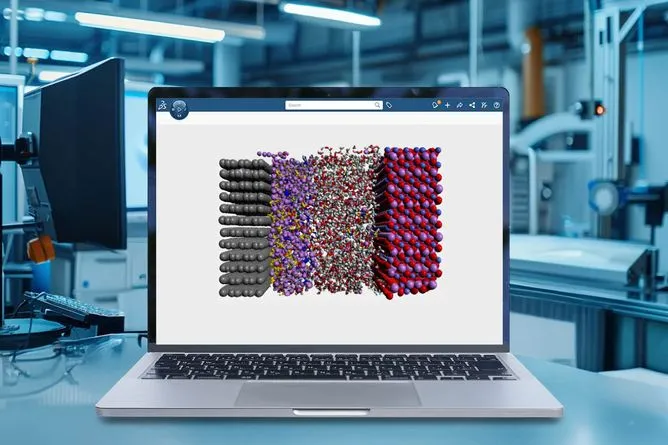
Shorten design cycles by integrating multiple design factors into virtual prototypes from the start. Optimize the ‘Magic Triangle’ and reduce the need for check tires by up to 85% through modeling and simulation.
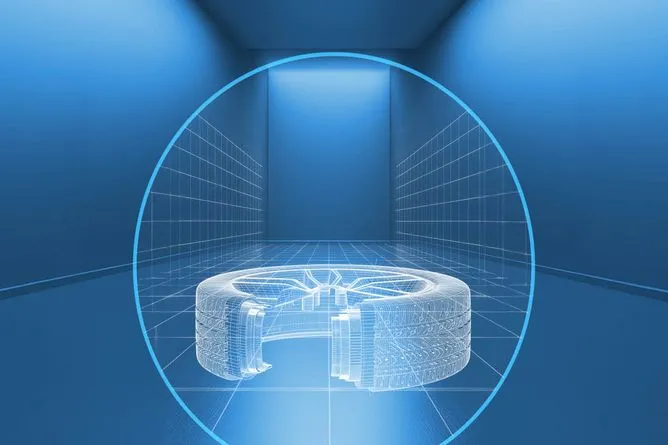
Streamline operations to improve plant availability and boost productivity. Integrate 3D design and simulation to optimize processes — reducing development and testing time by up to 25%.
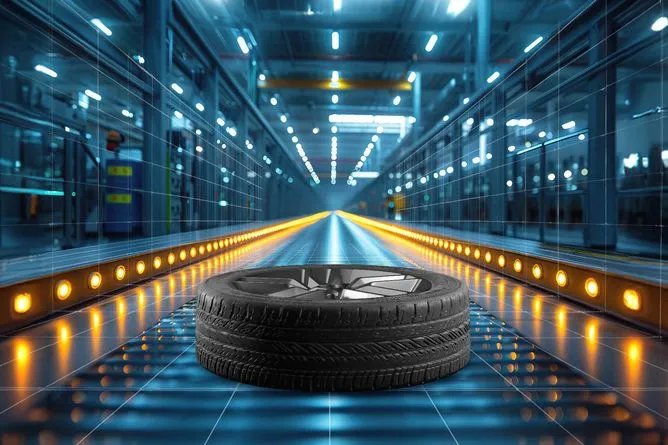
Incorporate data from all stakeholders for a seamless and integrated tire development process. Real-time collaboration improves communication, reduces supply chain disruptions and optimizes manufacturing operations.
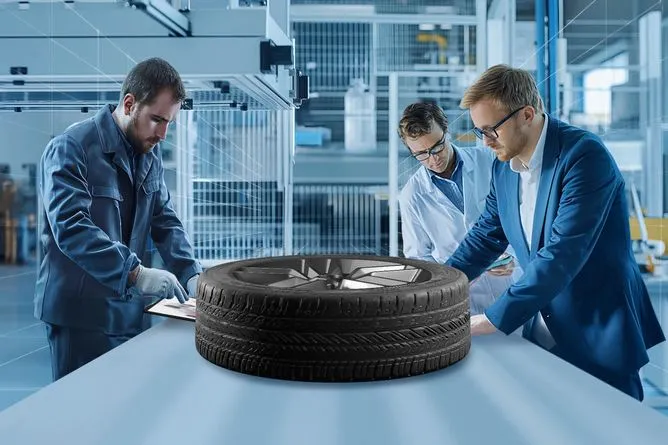
End-to-end digital continuity shortens the testing and evaluation process from weeks to hours. This single source of truth boosts right-first-time rates, speeds up time to market and aligns every development phase to business objectives and customer demands.
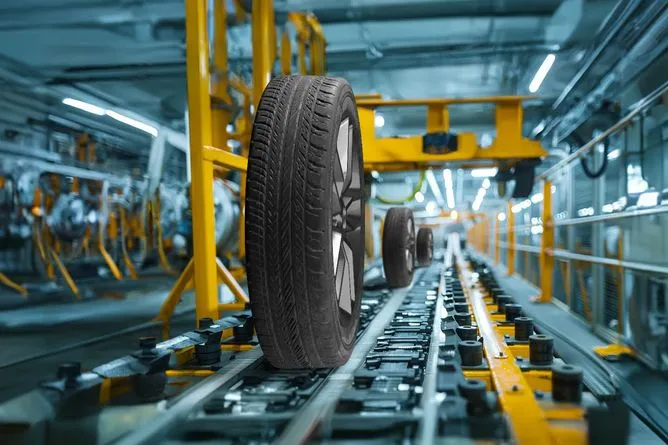
Embed sustainable practices throughout the tire development lifecycle. Optimize resource and energy use, minimize waste and reduce greenhouse gas emissions to meet regulatory standards for a sustainable future in tire development.

From Concept to Market
Discover all six connected advantage stages
- Stage 1: Concept
- Stage 2: Design and Development
- Stage 3: Verification and Validation
- Stage 4: Regulatory Clearance
- Stage 5: Manufacturing and Supply Chain
- Stage 6: Patient Experience
Stage 1: Concept
Connect the voice of the customer to design
Leverage the voice of the customer, insights from industry analysis and market research using a unified digital platform. Using simulation, rapidly explore innovative design concepts that meet customer needs and align with market demands.
Stage 2: Design and Development
Connect engineering teams for collaboration on product design and development
Unite multiple engineering disciplines with scalable simulation tools for dynamic adaptation of designs. Complete visibility drives seamless collaboration, reducing siloed work organizations.
Stage 3: Verification and Validation
Connect user requirements with simulation-driven testing
Utilize platform-based modeling and simulation tools to streamline verification and validation processes. Connect user requirements to simulation-driven test scenarios to gain full traceability, speed up test cycles and improve quality.
Stage 4: Regulatory Clearance
Connect innovative design with regulatory compliance
Compile regulatory dossiers quicker based on design history and requirements. Supplement real-world evidence with virtual simulation to adhere to global regulatory standards, accelerating time to market.
Stage 5: Manufacturing and Supply Chain
Connect quality devices with sustainable production
Connect engineering to manufacturing to prevent costly redesigns late in the process. With advanced lifecycle tools, optimize resources and ensure sustainable production of the device. Real-time monitoring quickly identifies and resolves quality issues, minimizing the risk of recalls.
Stage 6: Patient Experience
Connect patient experience to product optimization
Incorporate real-world data and patient feedback to continuously improve device design. This ensures that the product not only meets clinical standards but also drives innovation and enhances patient satisfaction.
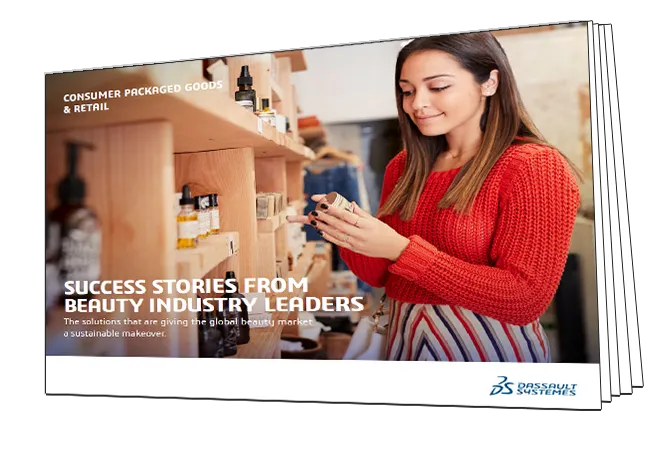
How are leaders in the Global Beauty and Personal Care market leveraging technology to get ahead?
Read about the solutions that are giving the global beauty market a sustainable makeover.
Our Customers
1. Unify Simulation Data and Processes
In the first step we enable our customers to manage their simulation data and processes while preserving their investments made on existing solvers, whether they are SIMULIA legacy solvers or third-party tools. The 3DEXPERIENCE platform makes it possible to capture and share existing analysis methods, with easy collaboration between analysts in different simulation disciplines.
2. Boost Design Exploration
The aircraft concept design phase represents a good incremental starting point for integrated simulations on the 3DEXPERIENCE platform, which offers unique capabilities to perform multi-disciplinary optimizations and trade-off studies to select the best concept with a high level of confidence in its potential performance.
3. Augment Validation and Verification
The third step focuses on Validation and Verification (V&V) and the proper governance of simulation processes. The overall V&V strategy is planned and executed on the platform, simulation data are connected to requirements, and review and approval processes are streamlined.
4. Enhance Performance with MODSIM
Building on the data and process management capabilities established in the previous steps, the journey towards fully integrated modeling and simulation (MODSIM) on the 3DEXPERIENCE platform can begin. As the aircraft design becomes more detailed, complex simulation models are updated in lockstep with the evolving design.
MAKE THE SWITCH

Electroimpact
"Are we able to meet our customers' needs and provide the information they need seamlessly? Can we run the business better and more productively? Can our engineers collaborate and work effectively and efficiently? On all three counts, the 3DEXPERIENCE platform is helping us achieve those goals."
Ben Hempstead
Mechanical Engineering Lead and Chief of Staff

CenterLineLimited
"Dassault Systèmes' solutions have helped us design equipment to simulate the assembly in a virtual setting and anticipate problems we could run into when selling the equipment and programming the robots. It really gives us a leg up before we put the steel to the floor."
Marc Levesque
Director of Corporate Marketing

Yutaka Electronics
"The virtual twin experience by Dassault Systèmes enables us to integrate the commissioning process into the design work itself. While doing 3D modelling, we can carry out comprehensive operational checks of an entire system, including multiple robots. This will help us to eliminate early design flaws that have sometimes been overlooked in the past."
Daisuke Matsuo
General Manager of Advanced Technology Division

CNBM Triumph Robotics
"The 3DEXPERIENCE platform offered a holistic solution, with diverse modules covering all aspects of our digital scenarios. This is very appealing to us. Everything we do is now based on the PLM’s unified database, without causing duplicate designs or incorrect references."
Gao Changqi
Chief Engineer