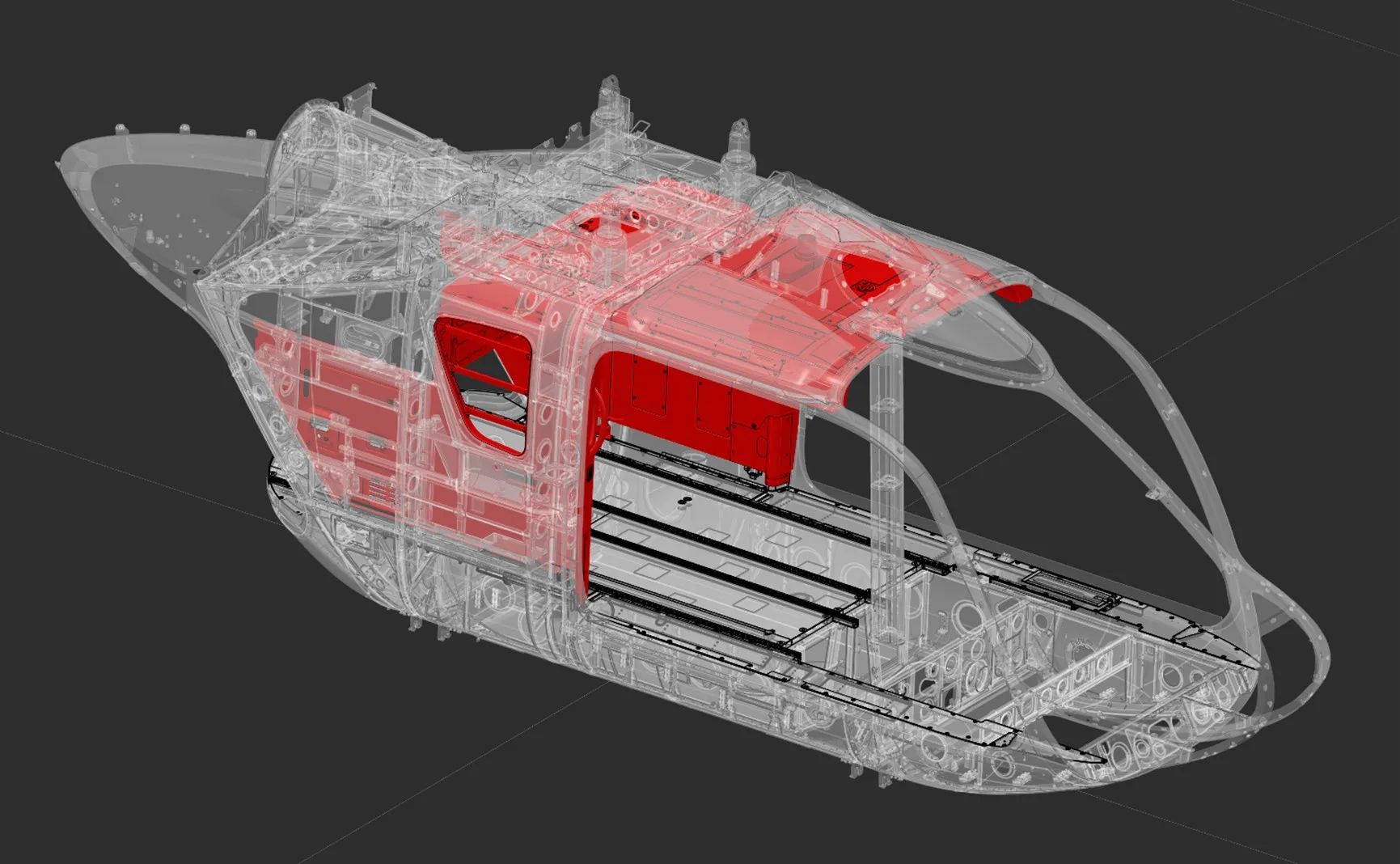
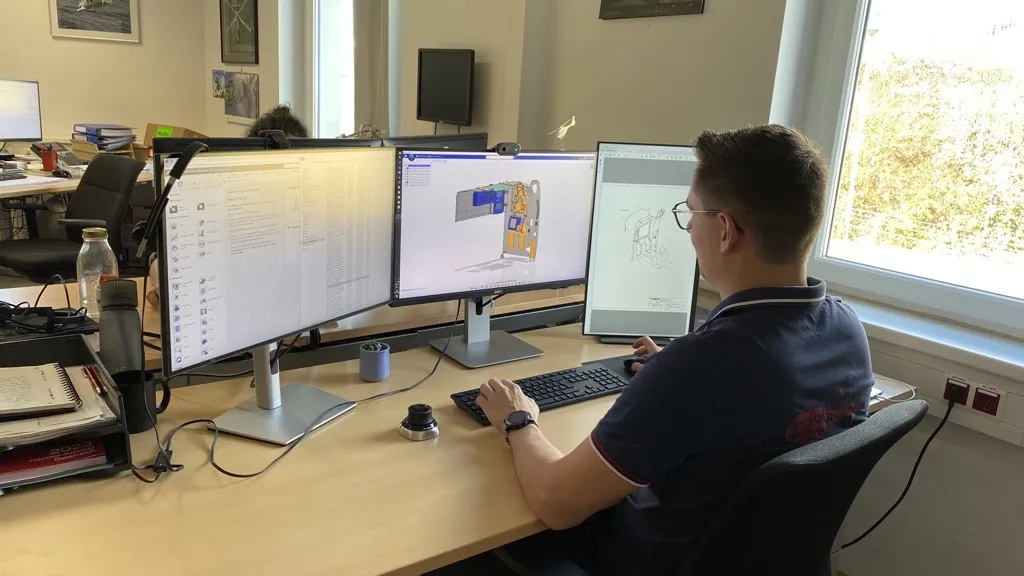
The VR experience was so successful that HeliAir now uses it as part of its daily work. Designers create parts in 3D and test them out in virtual reality, seeing how they function in a particular configuration and whether they can be accessed easily.
“It’s now super fast when someone wants to change the design,” said Matthias Neuner, design engineer at HeliAir. “We can quickly mock it up in VR and visualize the distance between equipment within the cabin. It helps us to get designs right first time.”
This user-centric approach is transforming how HeliAir collaborates with its customers. Before, prospective users waited until there was a physical prototype before they could determine whether the interior setup worked for them. Now, a medic that will be working in the helicopter can try everything out in virtual reality before it’s built.
“We produce fewer prototypes and our customers have a much better idea of what they’re ordering,” Bucher said. “We now only need one or two workshops to go through the mockup and, in that time, we’re covering details such as where a latch should be positioned.”
An additional benefit of the platform is the opportunity for HeliAir to upsell its services and expand the scope of the complex projects it takes on. The agility of a modular design approach allows it to quickly develop custom solutions without impacting delivery times.
“Recently, a customer approached us to make some adaptors on our interior lining for their own equipment,” Neuner said. “However, once they saw the virtual interior, the project developed into a whole new EMS installation, which we finalized within months. We can pull up the designs and parts we need and adjust them according to each customer’s specific needs. The processes we have in design and production using the 3DEXPERIENCE platform help in every way to reduce time and cost.”