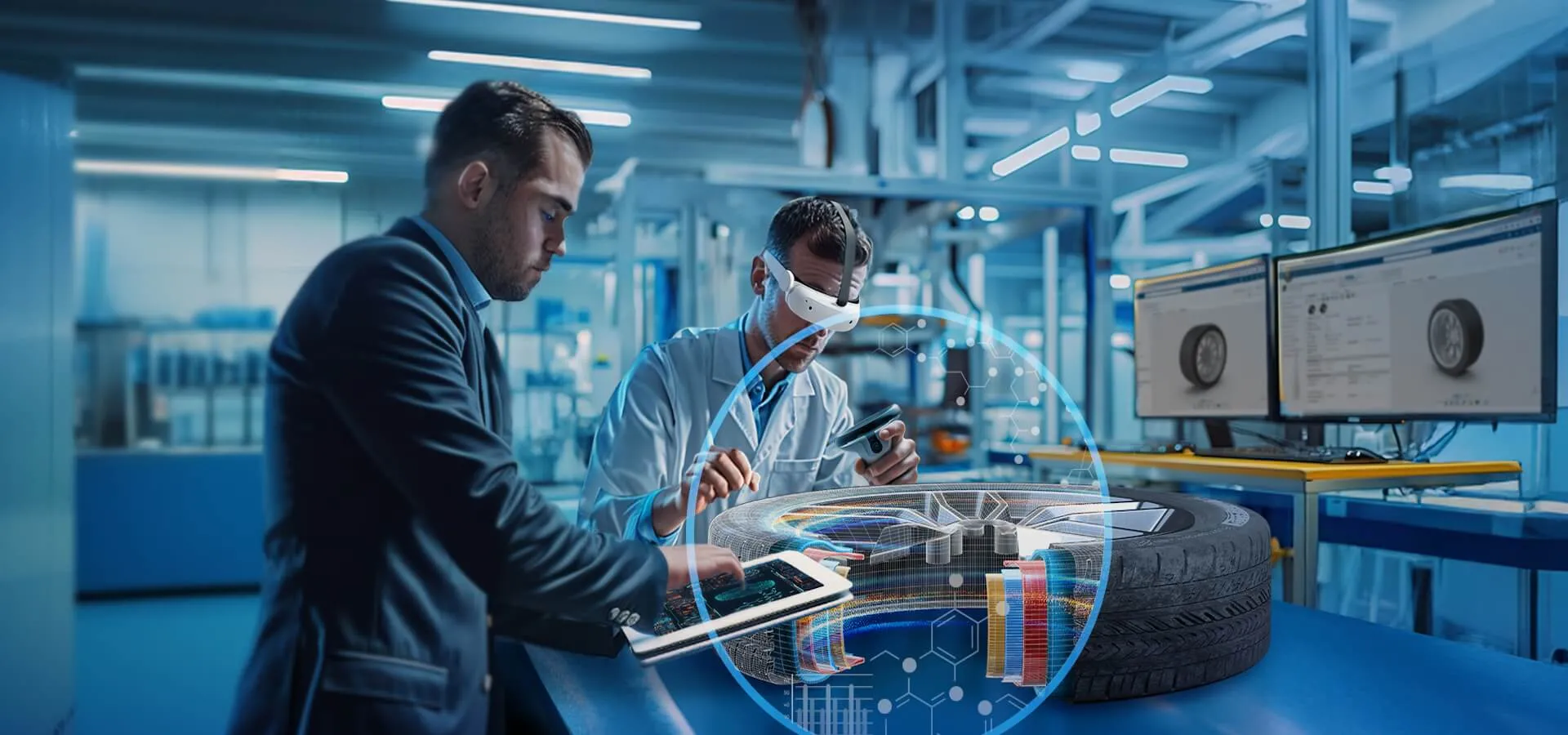
Perfect Integration Smart Tire Production
Streamlining tire development complexities with platform-driven efficiency and precision.
Perfect Integration Smart Tire Production
One major challenge is the shift to electric vehicles (EVs) and autonomous vehicles. EVs demand advanced tire materials, innovative designs and optimization of the 'Magic Triangle' — grip, rolling resistance and durability — to accommodate heavier weight, increased torque and enhanced safety needs. Autonomous vehicles further increase tire design complexities by requiring intelligent sensors for tire safety and performance.
Sustainability is another critical imperative. Under the 2015 Paris Accords, tire manufacturers must produce tires from 100% sustainable materials by 2050. This commitment demands a substantial reduction of carbon emissions and better tire recyclability. Non-compliance with environmental standards and varying
regional regulations, such as the Euro 72, can lead to market losses.
Additionally, supply chain disruptions — such as raw material shortages and logistical challenges triggered by weather, war and pandemic events — often inflate costs and delay time-to-market
With global vehicle miles set to double by 2030, tire innovation to tackle the above challenges is more crucial than ever. Meeting these demands with speed and agility requires an integrated approach — seamless transitioning to a modern, unified digital platform that streamlines processes and ignites innovation.