

Moonrider
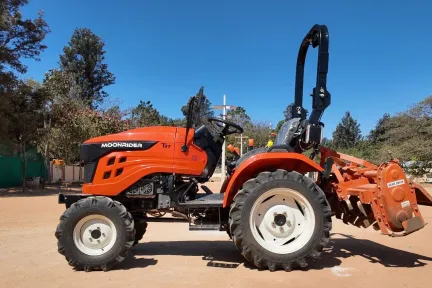
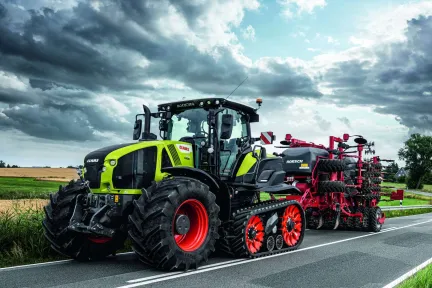
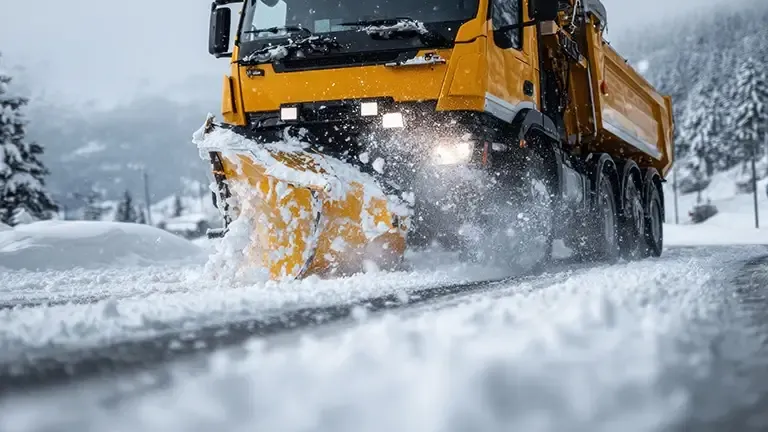
Moonrider simplifies the complexity of designing its electric tractors and advanced battery packs using the 3DEXPERIENCE platform on the cloud.
Customer Story
Accelerate the development of next-generation heavy equipment with a comprehensive suite of solutions for advanced simulation and testing.
From construction machinery to mining and agricultural equipment, manufacturers face challenges in performance, durability and safety. Dassault Systèmes’ simulation-driven approach enables original equipment manufacturers (OEMs) to design, test and validate heavy equipment in a virtual environment — reducing costs, improving efficiency and accelerating innovation.
Designing and manufacturing industrial equipment is a major challenge due to the extremely large and heavy nature of the machines. The equipment must be able to operate under heavy loads and for long operating cycles. Failure will not only be costly but also be dangerous to operators. Therefore, it's critical to ensure that the heavy equipment performs reliably before it is manufactured.
As such, manufacturers must work fast to keep costs down, deliver quality and reliable equipment on time, and manage increases in product variants, equipment combinations and design concepts. Simulation enables them to reduce the number of prototypes needed while quickly analyzing structural integrity and fatigue throughout the entire equipment lifecycle, and modeling its performance in a challenging real-world environment, such as a construction site or mine.
Heavy equipment is a complex system with multiple, often conflicting, performance requirements. It involves intricate interactions between various subsystems, including hydraulics, powertrains, controls and structural components. Design is complicated by the need to balance standardization with frequent customization for specific customer or site requirements. The difficulty is further compounded by the extreme, unpredictable conditions where the machinery operates — conditions that are hard to fully replicate in a virtual environment.
Optimizing for fuel efficiency (often related to weight and powertrain), aerodynamics (reducing drag) and raw power (required to move heavy loads or earth) simultaneously is difficult. Improving one attribute (such as aerodynamics) might result in structural changes that can increase weight and power requirements while reducing fuel efficiency.
Heavy equipment must withstand unplanned, high-magnitude loads and operate continuously across diverse, harsh environments. This challenge is further intensified by the industry's business model of high customization and low production volume, which limits reliance on generalized physical test data.
The necessity of creating unique configurations under tight deadlines demands a digital-first approach where virtual validation is paramount. Accurately simulating these conditions requires multiple advanced techniques, such as multibody dynamics (MBD) for machine motion and finite element analysis (FEA) for structural integrity. Failure to integrate these physics accurately can lead to flawed designs that compromise safety, durability and operational performance.
Reduce design time by up to 20%
Shorten deployment time by up to 30%
Cut errors and rework during production by up to 90%
Discover robust, efficient and advanced heavy mobile equipment solutions tailored for the heavy mobile machinery market.
Embrace a new standard of product development for heavy mobile equipment that emphasizes operator safety and equipment reliability.
With Dassault Systèmes’ simulation and validation tools, we can refine designs before production and check for manufacturing feasibility, leading to higher quality and less rework. Sharing reliable simulation data across departments has also strengthened collaboration and accelerated product development.
Moonrider simplifies the complexity of designing its electric tractors and advanced battery packs using the 3DEXPERIENCE platform on the cloud.
Customer Story
The company chose Dassault Systèmes’ 3DEXPERIENCE platform for product development, multi-site collaboration and manufacturing simulation.
Customer Story
Hyundai Everdigm manufactures heavy mobile equipment and is now able to work more productively and seamlessly with the 3DEXPERIENCE platform.
Customer Story
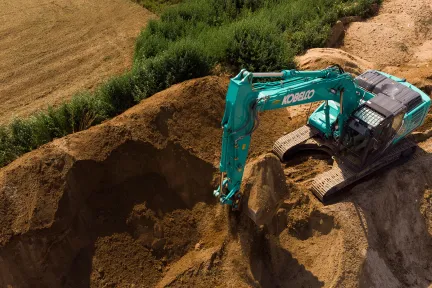
Kobelco Construction Machinery leverages the Single Source for Speed and Integrated Heavy Machinery solutions to optimize design processes and improve access to information across its organization.
Customer Story
Soosan Cebotics is leveraging the 3DEXPERIENCE platform for end-to-end PLM, accelerating development of smarter, connected machinery.
Customer Story
XCMG machinery is a pioneer in China’s construction machinery industry offering a comprehensive product line to its global customers.
Customer Story
The Italian manufacturer uses the 3DEXPERIENCE platform from Dassault Systèmes to improve governance from engineering to manufacturing to support.
Customer Story
Construction equipment manufacturer Takeuchi faced growing pressure to streamline its development processes. The company chose Dassault Systèmes’ to provide an integrated platform for product design, analysis and production.
Customer Story
CLAAS Tractor designs and manufactures tractors for the CLAAS Group, one of the world’s leading agricultural machinery manufacturers. As part of its strategy to modernize the factory, the company is using the 3DEXPERIENCE platform to effectively handle growing complexity in its products, optimize its assembly line, and digitally plan and drive production with full traceability.
Customer Story

Embrace an intelligent end-to-end approach to quality with the 3DEXPERIENCE Platform
Article
Simplify the intricacies of the heavy mobile machinery supply chain through digitalization. Discover the value path for streamlined efficiency.
Article
Model-Based Systems Engineering (MBSE) revolutionizes heavy mobile machinery and equipment development, enhancing collaboration, efficiency, and innovation
Article