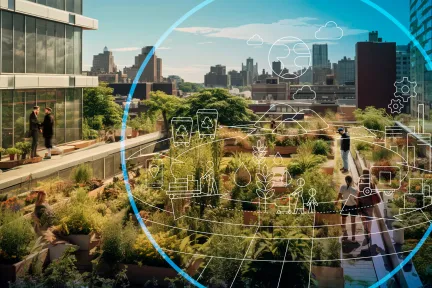
Reducing the Electronics Environmental Impact
Electronics innovators are joining forces around European EECONE program to ensure a more sustainable industry.
What Is EECONE About?
EECONE, the European ECOsystem for greeN Electronics, is a consortium that aims to engage European leaders in sustainable and circular electronics. EECONE's main objective is to reduce electronic waste (e-waste) – gathering 48 entities from 16 European countries – and following a key objective of the European Green Deal and the Circular Economy Action Plan.
- 62 million tons
e-waste generated in 2022
- 82 million tons
e-waste expected in 2030
EECONE’s Sustainable Practices

Durability
Improving electronic products’ reliability and repairing rates with eco design principles to increase their lifetime

Resources
Reducing and replacing materials in electronic components and systems
Circularity
Reusing, recycling, and recovering components from electronic products
What Is EECONE’s Ambition for Sustainability and Circular Economy?
EECONE aims to integrate end-of-life management constraints for electronic products upstream of the development phase, from the design stage. EECONE has structured its program around the "6Rs" concept – Reduce, Reliability, Repair, Reuse, Refurbish, Recycle – to speed up a zero-waste, efficient, and responsible electronics industry.
How to attain it?
- Definition: Generating, for the first time, a concise framework to help producers evaluate their eco-design pathways and choices, in order to foster the ecological transition.
- Design: Providing innovative approaches such as eco-design, for reduction, repair, reuse, refurbishment, and recycling to decrease electronic waste and boost circular practices for the next generation of electronics.
- Demonstration: Showcasing the innovation potential, ease of use, and versatility of the sustainable solutions throughout the value chain.
- Dynamics: Leveraging an ecosystem that supports the generation of "6R" ecological solutions.
EECONE's 6R Heroes
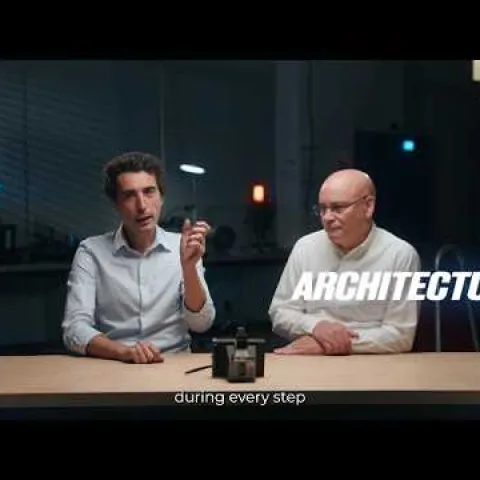
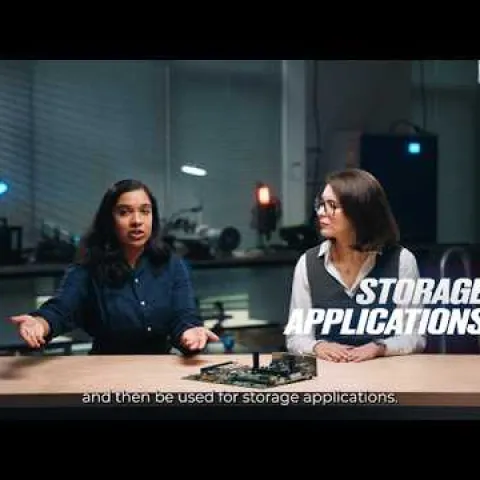
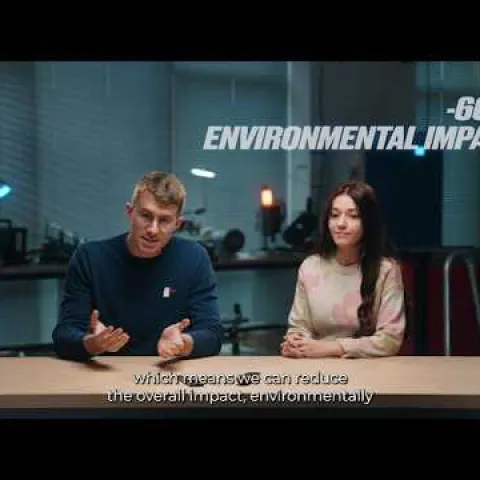
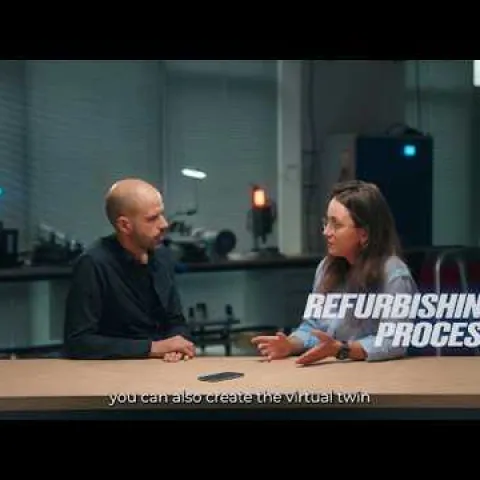
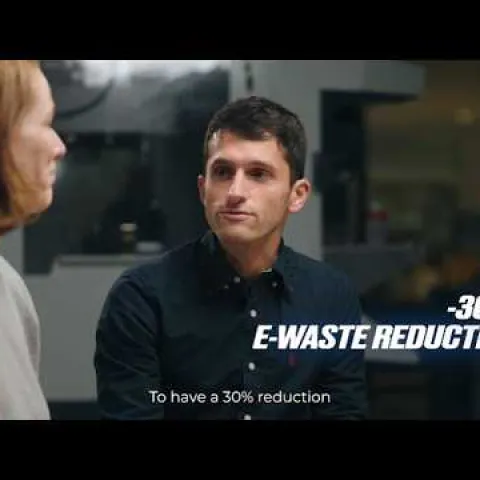
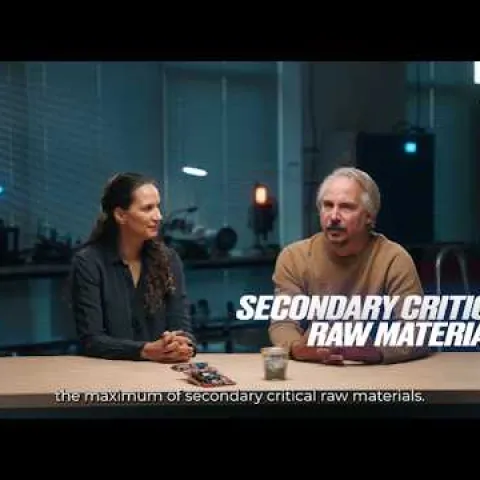
Virtual Twins for Collaborative Eco-Design
Co-leader of the work package "Tools and Techniques for green Electronic Components Systems by Design" with the CEA, Dassault Systèmes provides tools and methods supporting eco-design principles to the dedicated multi-disciplinary team of experts. The 3DEXPERIENCE platform provides a shared, cloud-based infrastructure for co-developing an electronic system, leveraging Lifecycle Assessment (LCA) from the chip to the printed circuit board, and finally to the electronic device.
Leveraging SIMULIA’s multi-physics simulation at various development stages, the team explored and evaluated innovative design options, optimizing product performance, reliability, and safety, all without any physical prototyping. Process simulation with DELMIA has been used to ensure and optimize repair and recycling procedures. On the backend, OUTSCALE delivered their robust, secure, sovereign, and customized IaaS (Infrastructure as a Service) cloud computing services, deployed on a trusted industrial infrastructure for all work package’s partners, namely ACORDE (Spain), Aniah (France), AT&S (Austria), Fraunhofer (Germany), IMEC (Belgium) and TST (Germany).
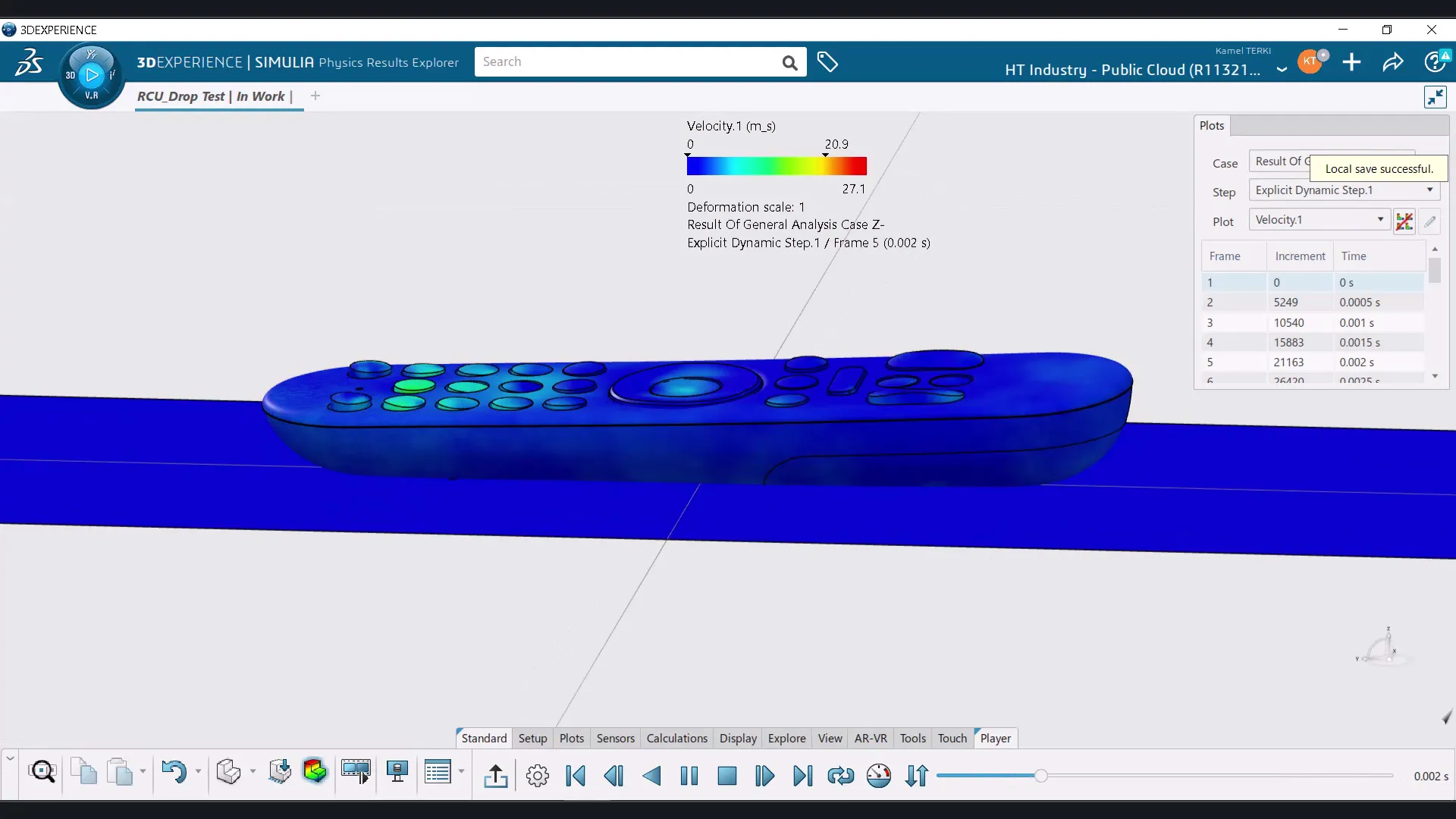
Assessments of the virtual product through several simulations (SIMULIA)
How to Improve the Environmental Footprint of Electronics for Real?
The Eco-design of a remote control as a real-world use case
Why was remote control chosen? It’s a common product that gathers all the sustainability concerns with the traditional elements of an electronic object (with plastic, energy need, embedded electronics, …). This use case illustrates five typical steps for such a product: concept research with circularity objectives, preliminary Life Cycle Assessment (LCA), research and development, simulation of the overall product and a complete LCA phase.
The concept research phase is complemented by defining the scope of eco-design, with the aim of linking creative solutions to their environmental impact across the product's lifecycle from very beginning. Defining circularity objective establishes targets for reducing environmental impacts throughout the product's lifecycle, while product performance, economic objectives, energy efficiency and the reduction of electronic waste are taken into account. Ideation can also appear to solve other negative imprints. As an example, the design team identified replacing the battery with a photovoltaic cell.
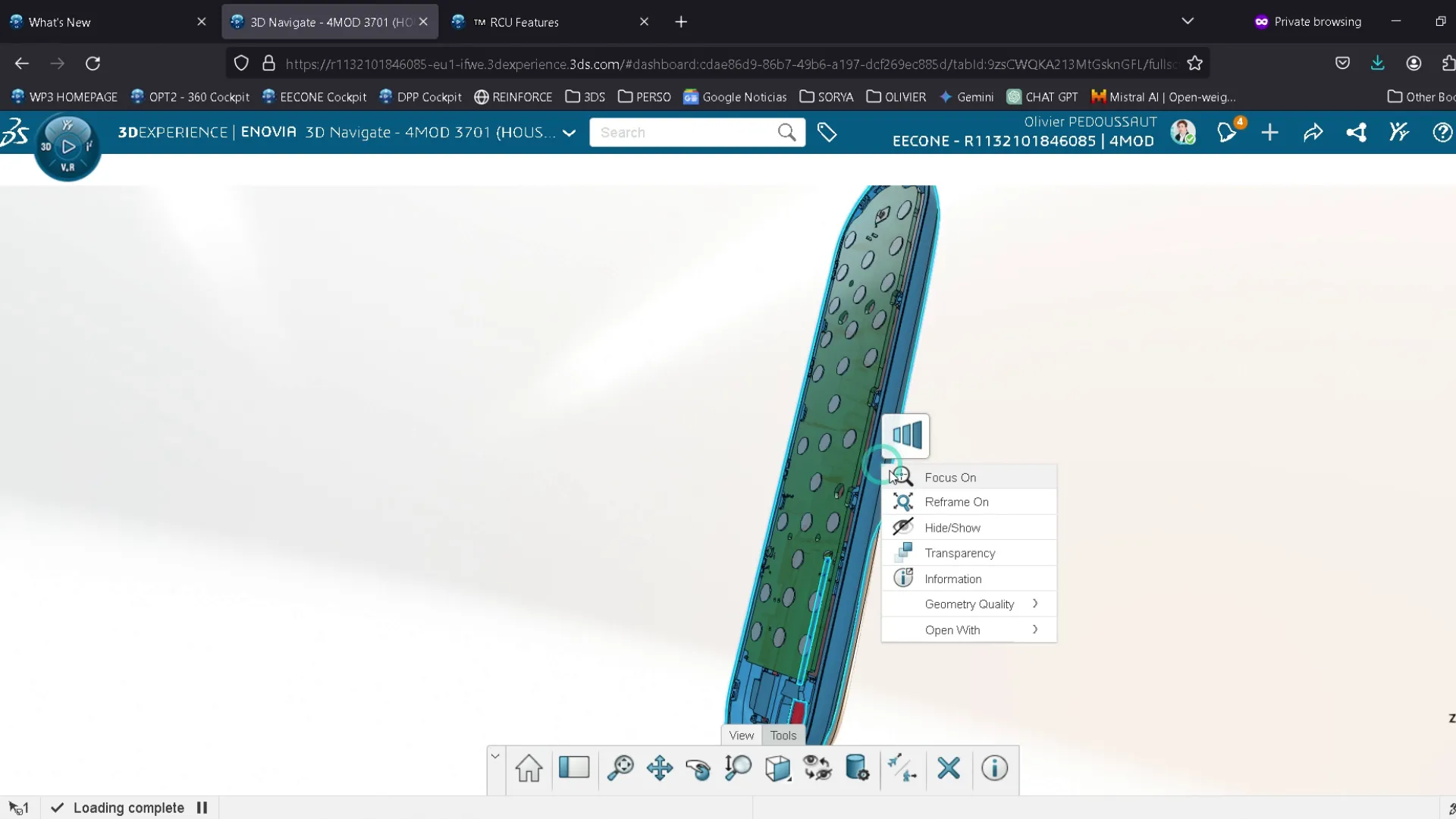
Design phase of the remote control in the 3DEXPERIENCE platform
The preliminary LCA, a rigorous scientific method used to systematically and objectively evaluate the environmental impact of a product's design and key enabler of eco-design, serves as a guide for these objectives and helps identify potential environmental critical points early in the design process.
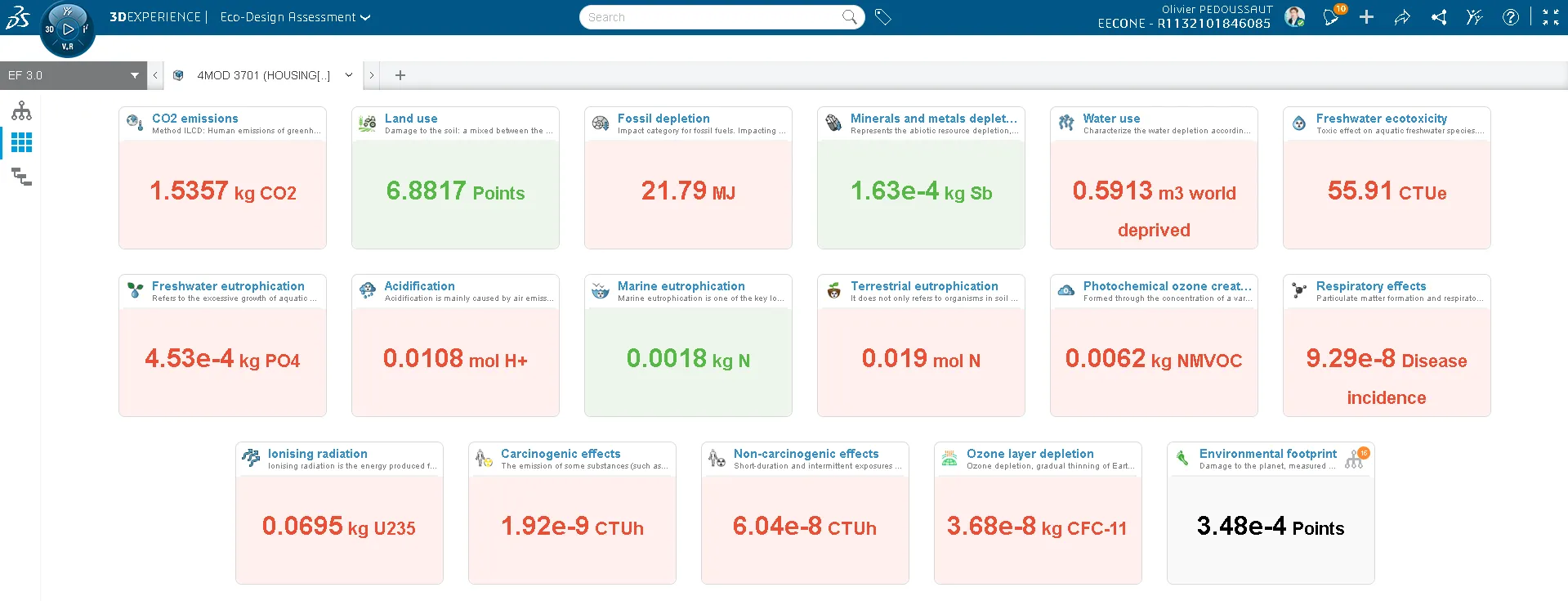
Relevant categories of the lifecycle assessment of the remote control in the 3DEXPERIENCE platform
The research and development phase focuses on developing solutions that meet the defined circularity objectives and circular electronics initiatives. To create a product with a low environmental impact, the design focuses on alternatives to minimize the materials used, explore sustainable options, and enabling easy disassembly.
The simulation phase aims to achieve high durability. Evaluating resistance over time allows for a reduction in waste through an extended lifespan and fewer replacements. During development, the virtual model can be manipulated and disassembled to test each recycling option, assess weight-reduction opportunities, and optimize material types.
The complete LCA phase allows for an in-depth analysis of environmental impacts throughout the product's life cycle to minimize their effects. Comparing different design iterations, for example in terms of weight reduction, energy consumption or battery removal, and benchmarking against optimization databases, provides valuable insight into the overall reduction of environmental footprint.
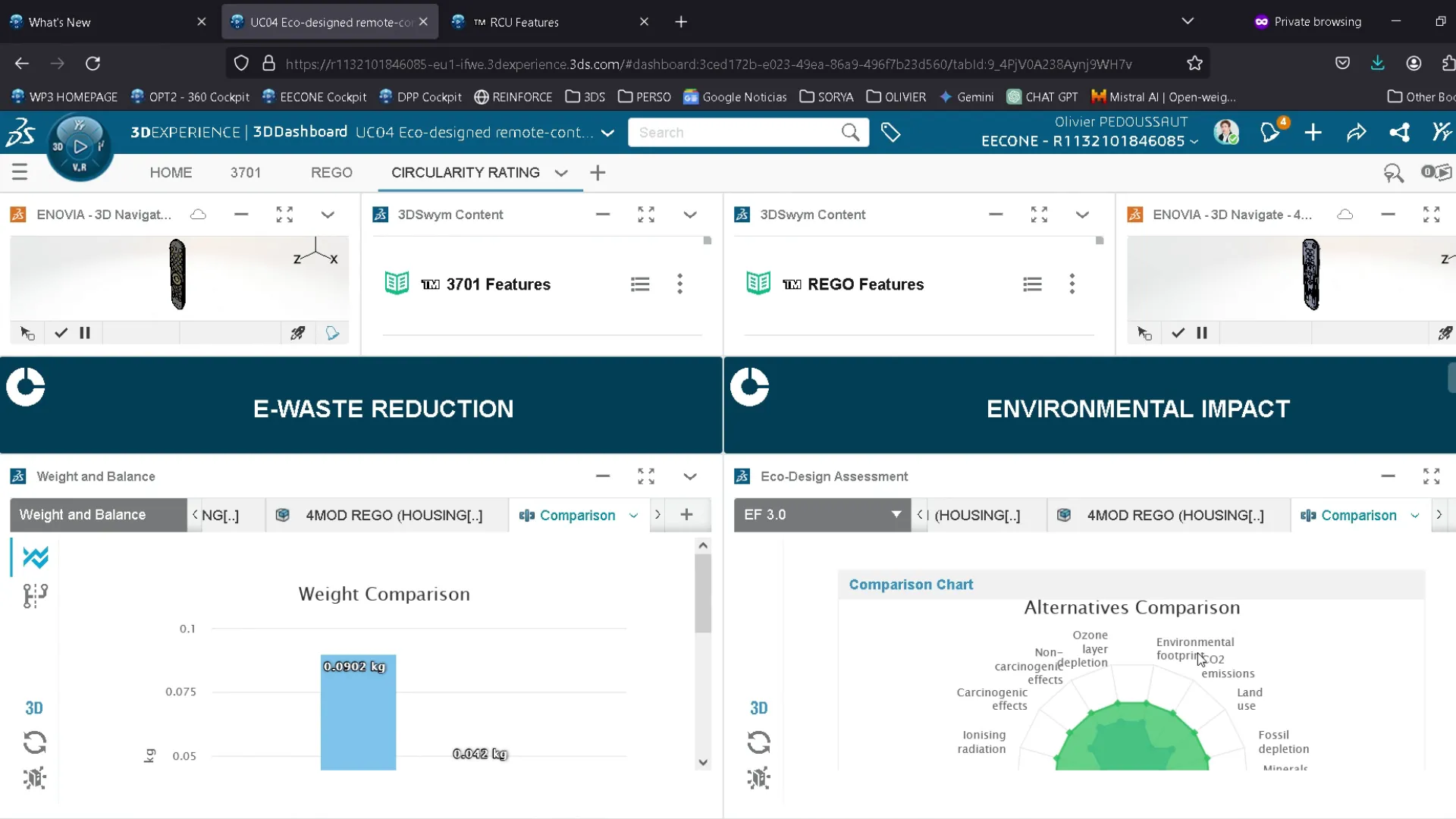
Lifecycle assessment of the remote control in the 3DEXPERIENCE platform
Small consumer devices represent a considerable share (33%, or 20.4 billion tons) of electronic waste. Only 12% of these devices are recycled, highlighting the urgent need for change.
EECONE Members
Companies
4mod Technology, Acorde Technologies Sa, Aniah, Arcelik A.S., At & S Austria Technologie & Systemtechnik Ag, Atea Sverige Ab, Bosch Car Multimedia Portugal Sa, Dassault Systèmes, Design And Reuse, Ecodc Ab, Get Electronique (Spherea), Infineon Technologies Ag, Infineon Technologies Austria Ag, Institut Mikroelektronickych Aplikaci (Ima), Interactive Fully Electrical Vehicles (Ifevs), Leonardo S.P.A., Luna Geber Engineering (Lge), Melsen Tech A/S, Nerosubianco (Nsb), Orbotech Ltd, Premo Sl, Robert Bosch Gmbh, Robert Bosch Kft, Smartsol Sia, Soitec Sa, Stmicroelectronics France, Stmicroelectronics Grenoble 2 Sas, Stmicroelectronics Srl, Swiss Vault Systems (Svs), Synano Bv, Tecnologias Servicios Telematicos Y Sistemas (Tst), Thales Dis France, Vitesco Technologies France, Weeecycling
Research organizations
Agencia Estatal Consejo Superior De Investigaciones Cientificas (Csic), Cea – Commissariat à L’Energie Atomique Et Aux Energies Alternatives, Cnrs – Centre National De La Recherche Scientifique, Csem – Centre Suisse D'électronique Et De Microtechnique, Dti – Danish Technological Institute, Fraunhofer Gesellschaft, Imec, Rise Research Institutes Of Sweden, Silicon Austria Labs (Sal), Utia
Universities
Charokopeio University (Hua), Institut Polytechnique De Grenoble, Özyegin University, Technicka Univerzita V Liberci (Tul), Technische Hochschule Deggendorf (Thd), Universita Degli Studi Di Perugia, Universite Catholique De Louvain, Universite Grenoble Alpes
FAQ on Circular Electronics
Discover More
LifeCycle Assessment
Find out how companies can quantify their environmental efforts and innovate sustainably with the right lifecycle assessment capabilities.
Sustainability
Circular Economy
Discover how circular economy practices can help businesses dare bold new business models that preserve environment for future generations.
Sustainability