Streamlined Path To Value
What happens once you opt for Virtual Twin as a Service? Let us walk you through a world of managed virtual twins.
VTAAS
By stepping into simulation and immersive virtual reality environments, staff at the American Hospital of Paris are shaping smarter, safer spaces for better patient care, before a single brick is laid.
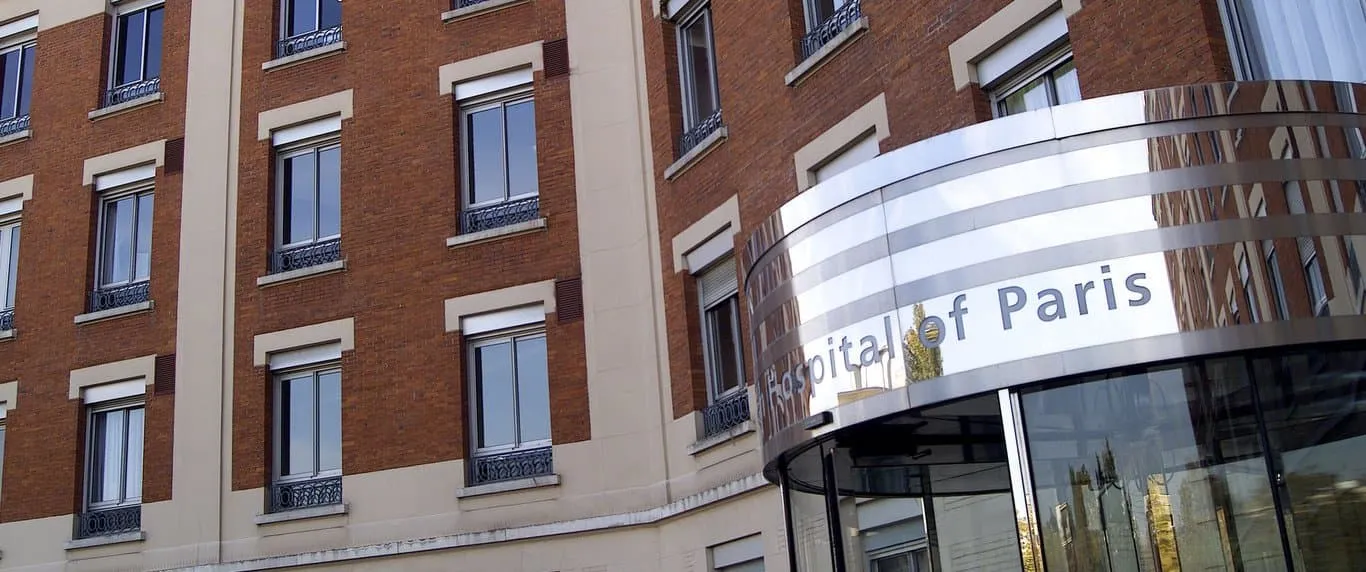
Based in Neuilly-sur-Seine in France, the American Hospital of Paris (AHP), has stood as a beacon of medical excellence and innovation for more than 120 years. Now, it’s building on that legacy with a bold modernization plan that will define the hospital’s next century.
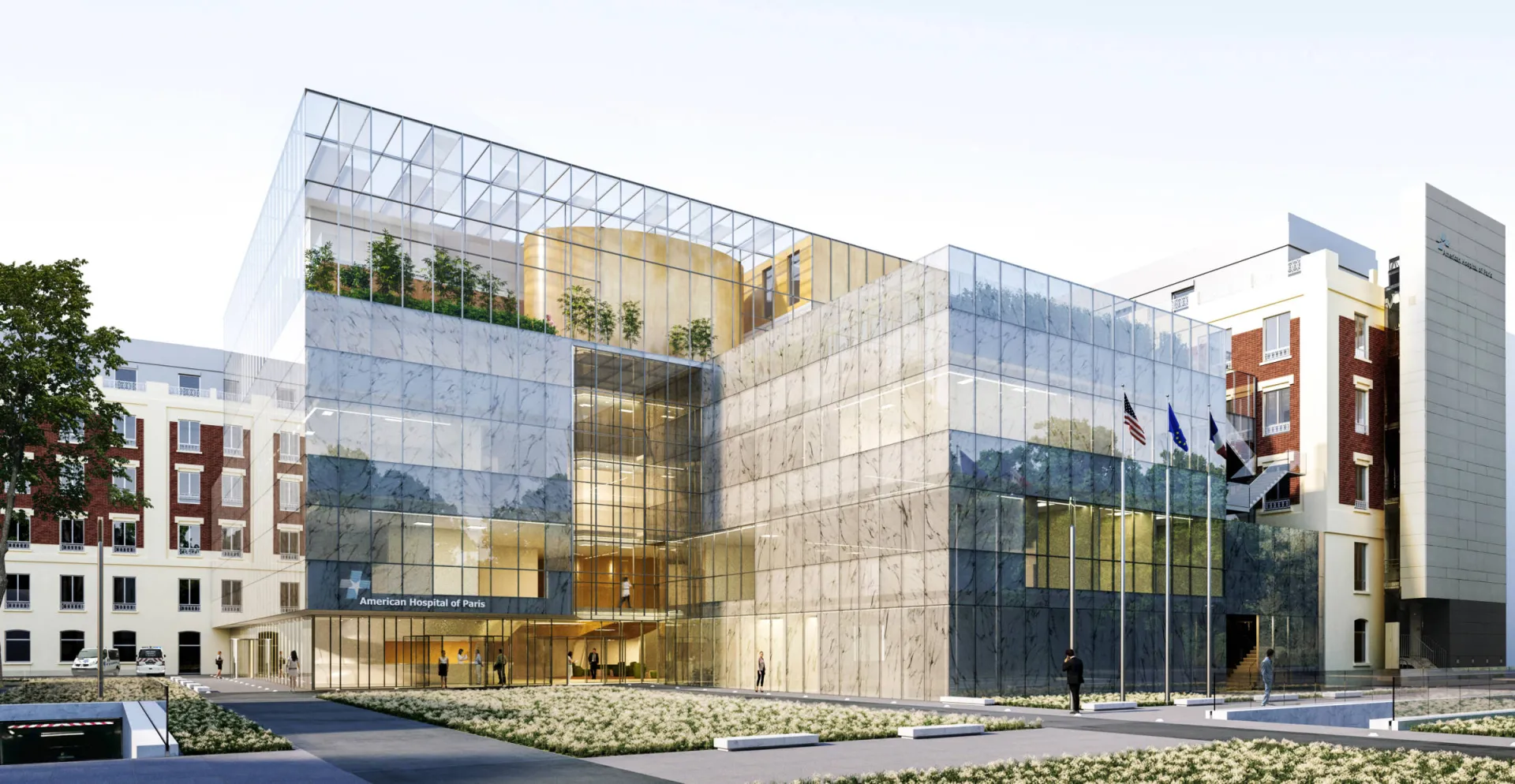
The €100 million (US$116 million) architectural transformation will see the hospital expand and redesign key areas, including its checkup center and operating rooms. The objective isn’t simply to build more space; it’s to create care environments that anticipate the real needs of patients and staff, enhance workflows, and support better outcomes.
In this new paradigm, room layout, patient flow, staff organization aren’t left to assumption. Everything from pathway organization, to the length of a hallway and ceiling-mounted equipment must be carefully considered for safety, efficiency and comfort. And that means simulating design concepts and patient flows, and involving clinical staff much earlier in the feedback process than traditional planning methods allow.
Working with Dassault Systèmes experts on this exciting project gave all of us a clearer view of the future, and the opportunity to shape it together.
AHP’s checkup center is a vital department for preventive care. The plan was to expand the facility’s footprint to three times its current size, allowing the hospital to double its patient capacity and perform up to 13,000 annual health checkups.
To guarantee better performance, the hospital wanted to be sure that the new layout would improve care quality, streamline workflows, and reduce stress for both patients and staff. Rather than rely on a conventional design approach, AHP wanted to simulate how the space would work in real life and incorporate insights from those who would use it daily.
At the same time, the hospital is constructing new buildings that will house predictive, preventive and rehabilitation medicine units as well as operating rooms. Here, precision is critical. The team needed to anticipate every movement within the operating rooms, post-op areas and corridors well before construction began.
Step into the American Hospital of Paris' immersive experience and explore the hospital future environment as if it was already built.
To bring its vision to life, AHP partnered with Dassault Systèmes and took advantage of its Virtual Twin as a Service approach through the Teleport 1/1 experience – a collaborative place that enabled the AHP teams to experiment their future workspace at a 1:1 scale, and assess their future care environments in terms of operations, workflow and spatial layouts. This gave the Hospital direct access to Dassault Systèmes’ advanced modeling and simulation capabilities for their project without having to skill up internally.
The initiative began with a consulting phase focused on the current checkup center. Dassault Systèmes’ team worked closely with clinicians and administrative staff to understand existing pain points, from disjointed patient flows to crowded waiting areas, so it could model and simulate future improvements.
Using architectural plans, building information modeling (BIM) data and supplier proposals, Dassault Systèmes used DELMIA to propose optimized scenarios and create detailed virtual twins of the checkup center, operating rooms and recovery areas, complete with all equipment. These virtual models were not just visual representations, they were realistic interactive environments that ran through typical hospital scenarios: patient check-ins during peak hours, emergency operating room transfers, and staff handovers. Flow simulations revealed how the hospital design would hold up under stress, how teams would move and collaborate, and where potential friction points might arise. Healthcare professionals could then explore these concepts using immersive virtual reality (VR) headsets. This multi-sensory experience aimed to engage them in a hands-on way and help to elevate knowledge and knowhow by bridging the gap between theory and practice.
In a series of interactive workshops, medical professionals stepped into life-sized simulations of the future hospital. Surgeons tested room configurations by “walking” through virtual operating theaters. Nurses tried different layouts for storage and equipment. Anesthesiologists evaluated the positioning of monitoring systems and lighting. All key stakeholders could experience the future spaces as if they were already built.
More than 40 participants took part in these sessions, alternating between virtual walkthroughs and collaborative debriefs to offer feedback. From here, ideas were tested and layout adjustments were made, helping to accelerate change management.
The result was an entirely new way of optimizing hospital operations. Immersive design sessions highlighted practical issues that traditional architectural plans might have overlooked. A door positioned too close to an operating table would interrupt movement. A medical light installed over the wrong bed could obstruct other equipment. Everything was simulated and fine-tuned to improve comfort and visibility, helping to avoid costly adjustments later. For example, relocating a €10,000 (US$11,600) light fixture during the planning phase avoided as much as €100,000 (US$116,000) in downstream rework including engineering studies and managing certifications.
By blending hands-on knowledge with simulation and VR, the hospital has made its future staff and patients central to the planning process. This involvement made sure that design decisions were grounded in real-world clinical needs – resulting in smoother workflows for caregivers, better coordination between teams, and more welcoming, stress-reducing spaces for patients. It allowed AHP to validate its choices before construction begins, avoiding inefficiencies that could compromise care delivery. More than 100 comments and improvement suggestions were collected from the interactive sessions, many of which have led to direct changes in the design. The result is a new way of working combining consulting, simulation and immersive experiences to make smarter decisions earlier and enhance operational workflows and clinical outcomes.
“Being able to step into a space that doesn’t yet exist, and walk through it, interact with equipment, and try out different layouts was an extraordinary experience,” said Professor Robert Sigal, CEO of the American Hospital of Paris. “Working with Dassault Systèmes experts on this exciting project gave all of us a clearer view of the future, and the opportunity to shape it together.”

The American Hospital of Paris is a not-for-profit multidisciplinary healthcare institution of recognized public benefit, accredited by both the American Joint Commission and the French Haute Autorité de Santé. The organization brings together, in a single location in Paris, the best in French and American medical practices and innovations. It offers patients, whether French or international, exclusive technologies and therapies that are recognized for their efficacy and relevance by the world’s most eminent international scientific and medical authorities.
For more information: https://american-hospital.org/en
What happens once you opt for Virtual Twin as a Service? Let us walk you through a world of managed virtual twins.
VTAAS
Virtual Twin Experiences for Sustainable Innovation – Helping People Live Healthier Lives
Industry
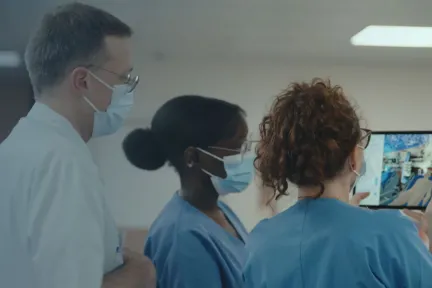
Innovative training powered by augmented reality and virtual twin technology transforms infection prevention at Saint-Louis Hospital AP-HP.
Customer Story
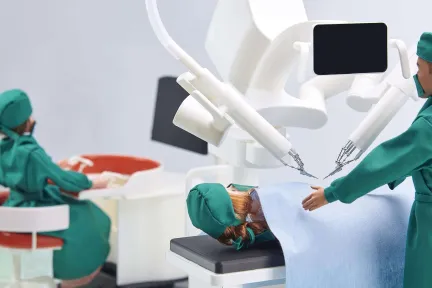
Japanese medical device manufacturer F.MED uses the 3DEXPERIENCE platform on the cloud to develop a microsurgery assistance robot system.
Customer Story
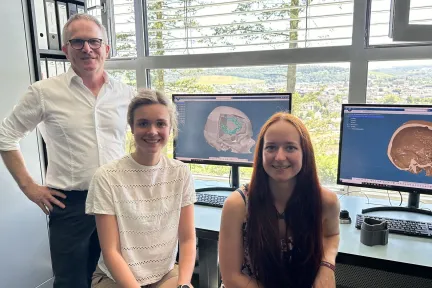
Trier University of Applied Sciences uses the 3DEXPERIENCE platform for its HAMLET project, which supports students in their neurosurgery training.
Customer Story
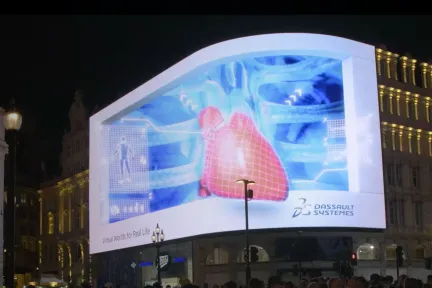
Discover how virtual twin technology transforms patient care, research and medical innovation.
Virtual Twin