
Plan to Win: Assume Control and Thrive
Explore the page to discover proactive strategies and tools to optimize your automotive supply chain for better resilience.
The growing complexity of vehicles and the rapidly evolving automotive supply chain landscape have led to an expansive, interconnected supply chain network with an inherent fragility. With supply networks extended across global locations, a single disruption at any stage can trigger a chain reaction. For example, delays at an inbound center or a supplier capacity gap can impact production schedules and delivery deadlines.
Without a comprehensive understanding of the supply chain network or a clear strategy to manage disruptions, there's a higher risk of exposure, ultimately impacting profit margin. Proactively taking control of your supply chain will enable you to anticipate risks, accelerate response time and mitigate supply chain disruptions with minimal impact on operations and customer service levels. Find out why supply chain resilience is the answer.
Defining Resilience
Enabling Resilience
Benefits of Resilience
Defining Resilience

87% of supply chain professionals plan to invest in supply chain resilience and 89% intend to improve agility in supply chain management.
A Gartner research shows that manufacturers who achieved higher long-term growth over their industry peers during supply chain disruptions were better at preserving business continuity and avoided reactive responses to macroeconomic conditions. Instead, these industry leaders took advantage of uncertainties to break away from competitors.
Achieving supply chain resilience is a strategic and proactive imperative that requires the optimization of all planning levels and horizons – from strategic network planning to production scheduling. End-to-end resilience will deliver tangible results through:
- Early detection of risks to mitigate disruptions
- Optimized decision-making for rapid response
- Continuous improvement of planning and execution
Supply chain disruption is now a constant rather than an exception in business operations. More CEOs increasingly view the supply chain as a critical point of competitive differentiation and there's a shift toward resilience rather than the standard focus on cost and service. As such, supply chain management strategies must adapt and evolve to remain relevant.

Take the Reins With Digitalization
McKinsey reports that 43% of enterprises will continue to digitalize and integrate innovative technologies into enterprise-wide systems.
As the focus shifts to improving end-to-end resilience, supply chain digitization efforts are entering a new phase. Digital transformation is central to a supply chain that can thrive and progress amid internal and external disruptions by providing:
Enabling Resilience
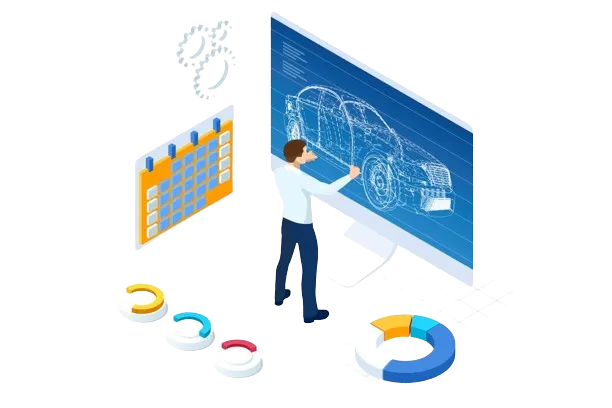
61% of respondents in a Gartner survey are investing in technology for a competitive advantage.
Emerging and maturing supply chain technologies are critical in building a resilient supply chain, particularly technologies that improve decision-making. The following technologies in a digital ecosystem will support greater efficiency and better outcomes.
- Modeling and simulation
- Advanced analytics
- Product lifecycle management

Modeling and simulation
Integrating the entire supply chain into one virtual model provides you with a consistent and consolidated view to manage operations. Running simulations on the virtual twin model provides you with better insights into the supply chain and the landscape in which it operates so that you can forecast a feasible strategy and plan ahead.
As a replica of the physical supply chain ecosystem, the virtual twin allows you to run a what-if analysis to explore different configurations and produce an optimal plan to futureproof the supply chain. Validated plans can then be automatically shared with all teams responsible for execution in a responsive and agile environment.
Advanced analytics
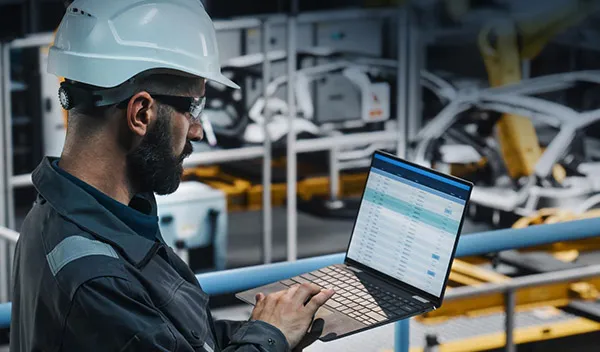
Gartner reports that over 75% of supply chain management solutions will utilize advanced analytics, artificial intelligence (AI) and data science by 2026 to assimilate large volumes of forecasting data and generate executable insights for a futureproof strategy.
Leveraging AI algorithms in inventory management and applying AI-driven forecasting will help improve the following KPIs:
- Up to 65% reduction in lost sales and product unavailability
- 5% -10% reduction in warehousing costs
- 25% - 40% reduction in administration costs
Product lifecycle management
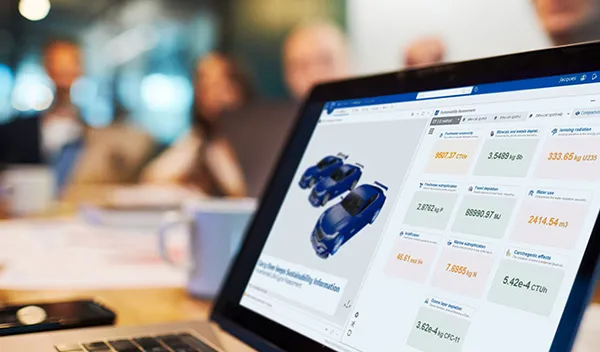
A platformized PLM solution that links the physical flow of products with the flow of information will provide complete documentation of all supply chain and production stages to ensure data consistency and accuracy. Establishing a centralized data repository to store all product-related information provides all stakeholders with access to crucial information for:
- Improved transparency
- Better quality management and compliance
- Increased productivity
- Reduced time-to-market
Robust and Resilient: Production Planning Optimization To Mitigate Disruptions
Watch this webinar replay and learn how to:
- Analyze multiple supply chain scenarios with automated production planning
- Optimize service levels while reducing inventory
- Prioritize the allocation of available material and resources
- Adapt to customer order cancellations or delays
Benefits of Resilience

Optimal supply chain management requires a smart approach that connects manufacturing and engineering processes with the operations planning process for supply chain resilience.
Dassault Systèmes’ 3DEXPERIENCE® platform and suite of solutions provide a key competitive advantage by connecting business strategy with operations.
With information visibility and the breaking down of siloes, decision-makers are better positioned to align business strategy with operational capacity. End-to-end documentation, collaboration and traceability on a unified platform also offer a comprehensive perspective on the feasibility of corporate strategies and bring value to the following areas:
Collaboration on the integrated 3DEXPERIENCE platform equals more resilient and agile supply chain operations. Let's see what some of Dassault Systèmes' automotive customers have achieved:
A 360° bird's eye view of projects in 18 global manufacturing plants

Dassault Systèmes' DELMIA production planning and scheduling solution helped Novares achieve:
- 98.5% of group-wide customer service level
- Over 90% of supplier service level
- 30% - 40% less inventory
- Elimination of exceptional shipments
- Reduced obsolescence with average inventory levels of eight days
- Better accountability, control and anticipation across its entire supply chain
An integrated Material Requirements Planning system
Dassault Systèmes' DELMIA Ortems planning solution enabled Ortakci Cam to:
- Plan and schedule with finite capacity across different timelines
- Monitor capacity occupancy and idle status in real time
- Optimize capacity planning, material planning and load-balancing
- Run what-if simulations to reschedule production lines
- Respond quicker to disruptions
It's Time To Take Control
The automotive supply chain will be constantly challenged to deal with global disruptions.
It's no longer a question of whether you need to build resilience to withstand disruptions.
Instead, proactively building better resilience empowers you with a competitive edge – to identify and capture opportunities, take preventive measures quickly and, ultimately, preserve business continuity and profit margin.
With a proven track record of successful partnerships with global automotive industry leaders, Dassault Systèmes is uniquely positioned to support a connected and collaborative supply chain ecosystem to become a future-forward growth driver.
Explore more insights here.