
Business Services
Optimize service operations and accelerate service innovation to improve the customer experience.
Industry
With integrated planning and optimization solutions, Dassault Systèmes empowers MRS Logística to transform rail operations, optimize resources and build a more resilient, efficient freight network.
Every day, MRS Logística moves thousands of tons of iron ore, steel, cement and agricultural goods across more than 1,600 kilometers (900 miles) of railway in Brazil’s southeastern corridor. Its network connects the states of Rio de Janeiro, Minas Gerais and São Paulo, and links inland mines and manufacturing hubs to key ports and consumer centers, playing a pivotal role in Brazil’s economy.
Like many countries, Brazil is working hard to reduce carbon emissions and take the pressure off its busy highways. As part of this effort, more companies turn to rail as a cleaner, more efficient way to move large volumes of goods over long distances. This shift brings big opportunities, but it also means MRS Logística must be ready to handle more diverse cargo types and keep everything running smoothly as demand grows.
“We currently have a fleet of 20,000 wagons and 900 locomotives, and our mission is to grow our general cargo operations,” said Daniel Dias, CIO of MRS Logística. “We want to be a strong alternative for moving freight in a more sustainable way, both by emitting fewer carbon emissions overall compared to trucks and continuously reducing our fuel consumption, and deliver a greater contribution to society.”
By 2056, MRS Logística expects to double the amount of cargo and container traffic it handles, reaching 109 million tons. As freight demand rises and operations grow more complex, the company has outgrown traditional planning tools and disconnected systems. To rise to the challenge, it is undergoing a sweeping digital transformation, using Dassault Systèmes’ solutions to gain deeper insight into its operations and lay the groundwork for a smarter, more sustainable railway system.
As more freight shifts from road to rail, the industry faces growing pressure to step away from outdated, manual processes. MRS Logística sees this as an opportunity to lead the way. By embracing a digital transformation, the company aims to modernize its own network while setting a benchmark for others to follow.
“One of the main challenges we face today is turning a relatively traditional industry into a more modern, agile and digital one,” Dias said. “We have many legacy systems, often developed in house. We believe there’s a lot to learn from other industries and we can bring that knowledge into rail. To grow in new cargo segments, we must be faster and more competitive.”
MRS Logística is beginning to harness Dassault Systèmes’ DELMIA Quintiq portfolio of integrated rail service delivery solutions to improve its operations and integrate previously siloed functions. This industry solution covers everything from rail freight, crew, fleet, service and network planning and optimization, yard management and rolling stock maintenance.
Each solution addresses a different layer of complexity in MRS Logística’s network, enabling more effective use of infrastructure and resources. Crew planning helps prevent trains from sitting idle due to crew shortages, while also easing labor-related friction. Yard planning speeds up loading, boosting throughput without adding more trains, so MRS Logística can do more with the resources it already has. This digital foundation supports the company’s long-term goals, including better traffic control, asset allocation and infrastructure lifecycle planning.
“Dassault Systèmes technology is an important part of our digital transformation,” Dias said. “I believe their solutions can help us transform our network into a more agile one that can better serve our customers, especially those who currently use other modes of transport.”
DELMIA gives MRS Logística greater visibility across its operations, helping planners optimize crew schedules and fleet resources while supporting the people who keep the railway running every day.
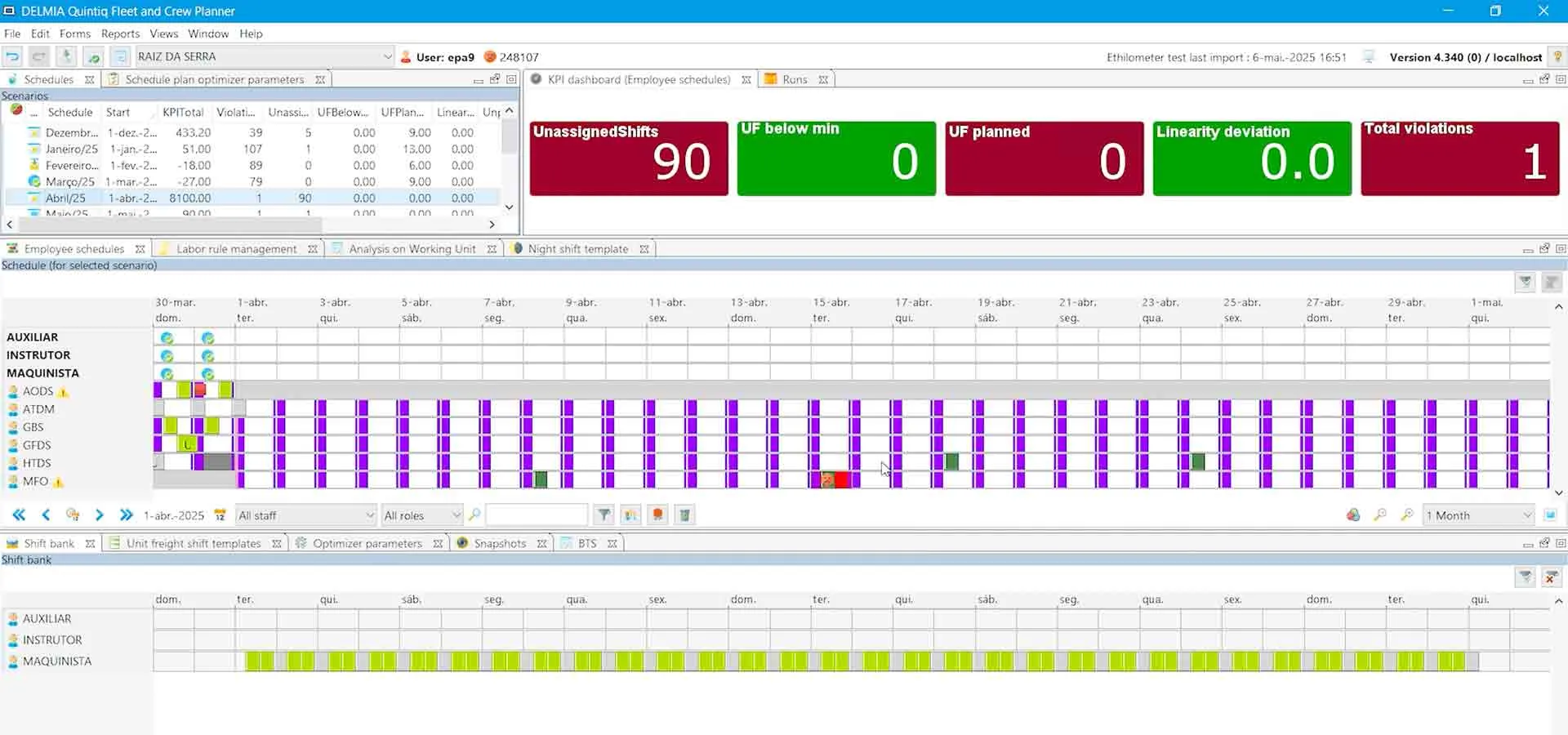
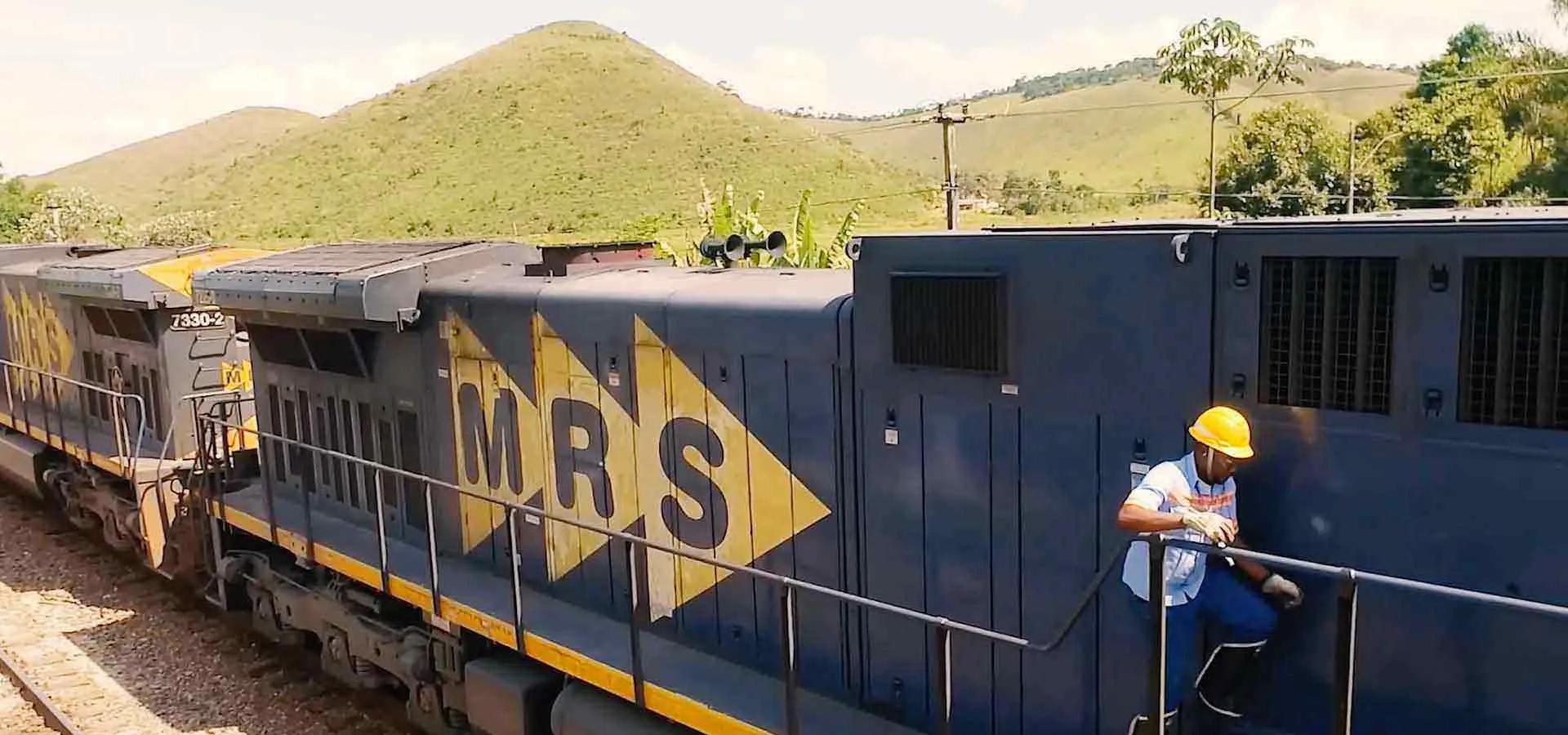
One of MRS Logística’s biggest planning challenges is managing thousands of crew shifts across its expansive network. Its legacy process was manual and time consuming, requiring weeks of effort and offering little flexibility when plans needed adjusting on the day due to all manner of constraints such as loading and unloading delays at mining sites, port queues and the sheer distances its trains travel. When so many variables are in play, plans can change constantly, demanding a fast response to keep crews where they’re needed.
MRS Logística worked with Dassault Systèmes to develop a purpose-built driver shift planning solution. The application integrates operational data, labor rules, employee preferences and resource availability, allowing planners to model different shift scenarios and optimize crew schedules based on actual needs.
“With good driver scheduling, we can keep the entire operation running regularly,” Dias said. “We now plan ahead much more effectively, make better use of all assets, and give our train drivers a better quality of life as there’s more predictability in their work schedules. Before, planning took about a week and required 30 people. Now, it can be done within a few seconds and is much more reliable, freeing up our people to focus on higher-value work.”
Dassault Systèmes is an extremely important partner to us. The team there understand our needs very well. Together, we can develop really interesting solutions that meet the needs of not just MRS Logística, but the entire rail industry worldwide.
MRS Logística is solidifying its leadership in Brazil’s rail freight sector. Backed by a multi-billion Brazilian real investment plan and a renewed concession agreement running through 2056, the company is expanding capacity, improving performance and introducing new technologies across its network.
From smarter shift planning to streamlined yard operations, MRS Logística is putting the right systems in place to build a more resilient, responsive rail network. And with Dassault Systèmes as its technology partner, the company is well-positioned to adapt to rising freight demand and deliver on its long-term vision.
“Dassault Systèmes is an extremely important partner to us,” Dias said. “The team there understand our needs very well. Together, we can develop really interesting solutions that meet the needs of not just MRS Logística, but the entire rail industry worldwide.”
MRS Logística is a Brazilian concessionary that controls, operates and monitors the Southeastern Federal Railroad Network. The company has been in operation in cargo railway transportation since 1996. It interconnects the states of Rio de Janeiro, Minas Gerais and São Paulo, spanning the region that is responsible for around 55% of Brazil’s GDP and is home to some of the country’s largest industries.
For more information: www.mrs.com.br/contact-us/
Optimize service operations and accelerate service innovation to improve the customer experience.
Industry
Kinetic Vision uses SIMULIA tools and the 3DEXPERIENCE platform on the cloud solution to create virtual twins of clients’ products and hundreds of simulations in a brief period of time, enabling clients to thoroughly test their products without requiring physical prototypes.
Customer Story
To keep track of all its assets and resources, Lufthansa Cargo centralized its inbound and outbound cargo planning and scheduling with DELMIA Quintiq.
Customer Story