Highly Virtual Prototyping
Accelerate development & increase device reliability by maximizing the use of virtual validation
Solution

Smarter Designs, Faster Development and Seamless Collaboration with Braided Strategies.
In high-tech, simulation isn't just a specialized task; it's a decision-making engine central to the product innovation process. When projects demand tens of thousands of design iterations in development cycles as short as 3 to 4 months, every handoff, queue and rework loop becomes a business issue: it delays time to market, inflates prototype spend and raises certification and compliance risk.
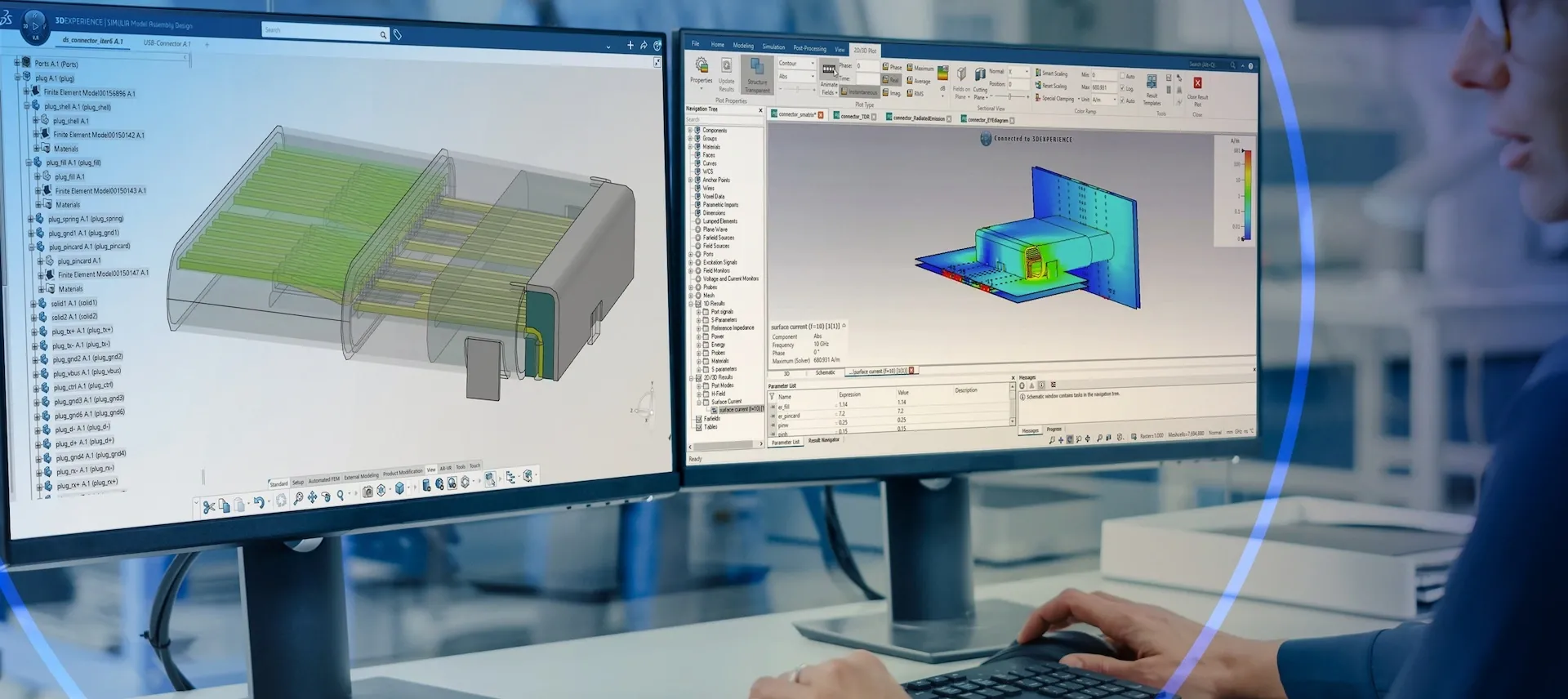
Yet the reality in many organizations is challenging. More than 70 percent of simulation time is still consumed by non-value-added work such as model preparation, manual meshing, repetitive setup and post-processing. Disconnected tools and sequential discipline by discipline execution turn cross-discipline interactions into late surprises, exactly when change is most expensive.
Smarter Designs, Faster Development and Seamless Collaboration with Braided Strategies.
Leading high-tech innovators are moving toward a unified generative simulation strategy by braiding three critical capabilities that scale across engineering applications. The goal is clear and quantifiable: shorten development cycles, reduce physical prototypes and raise design quality – all while maintaining traceability and protecting intellectual property (IP). The three braids that support multiple use cases are:
Download the full white paper for a detailed roadmap, recommended practices, and additional high-tech engineering examples that show how to scale generative simulation across your organization.
Learn more about how our industry solutions can help you to achieve your professional ambition and business objectives.
Accelerate development & increase device reliability by maximizing the use of virtual validation
Solution
Anticipate the future, and embrace sustainable innovation in your engineering today
Solution

Foster efficiency and agility in defining a portfolio of configurable products and solutions
Solution

High-Tech Smart Factory enables to transform your planning and global operations to gain responsiveness, flexibility, and efficiency
Solution
Many of the greatest automotive innovations originate from the toughest, most competitive tests that vehicles are put through. These are all about staying ahead of the competition. The same is true for the automotive semi-conductor business. Taking part is simply not enough. So, how will you ensure that your business is a winner?
Article
Riding the IoT-wave bringing new opportunities through new markets, customers and applications
Market Segment
Shorten the stand-up time of configurable, sustainable data centers through virtual twin experiences.
Article
Modular supply chains make it easier for manufacturers to master complexity and strengthen their supply chain resilience against volatility.
Article
Secure an advantage to deliver best-in-class batteries with the power of virtual twins.
Article