
Transforming High-Tech Innovation with Generative Simulation
Smarter Designs, Faster Development and Seamless Collaboration with Braided Strategies.
Article
Connect design, simulation, requirements and engineering knowledge to accelerate the development of smarter, safer and more reliable products.
Connected objects combine electronics, software, sensors, mechanical design, thermal management and electromagnetic performance in increasingly compact and complex products. Engineering teams need to understand these interactions earlier, faster and with greater confidence.
Unified modeling and simulation brings design and simulation into one shared engineering context. Your teams can collaborate more effectively, explore more alternatives, reuse validated methods and make better decisions before physical testing begins.
Empower your engineering teams for more speed efficiency and performance.
Connected objects are no longer developed through isolated mechanical, electronic or software contributions. Performance, reliability, user experience and manufacturability depend on how multiple domains interact across the product lifecycle.
When design and simulation remain disconnected, teams face fragmented decisions, repeated handoffs, late-stage rework and slower innovation cycles. A synchronized approach helps your engineering teams move from sequential validation to continuous co-engineering.
Traditional development often treats simulation as a downstream validation step. By the time issues are discovered, design changes can be costly, schedules are already under pressure and teams may lack full traceability between requirements, assumptions and results.
Unified modeling and simulation changes the process. It connects product models, requirements, simulation methods, configurations, results and engineering know-how in a shared environment. Your teams can evaluate more options earlier, streamline expert workflows, reuse proven methods and maintain decision continuity as designs evolve.
Disconnected design and simulation create late discovery, rework and slow decision-making.
Unify models, requirements, simulation methods and results in one engineering context.
Accelerate interations, improve tracebility and make better-informed product decisions.
Connected objects always involve multiple physics domains. Structural performance, heat dissipation, fluid flow, electromagnetic behavior, vibration, signal integrity and material reliability can all influence final product performance.
Unified modeling and simulation helps your teams understand these interactions together, rather than resolving them through disconnected analyses and late physical testing. Engineers can evaluate how design decisions affect performance across domains and make trade-offs earlier in the development process.
This is especially important for compact, connected and intelligent products, where thermal constraints, electronics packaging, mechanical durability and electromagnetic performance are tightly linked.
Industrial-grade artificial intelligence needs to connect to reliable models, validated simulation processes and reusable engineering knowledge.
In unified modeling and simulation workflows, AI and machine learning can help you accelerate simulation setup, support optimization, guide trade-off studies and make expert methods more accessible across engineering teams. This allows your teams to explore more design alternatives while keeping simulation connected to requirements, configurations and decision context.
AI-enabled engineering is not only about speed. It is about helping your teams use trusted engineering knowledge more effectively, so they can make better decisions earlier and with greater confidence.
Connected object development programs often span multiple disciplines, locations and product variants. A shared engineering environment helps teams keep models, simulation results and decisions synchronized as requirements change, designs evolve and new product configurations emerge.
With secure, cloud-enabled engineering workflows, your teams can access the right models, methods and results wherever they work. Simulation specialists can focus on advanced studies and process improvement, while designers and engineers can use guided workflows to validate more decisions earlier.
When engineering know-how isn't captured and traced back to the decisions that shaped a product, it disappears with employee turnover, project handoffs and time, forcing new product teams to relearn lessons the business has already paid for; unified modeling and simulation closes this gap by keeping models, requirements, reasoning and results contextualized in one environment, so knowledge is preserved, understood and carried forward into every new design.
Unified modeling and simulation gives connected object teams a trusted engineering context where design, simulation, requirements, results and know-how stay aligned.
This same foundation supports a broader move toward 3D UNIVERSES: virtual twin-based environments where engineering IP, industrial AI and real-world feedback help teams generate, validate and improve products with greater speed and confidence.
Rather than treating complexity as a barrier, connected engineering workflows help turn complexity into a space for exploration, learning and better, more sustainable product decisions.
Smarter Designs, Faster Development and Seamless Collaboration with Braided Strategies.
Article
The era of purely physical products is coming to an end – the products of the future will be software-defined and circular by design. 3D UNIVERSES provide engineers and designers with the AI-powered generative design capabilities and virtual-twin-based engineering needed to get working on tomorrow, today.
INSIGHTS
Get expert insights on how businesses can empower their engineering teams to achieve greater speed, efficiency and performance through MODSIM.
Podcast
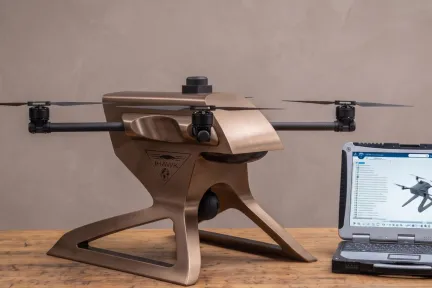
iHawk Global redefines container yard visibility with autonomous drones and ground robots which are designed using a simulation-first approach on the 3DEXPERIENCE platform.
Customer Story
The Antenna Company uses SOLIDWORKS and SIMULIA to develop high-performance antenna design for 6G networks using nature-inspired, energy-efficient shapes.
Customer Story
Bring design, simulation, requirements and engineering knowledge together to accelerate connected object development. Explore how unified engineering workflows can help your teams improve collaboration, reduce rework and make better product decisions earlier.
Reach us out to speak with an expert or schedule a demo.