



Terre adélice
See how Terre adélice uses the 3DEXPERIENCE platform and ITEROP to digitize business processes, saving 700+ hours annually and boosting operational efficiency.
Customer Story
Serenity streamlines condominium management and secures its teams' daily operations with Dassault Systèmes’ 3DEXPERIENCE ITEROP
Managing condominiums is built on trust. Property owners rely on management companies to oversee the administrative, legal, technical and financial aspects of their shared assets with accuracy and professionalism. At the same time, property managers must comply with strict legal deadlines, handle an ever-growing volume of documentation and meet increasing expectations for responsiveness from co-owners.
For smaller, human-scale organizations, the ability to make internal processes more reliable, without growing headcount, has become a key differentiator. It was with this in mind that Serenity chose to orchestrate its operations with the 3DEXPERIENCE ITEROP solution from Dassault Systèmes.
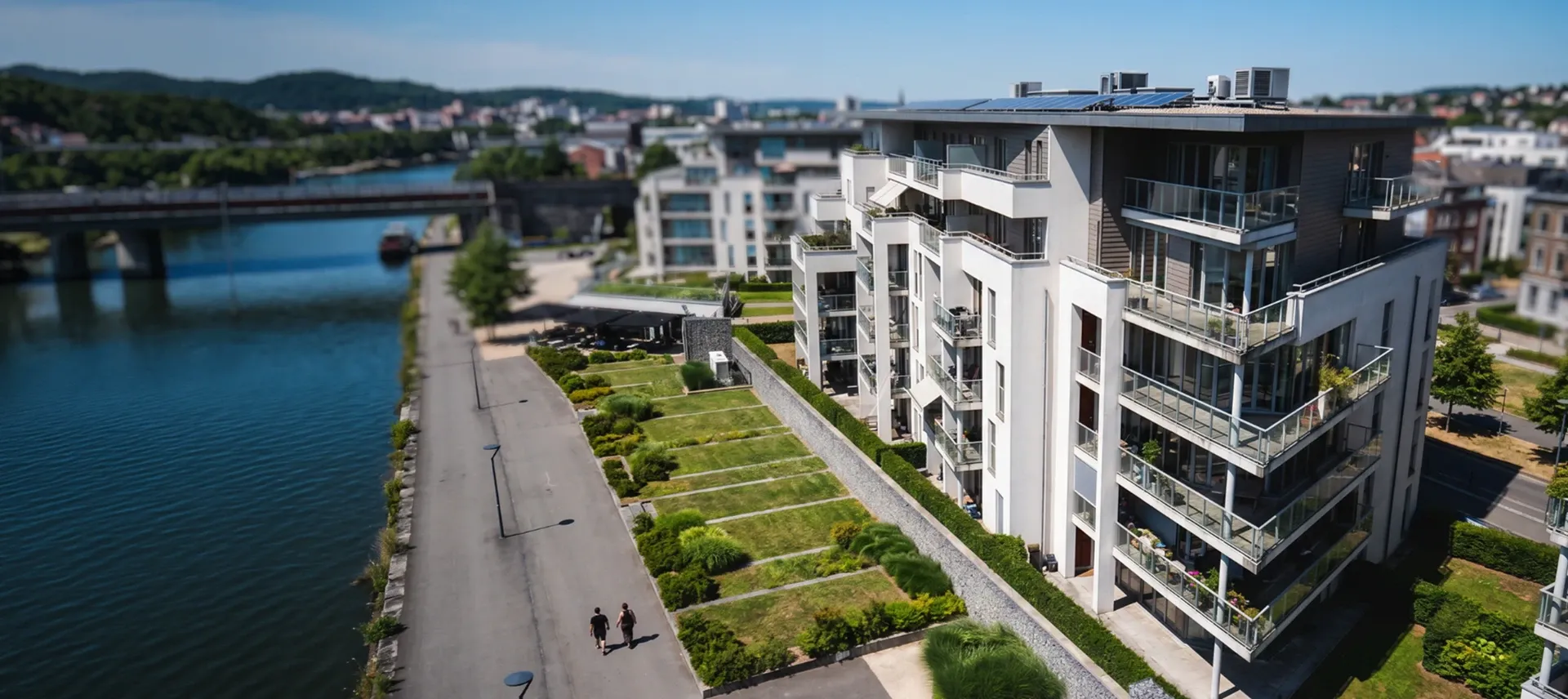
Founded around ten years ago by Tony Moïse, Serenity is a property management company dedicated exclusively to condominium management across the Walloon Region of Belgium. With offices in Namur, Libramont and Arlon, and a fourth location soon opening in Charleroi, the company has steadily expanded while maintaining a strong commitment to service quality.
Today, Serenity manages more than 80 condominium associations ranging from small four-unit buildings to large residential complexes with several hundred apartments. Its internal team of around ten employees is supported by external accounting partners who help deliver reliable, high-quality services to every property under management.
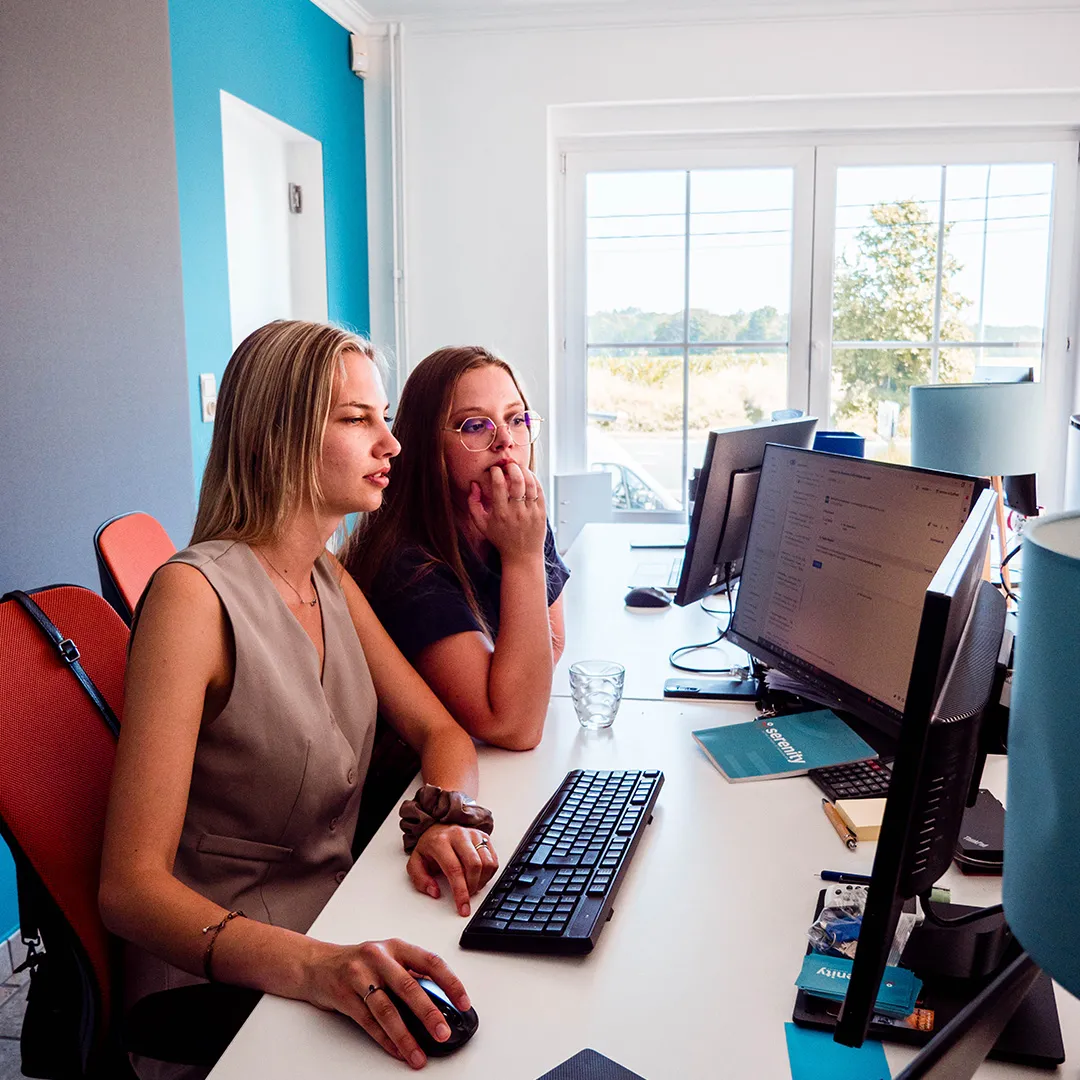
Since its creation, Serenity has built its reputation on transparency, rigor and professionalism, with the ambition of elevating the image of a profession that is often underestimated. To support this vision, the company established a clear organizational model separating property managers, who interact daily with co-owners, from a dedicated support team responsible for accounting, administration and the organization of general meetings.
From its early days, Serenity documented and mapped its working methods through process diagrams and a shared knowledge base. While this provided a solid foundation, the approach became increasingly difficult to maintain as the company expanded. Procedures evolved faster than documentation could be updated, leading to inconsistencies between offices, outdated information for new employees and no guarantee that standard processes were consistently followed.
These challenges were particularly evident within the support team, which handled repetitive administrative tasks. Staff turnover in these roles created operational disruptions that directly affected property managers and, ultimately, the co-owners they served.
One of the most critical examples was the organization of annual general meetings, around thirty every year. Coordinating venue bookings, sending legal notices and tracking mandatory deadlines relied heavily on spreadsheets and phone calls. If the person responsible was unavailable, the entire process could slow down significantly, with tangible consequences for residents.
The same issue affected the daily processing of bank statements. Split between two external accounting firms, this recurring but time-consuming activity represented a significant operational risk whenever the responsible employee was absent, delaying accounting workflows.
We're constantly looking for ways to become more efficient and reduce the risk of errors. We realized that although our processes were well defined, they still depended too heavily on individuals. We needed a solution that would better structure our work, provide the right operational rhythm and, above all, ensure that no step would ever be missed.
Already familiar with the logic of workflow modeling, Tony Moïse discovered the 3DEXPERIENCE ITEROP solution and immediately saw it as a natural extension of the process-driven approach already underway at Serenity. The solution’s low-code nature was a particularly decisive factor: it allows processes to be designed and evolved without advanced technical skills, while keeping management closely aligned with day-to-day operations.
Rather than trying to digitize everything at once, Serenity opted for a pragmatic, step-by-step approach: starting with small, highly repetitive processes involving a limited number of users to get comfortable with the tool before moving on to more complex tasks.
We opted for a pragmatic approach: starting with quick wins on a few pilot processes, with a limited number of users. The time we invested in creating and structuring the processes is now paying off handsomely.
The first project focused on the daily distribution of bank statements between the two accounting offices. It was a modest process, but one that allowed the team to become familiar with ITEROP while resolving a daily annoyance.
The organization of general meetings, a more ambitious undertaking, was then broken down into four successive phases, deployed and refined one after another rather than all at once. Tony Moïse and his team's approach remained consistent throughout the rollout: first model faithfully what was already in place, put the process into production, and only then improve it once operational, rather than trying to perfect everything before going live.
To design its processes, Serenity relies on a two-step approach. Business discussions first take place internally, between Tony and his colleagues, to precisely define the need; the modeling within the tool is then refined together with the ITEROP team, whose support allows the company to go further than it would have on its own.
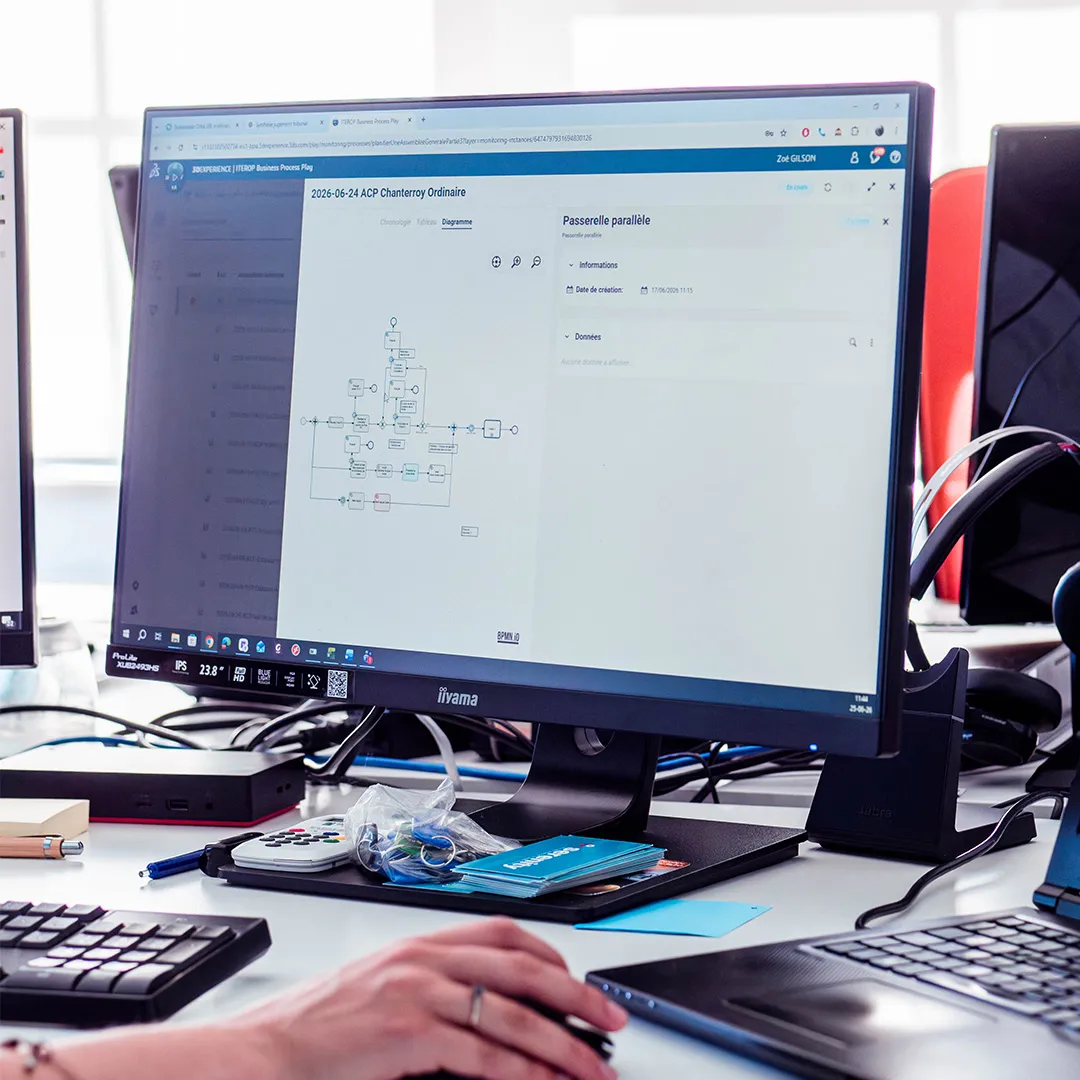
Serenity's well-established culture of continuous improvement made adoption considerably easier. Used to evolving tools and methods, teams quickly adopted the new habit of validating each task within the tool, a step that, after a short adjustment period, came to be seen as a genuine gain rather than a constraint.
On bank statement processing, the first process to go live, the gain was immediate and tangible. A task that used to take up to 45 minutes a day, with a real risk of disruption in case of absence, now takes just 5 minutes. If the usual operator hasn't processed the statements in time, the task is automatically reassigned to a backup operator, with automatic reminders flagging any issue.
The organization of general meetings, Serenity's most cross-functional process since it involves every team, shows particularly strong results. Room bookings, previously handled by phone, are now triggered automatically by email. Notices, subject to strict legal deadlines, now benefit from several automatic reminders spread out over time, ensuring no deadline is ever missed. Every notice and set of minutes is automatically confirmed to property managers, who no longer need to manually check that everything has been sent.
Most importantly, reliance on a single person for administrative tasks has disappeared: processes now continue to run automatically, whether or not the person responsible is present. This safety net reassures property managers and management alike.
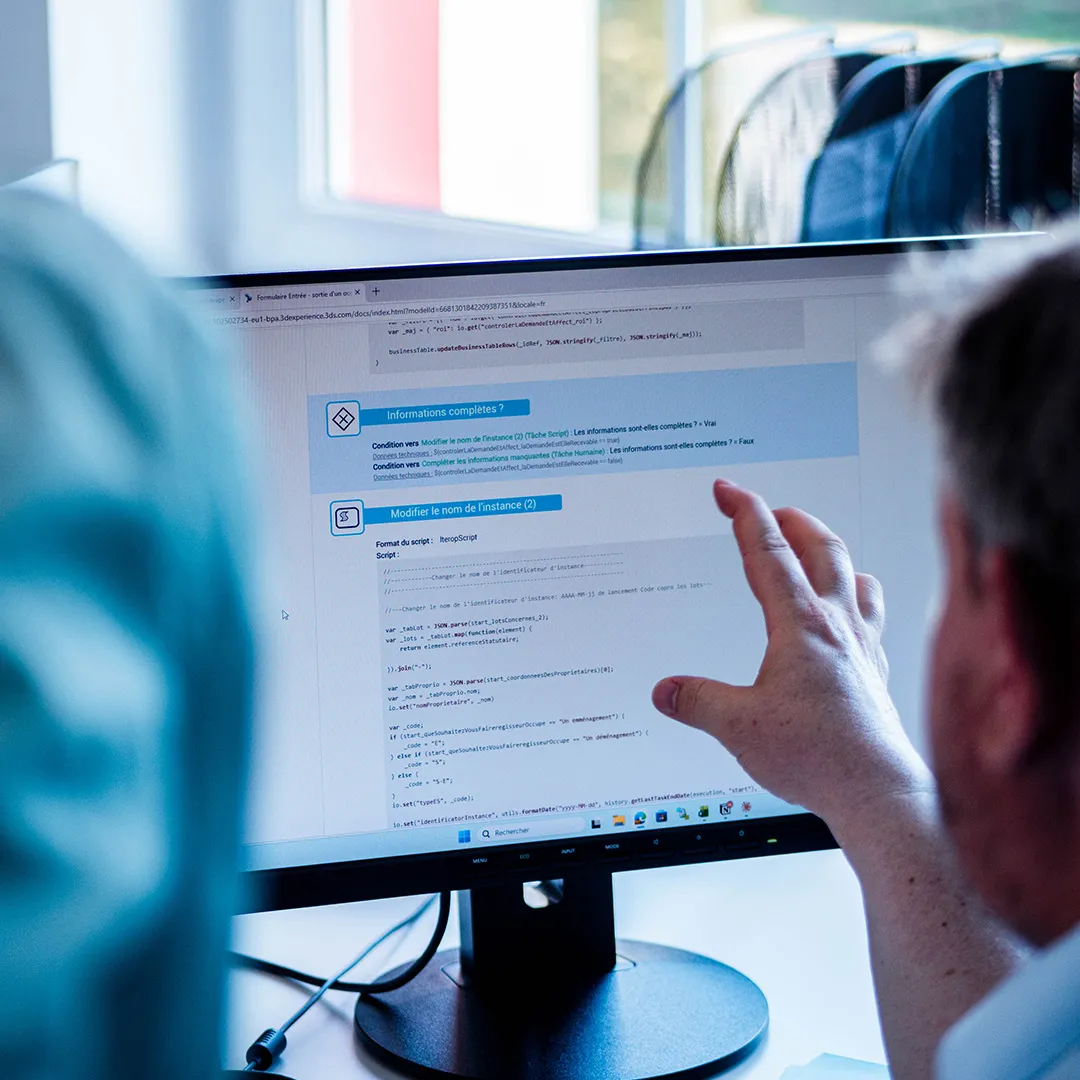
Since ITEROP was put in place, once we've confirmed the date of a general meeting, we know it's being taken care of and that everything is automated. Whether the person responsible is there or not, it happens because it's programmed. It's genuinely reassuring for us, as property managers.
Data entry errors, which used to create friction, have also dropped significantly, leaving more time for the high-value work that matters most to co-owners. On the co-owners' side, the shift to digital forms for occupant changes and label orders has considerably smoothed communication, replacing PDFs that once had to be printed and returned with simple online forms.
Organizing a general meeting is far more complex than it looks. Between the planning, the notices, the legal deadlines to meet, and sending out the minutes, there are a lot of steps involved, spread out over six months. With ITEROP, we now get notifications alerting us as a deadline approaches. In a daily routine driven by urgent matters, that kind of support is invaluable.
condominiums under management
processes used daily by every employee
time saved on bank statement processing
Serenity continues to model its business processes today: 80 to 90% of its activity, particularly on the support side, is now covered by ITEROP, and the team keeps integrating new processes, including on the marketing and sales side, to automate the drafting of commercial offers.
The next project is focused on governance. Serenity wants to build a KPI dashboard to gain a more detailed view of its organization and identify new areas for improvement, a project planned for this semester.
On the co-owner relationship side, Serenity is looking into allowing co-owners to confirm their attendance at a general meeting directly online, a feature that would make it easier to anticipate quorum while making the experience more interactive.
We want to keep modeling the rest of our activities. We still have processes running outside of ITEROP that we want to bring in. We also want to further develop reporting and KPIs, to get an even clearer view of our business. There's still a lot to do, but the foundations are there.

Founded around ten years ago, Serenity is a condominium property management company active in the Walloon Region of Belgium, with offices in Namur, Libramont, and Arlon. The company today manages more than 80 condominiums, from small four-unit buildings to large complexes of more than 200 housing units, supported by a team of around ten employees and external accounting partners.
For more information: https://www.serenity.be/
See how Terre adélice uses the 3DEXPERIENCE platform and ITEROP to digitize business processes, saving 700+ hours annually and boosting operational efficiency.
Customer Story
The Centre Neuchâtelois de Psychiatrie (CNP) transforms critical incident handling, elevating patient safety, efficiency, and team collaboration.
Customer Story
The Automobile Club du Luxembourg succeeds in its digital transformation and boosts customer satisfaction thanks to ITEROP.
Customer Story