




Centre Neuchâtelois de Psychiatrie
The Centre Neuchâtelois de Psychiatrie (CNP) transforms critical incident handling, elevating patient safety, efficiency, and team collaboration.
Customer Story
Danone France cuts processing times in half, automates processes, improves collaboration, and secures data with ITEROP.
In a context marked by rising costs, stricter environmental expectations and a deep organizational transformation, Danone is trying to balance economic performance, social responsibility and operational agility. The company faces major challenges: securing its supplies, guaranteeing fair remuneration to its partners, reducing its environmental footprint and maintaining the accessibility of its products, while adapting to a constantly changing competitive and regulatory environment. Against this backdrop, and as part of a drive to modernize and optimize its working methods, Danone has chosen to digitize its business processes.
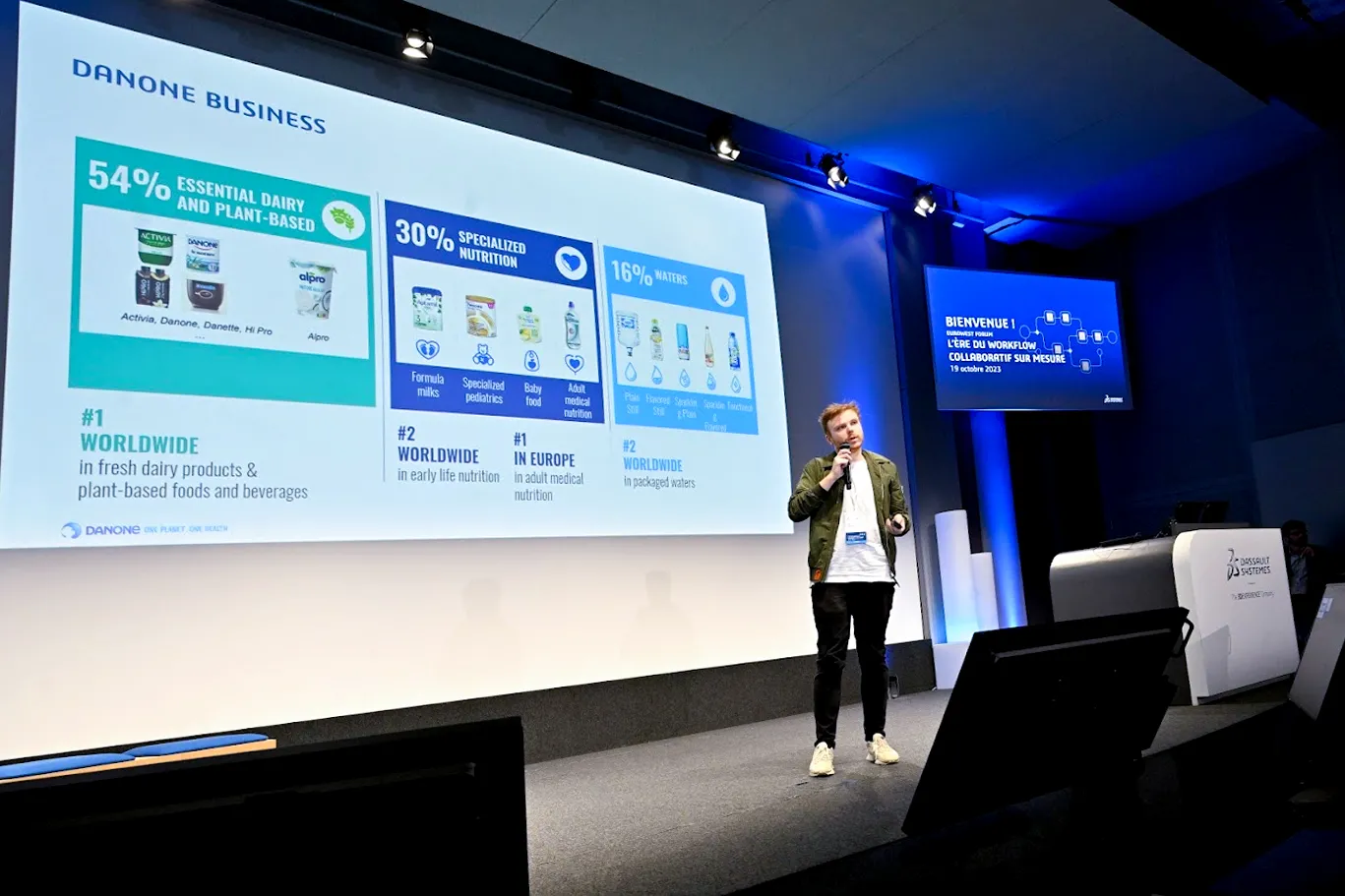
Danone is a global leader in food and beverages, with three main fast-growing categories: Essential Dairy and Plant-Based Products, Waters, and Specialty Nutrition. The group's portfolio includes leading international brands, as well as region-specific brands. With nearly 90,000 employees and products sold in more than 120 markets, Danone achieved sales of €27.6 billion in 2023.
Danone faced many friction points within its operations, particularly in the legal, supply‑chain and customer‑service departments. Processes were largely manual and time‑consuming: tasks such as claim management, labelling, data updates or opening customer accounts in pharmacies relied on paper forms or outdated systems, leading to errors and administrative overload.
The legal department suffered from a lack of clarity, availability and accessibility of services: expertise was difficult to mobilize, contracts were not automatically generated, and there were no precise monitoring tools or performance indicators to enhance the value of the activity.
In customer service, more than 80,000 complaints were processed through multiple channels, email, phone and fax, leading to duplicate records, lengthy investigations and an average resolution time of 30 days. The lack of in-depth analyses also prevented the root causes of quality defects from being identified quickly.
Finally, the lack of centralization of data and processes limited collaboration between departments. The overall vision of the product lifecycle, from the marketing idea to the shelf, was fragmented, and the validation of packaging changes, involving marketing, quality and suppliers, remained complex to coordinate.
Investing in Dassault Systèmes’ ITEROP solution requires limited capital and delivers a very short return on investment. This is precisely the key advantage of this type of solution.
In response to these challenges, Danone has set itself the clear objective of effectively transforming its operations, starting with significantly reducing the manual management of many tasks.
To meet its operational agility and team integration challenges, Danone has identified Dassault Systèmes' Business Process Management solution, ITEROP, as the best choice. The low-code approach, the ability to integrate and the speed of deployment have made it possible to align the varied needs of the teams, ranging from digitization and fluidification of processes to data centralization.
Implementation began with a pilot on the Blédina brand. The aim was to support supply chain activities and automate previously highly manual processes, such as claim management, labeling, and data updates. This first success paved the way for a broader strategy: the creation of a Business Process Factory. It is a dedicated team, within Danone France, to standardize and coordinate the management of business processes across the group.
The Business Factory allowed business teams to co‑design complete workflows. The product life cycle has thus been digitized to offer a global vision of the journey, from the marketing idea to the shelf, by integrating the stages of R&D, finance, sales and packaging.
The legal department has also benefited from this support to develop its own internal platform through the Business Process role. This makes it possible to automatically generate contracts, to precisely monitor requests and to produce performance indicators. Legal content is now formalized in simple, up‑to‑date language, improving clarity and making in‑house expertise more accessible.
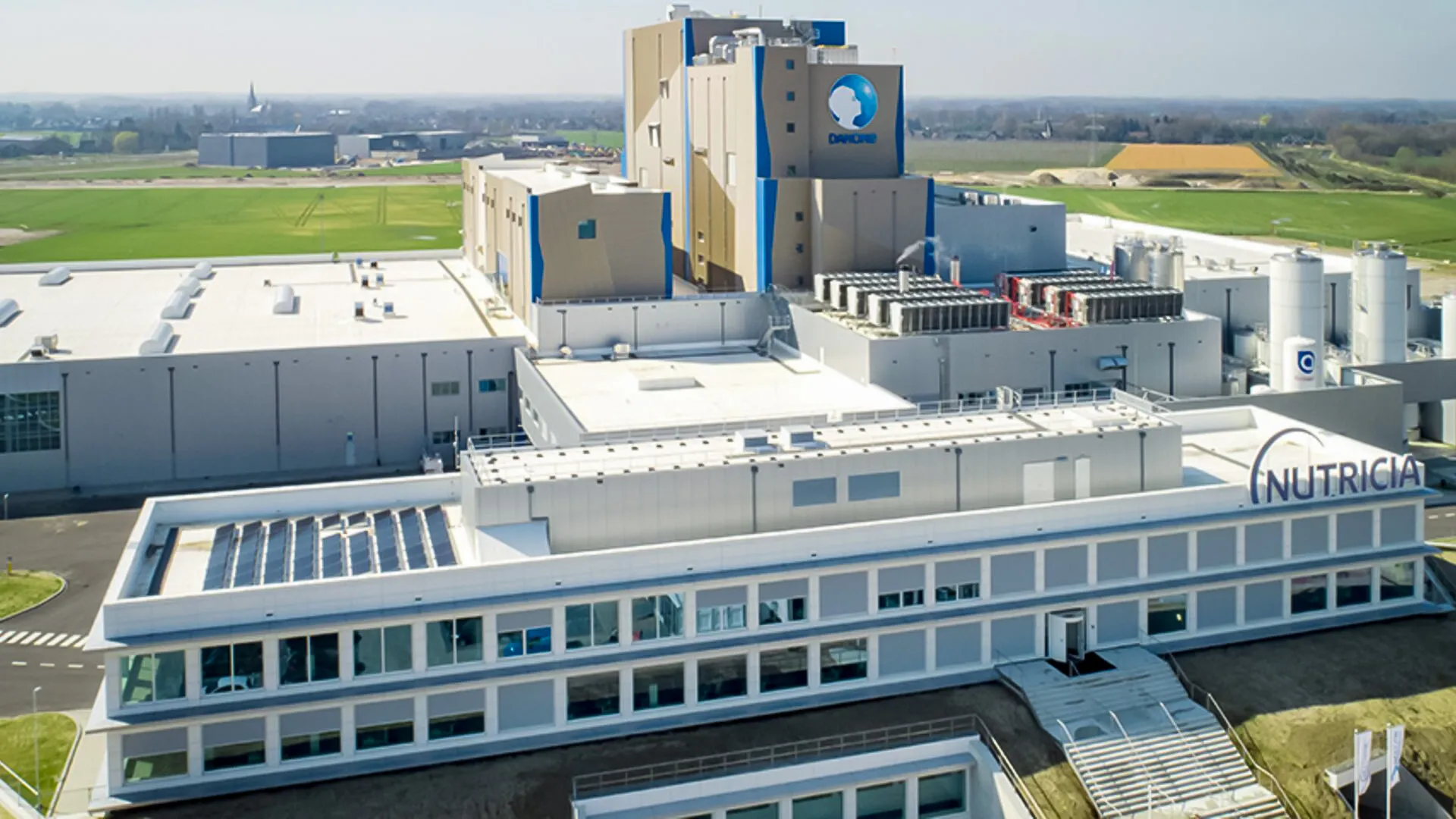
Other departments have also benefited, particularly for managing packaging changes, which involve coordinating multiple stakeholders and prioritizing requests. A mobile application was developed for Nutricia Pharmacies teams. Connected to master data, it replaced paper forms and outdated tools, offering offline mode, assistance for data entry and step‑by‑step order entry.
Thanks to a successful adoption of the solution among early adopters, Danone's Business Process Factory has a significant volume of processes, with more than 200 different processes used today.
Since implementing ITEROP, Danone has recorded measurable gains in efficiency, collaboration and data quality, while saving time and reducing costs.
Financially, the investment in the Business Process Management (BPM) solution was characterized by a very low initial cost and a particularly short return on investment. The digitization of paper forms for opening customer accounts in pharmacies has eliminated the costs and inefficiencies associated with manual processing. Removing recurring anomalies in the old software also avoided troubleshooting and data recovery costs.
In terms of productivity, processing time for customer and supplier complaints has been cut in half, from 30 to 14 days, thanks to task automation and integration with other internal tools. Danone is now able to create and deploy a new workflow every three weeks, offering unprecedented agility to quickly adapt its processes to market changes. The initial implementations on the Blédina brand automated previously manual processes, such as claim management, labelling and data updates, halving the administrative workload and improving the daily work of sales and master‑data teams.
The legal department has seen its efficiency increased thanks to the automatic generation of contracts, the precise monitoring of requests and the implementation of performance indicators. These tools have helped provide clearer guidance, make in-house expertise more available, and improve accessibility for employees. The content is now always up-to-date, ensuring that the information on case law and applicable law is reliable.
When it comes to collaboration, the Business Process Factory unifies data and processes, strengthening cross-functional work between teams. The distribution of tasks is better orchestrated, especially in the management of complaints, and all the players work on a single platform where robust systems such as integrated management software and innovative low-code applications coexist. This architecture ensures data accuracy and synchronization while giving business teams the ability to co-build complete workflows and develop their own solutions.
Finally, digitizing the product life cycle has given a global view, from marketing idea to shelf, by integrating all internal stages (R&D, finance, sales, packaging). This approach has accelerated time‑to‑market and improved coordination, while allowing rapid adaptation to changing market requirements.
Overall, Danone’s teams observed several benefits, including:
Operational efficiency
Lead times were reduced by automating certain tasks and making previously manual, time‑consuming tasks more efficient.
Agility and innovation
Teams can quickly create new workflows, allowing continuous adaptation to business needs.
Traceability and tracking
Performance indicators and precise monitoring ensure teams have up‑to‑date data.
The solution is a real engine that guides all the other applications of the group through the data. This ensures that all information is up-to-date and coordinates all activities. The administrative workload has been halved, and the sales and Master Data teams have clearly improved their daily work.
Danone continues to enrich and adapt its workflows at a steady pace, ensuring great agility in the face of market changes. The Business Process Factory remains at the heart of the strategy, centralizing and unifying processes across the group.
Looking ahead, Danone is focusing on digital transformation, in particular through artificial intelligence and supply chain optimization, with the Dassault Systèmes 3DEXPERIENCE platform as a key technological pillar.

Danone is a leading French food company recognized worldwide for its fresh dairy products, bottled water, and nutritional solutions. With iconic brands such as Actimel, Evian, and Blédina, the group is committed to combining health, pleasure, and sustainability in food. Danone also stands out for its expertise in medical and infant nutrition, particularly through its subsidiary Nutricia. Present in more than 120 countries, Danone places innovation and social responsibility at the heart of its strategy.
For more information: https://www.danone.com/
The Centre Neuchâtelois de Psychiatrie (CNP) transforms critical incident handling, elevating patient safety, efficiency, and team collaboration.
Customer Story
The Automobile Club du Luxembourg succeeds in its digital transformation and boosts customer satisfaction thanks to ITEROP.
Customer Story
Auchan is accelerating its digital transformation by structuring its processes and improving internal collaboration with ITEROP.
Customer Story