
Centre de ressources BIOVIA
Accéder à toutes les ressources concernant BIOVIA
236 résultats
BIOVIA Pipeline Pilot Imaging Collection
Datasheets
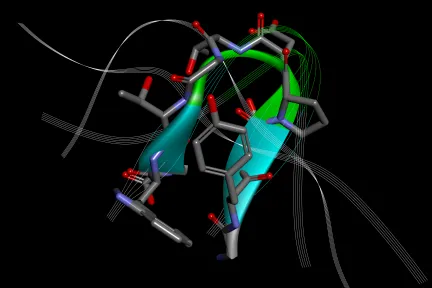
BIOVIA Discovery Studio 2025 System Requirements
Technical Documentation

BIOVIA Biopharma Quality Management
Solution Briefs

BIOVIA ONE Lab Infographic
Infographics
BIOVIA Scientific Notebook
Datasheets
e-séminaires
53 résultats
Témoignages clients
33 résultats
Communautés
Partagez votre expertise et découvrez comment d'autres scientifiques et chercheurs résolvent les problèmes avec BIOVIA.
Happy Holidays!
As we prepare to enter 2026, I want to wish everyone a happy new year, and I hope that everyone has had fun celebrating the Holidays in 2025. Customers, BIOVIAns, and partners: we are here for you!
BIOVIA LABORATORY INFORMATICS
Notebook: Access to the application fails
Notebook users might sometimes experience issues with access to the application and one known occurrence is if a user who worked for an organization leaves after sometime and then returns to the same organization after a period of absence. One of the main reasons for this access issue could be a mismatch in the user's GUID between Notebook and the directory from where the user's credentials were i
BIOVIA LABORATORY INFORMATICS
Chemical Registration: Prevent direct registration or limit access to Read-only.
Chemical Registration Configuration guide says the following on these two topics:Preventing Direct RegistrationTo prevent direct registration by a specific user or group, ensure they are explicitly Denied the Chemical Registration > Register Entities permission.Limiting Access to Read-OnlyTo prevent a user or group from having any registration ability (so that they can only view the home panel of
BIOVIA LABORATORY INFORMATICS
Formulation Design: Limits on the number of recipes and the number of iterations
Formulation Design users might be interested in knowing if there is a limit to the number of recipes that can be added to the Multi-Formula Editor (MFE) and the number of iterations a recipe can have.Our Formulation Design Developer says: "Currently, there is no set limitation on the number of recipes that can be added to the MFE, nor on the number of clones or interactions a recipe can have. The
BIOVIA LABORATORY INFORMATICS
Événements
Un résultat
Auto-apprentissage BIOVIA
Nous proposons plusieurs centaines de modules d'auto-apprentissage pour que vous puissiez continuer à apprendre à votre rythme.
Blogs
Lisez le blog BIOVIA publié par nos experts pour connaître les dernières actualités et innovations.
231 résultats
My Experience as a Scientific Software Development Intern at BIOVIA
Luis Reig, a scientific software development intern at BIOVIA, shares his experience in this video. He worked with his team for six months to combine Material Studio’s Phase Field simulations with Simulia’s tools to create a multi-scale and multi-physics digital approach to metal manufacturing.
Article

Exploring the Atomic World of Chemical Vapour Deposition: Insights from Density Functional Theory
Chemical Vapour Deposition (CVD) is an essential technique for growing metallic films, and it has been around for over a century. Today, the range of applications for CVD has expanded to include electrical, optoelectronic, optical, mechanical, and chemical materials, among others. To understand the growth processes and improve product characteristics, researchers rely on quantum mechanical calculations, particularly density functional theory (DFT).
Article
Part I Modeling the Titanic Data Set Using BIOVIA Pipeline Pilot
Explore how to use BIOVIA Pipeline Pilot to analyze the Titanic dataset, available on Kaggle.com Pipeline Pilot allows users to manage and analyze complex scientific data by integrating data from multiple sources and creating customized scientific workflows.
Article

Part II Modeling the Titanic Data Set Using BIOVIA Pipeline Pilot
Learn how missing data can affect the accuracy of machine learning models and how to enhance the data by imputing missing values using Pipeline Pilot.
Article
Investing in the Future of Scientific Innovation: A Spotlight on Dassault Systèmes Interns
By investing in the future of the workforce, Dassault Systèmes drives innovation, growth, and development and positions itself as a leader in the software industry.
Article

Emerging Water Pollutants: Challenges and Solutions for a Sustainable Future
Access to healthy, unpolluted water is a fundamental human right. Unfortunately, there are many water quality problems, and technological progress often creates new ones.
Article

A Novel Approach to Simulating Lithium Intercalation into Graphite Nanoparticles
Discover how advancements in battery materials can improve the efficiency and performance of the batteries that power our modern world.
Article


Revolutionizing Packaging: Moving Towards Sustainable Tray Materials Part II
Recycling plastic is a crucial aspect of sustainability, but it remains a challenging task. While mechanical recycling is the most common form, it leads to products with degraded properties.
Article
Unlocking the Power of Sustainable Packaging, Recycle the Polymer Film Lid Part III
Plastic films used in food packaging are made of multiple layers of polymers, each with its unique properties. As a result, up to 40% of pristine film is discarded as industrial waste during the manufacturing process. However, researchers from the University of Wisconsin-Madison, Department of Energy, and Amcor Flexibles have developed a process called STRAP, which uses different solvent washes to dissolve and recover the pure polymers from the discarded film.
Article
Turning Domain Experts into Data Scientists with Low-Code No-Code Solutions: How Important is it?
At Dassault Systèmes, we believe that Virtual Twins hold enormous potential in leveraging machine learning to tackle complex technical problems. Our focus on models has been a key aspect of our technology for many years.
Article


Se connecter à BIOVIA
Découvrir comment BIOVIA peut vous aider
Contactez un expert BIOVIA pour découvrir comment nos solutions permettent une collaboration transparente et une innovation durable dans des entreprises de toutes tailles.
Commencer
Des formations et des cours sont disponibles pour les étudiants, le monde académique, les professionnels et les entreprises. Trouvez la formation BIOVIA qui vous correspond.
Obtenir de l'aide
Obtenez des informations sur la certification des logiciels et du matériel, les téléchargements de logiciels, la documentation utilisateur, les coordonnées du support et l'offre de services.