

Satellite Structural, Thermal and Propulsion System Performance
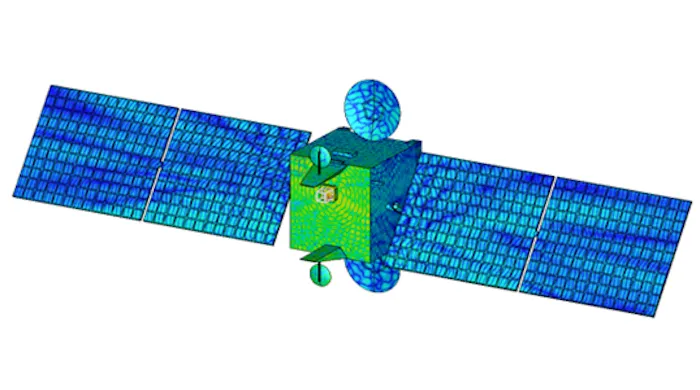
Leverage end-to-end structural and thermal simulation workflows to design and validate space satellites, leading to robust designs that meet requirements
Process
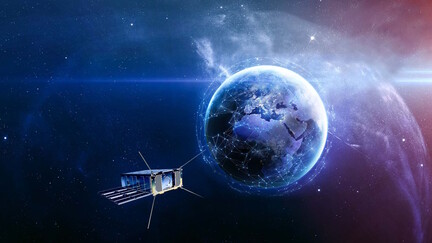
Advanced simulation for spacecraft design, enabling reliable performance in extreme conditions, accelerating development, and improving mission success.
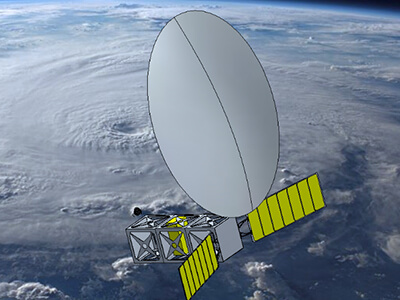
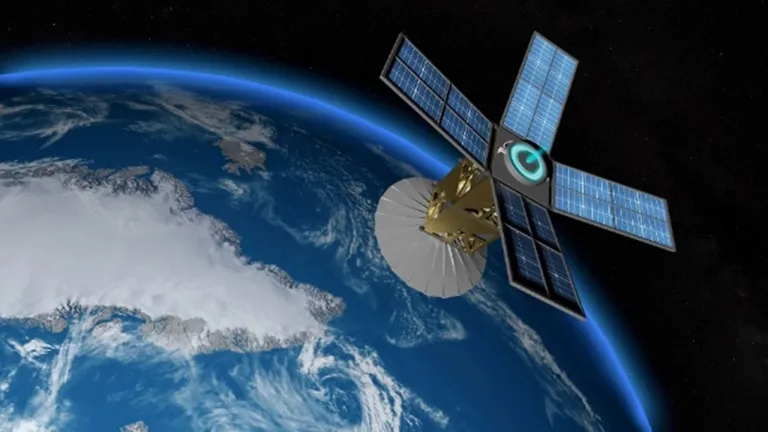
Satellites and spacecraft must operate with a high degree of reliability in extreme space and launch environmental conditions. This demands high-performance design for robust communication, power, electronics, and mechanical deployable systems, all under the pressure of an absolute launch schedule.
The SIMULIA high-fidelity physics simulation improves mission success, reduces physical testing, and accelerates development for satellites, spacecraft, and launch systems.
Integrated on the 3DEXPERIENCE platform, SIMULIA ensures traceability across processes, accelerates innovation, and supports smarter, more robust system designs through Model-Based Systems Engineering (MBSE).
Accelerate development from idea to first-to-launch
Quick deployment, scalability and optimized TCO with cloud solution
Minimize satellite weight without compromising performance
Increase satellite reliability and mission success
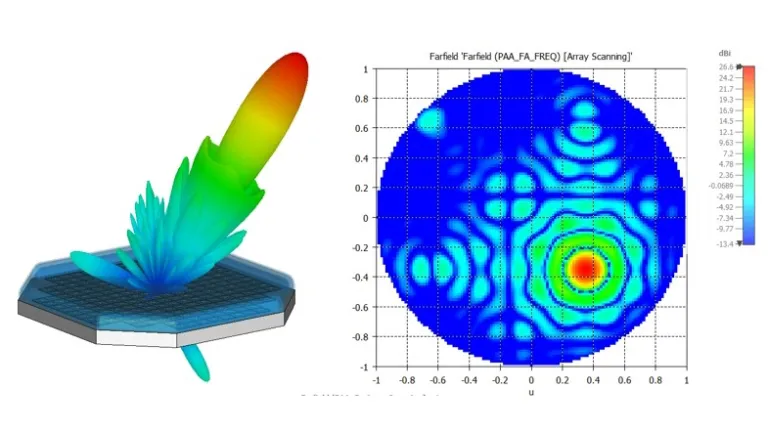
Modern spacecraft integrate a growing number of densely co-located antenna systems, increasing both simulation complexity and the need for accurate insight.
SIMULIA CST Studio Suite leverages a hybrid combination of electromagnetic solvers to deliver efficient and precise simulation across antenna types, including their interactions with each other and the surrounding environment.
Antenna arrays, widely used in satellite communications and sensing, are affected by mutual coupling between closely spaced elements, often leading to detuning and performance loss.
CST’s Array Task enables efficient modeling of both periodic and full finite arrays using a shared layout and excitation profile. With high memory efficiency and GPU acceleration, even large, complex arrays can be simulated in full.
The adoption of Model-Based Systems Engineering (MBSE) is accelerating as Defense organizations and their supply chains face increasingly complex requirements.
CATIA Magic, integrated with the 3DEXPERIENCE platform, delivers a unified environment for defining, simulating, and qualifying systems across all engineering milestones. This model-centric approach enables early trade-off of alternatives, automated simulation to increase confidence in design choices, reduced risk in concept phases, and higher fidelity through multi-domain integration.
Extended with SIMULIA high-fidelity simulation tools, MBSE models can incorporate detailed structural, thermal, and multi-physics analyses to validate performance under real-world conditions. Together, CATIA Magic, SIMULIA, and the 3DEXPERIENCE platform provide a scalable framework for rigorous, traceable, and efficient systems engineering.
Spacecraft systems are growing in complexity under increasing pressure for faster delivery, higher reliability, and seamless collaboration across engineering domains. Modeling and simulation now span the full lifecycle—from concept and design to manufacturing, testing, and operations—requiring a unified, integrated approach.
MODSIM (Modeling and Simulation), powered by the 3DEXPERIENCE platform, integrates modeling and simulation within a single environment to connect data, teams, and processes. By replacing linear, sequential workflows with cyclical, collaborative ones, MODSIM enables true concurrency and simulation-driven design. A single source of truth links evolving requirements, real-time design iterations, and high-fidelity simulation in a collaborative context.
The result: accelerated development, reduced risk, and more robust spacecraft systems engineered with precision and confidence.
As simulation tools grow in scale and complexity, managing multidisciplinary interdependencies and diverse data threads requires advanced solutions. The 3DEXPERIENCE platform enhances simulation governance by:
This ensures better decision-making and streamlined workflows.
Defense systems demand high performance and reliability, generating vast simulation data that must be managed effectively. The 3DEXPERIENCE platform streamlines SPDM by:
SPDM ensures efficient, reliable, and scalable simulations.
A complete simulation workflow for ion thruster design, covering pre-design studies through detailed plasma analysis. Tracking analysis is used for early-stage evaluation, while the Electrostatic Particle-In-Cell (PIC) solver enables transient simulation of plasma formation through to ion extraction. The workflow supports evaluating device efficiency, optimizing performance, and selecting neutral gas types to achieve desired thrust characteristics. A wide range of thruster configurations can be modeled, including gridded electrostatic ion thrusters and Hall-effect thrusters.
SIMULIA CST Particle Studio provides advanced capabilities for low-pressure, low-density plasma simulation. The plasma chamber design, ion extraction process, and particle behavior are modeled using a kinetic approach. Plasma interactions are characterized through collision dynamics and solved using Monte Carlo collision models.
Antennas are critical to satellite communication and mission success, but increasing density and complex installation environments make accurate prediction challenging.
SIMULIA CST Studio Suite uses hybrid solver technologies to evaluate antenna performance across diverse topologies and installation conditions.
Antenna arrays, widely used for communication and sensing, are strongly affected by mutual coupling, often necessitating redesign and system-level optimization.
The CST Array Task enables efficient analysis of both periodic and finite arrays from a single shared design, supporting scalable performance evaluation.
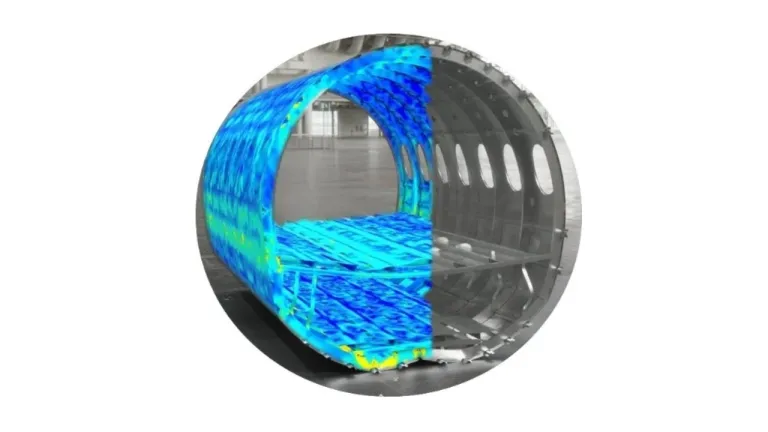
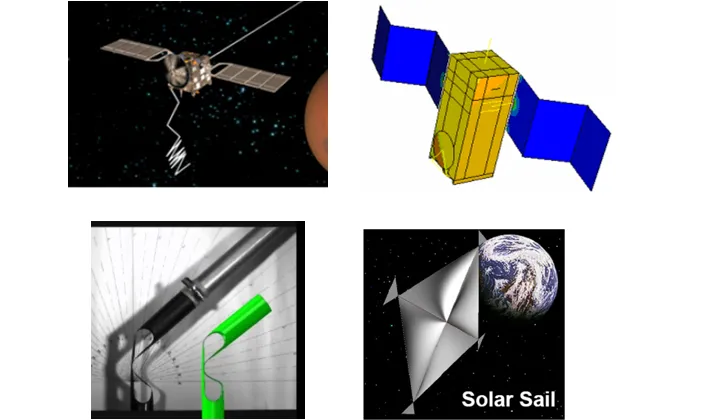
Discrete events such as transportation, launch, separation, and deployment often drive critical design decisions in spacecraft systems.
Abaqus is well-suited to simulate these events, whether static or dynamic, including associated thermal effects and complex material behavior.
For example, deployment kinematics of solar panels, antennas, and thin deployable structures such as solar sails can be accurately modeled using Abaqus.
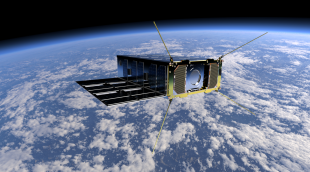
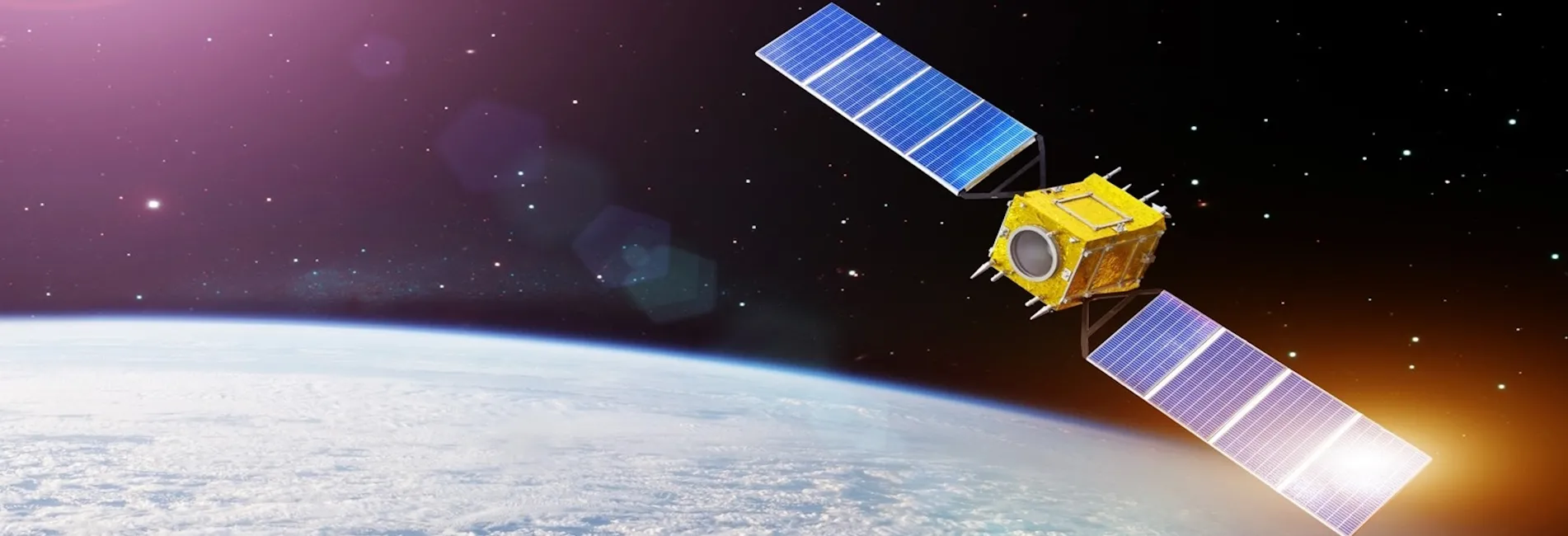
Leverage end-to-end structural and thermal simulation workflows to design and validate space satellites, leading to robust designs that meet requirements
Process
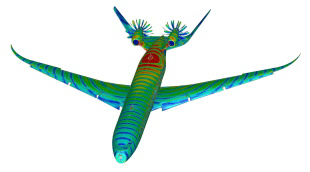
Use electromagnetic simulation to evaluate communication system designs during early development stages, leading to better performance and reduced design time
Process
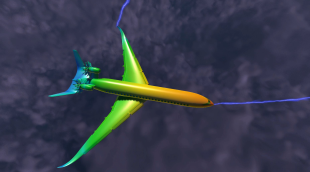
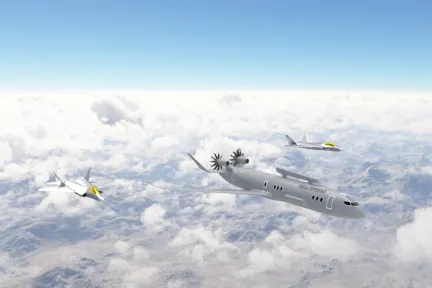
Develop and virtually validate the performance of aircraft systems when subject to electromagnetic environmental effects such as lightning strike
Process
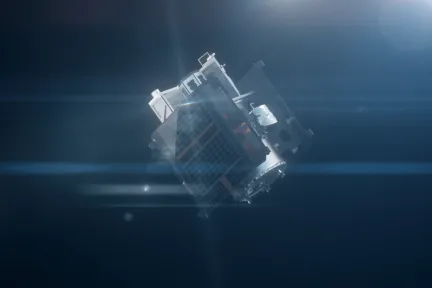
D-Orbit needed to build satellites faster while mitigating potential electromagnetic issues on smaller spacecraft. They selected CST Studio Suite to run complex electromagnetic simulations accurately and efficiently and harness the power of cloud-based multi-core computing.
Customer Story
Accelerate space companies' ability to design a system right the first time with the required quality, reliability and safety at lower cost.
Event
Watch the replay to learn how SIMULIA CST Studio Suite allows the complete optimization of the antenna system, from the isolated feeder to the complete simulation of all the systems on the satellite.
E-seminar
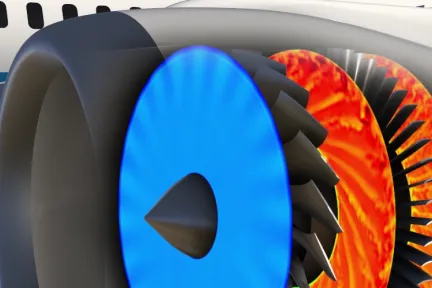
Optimize aircraft propulsion with SIMULIA solutions to improve engine performance, reduce aeroacoustic noise, and ensure reliable turbomachinery integration.
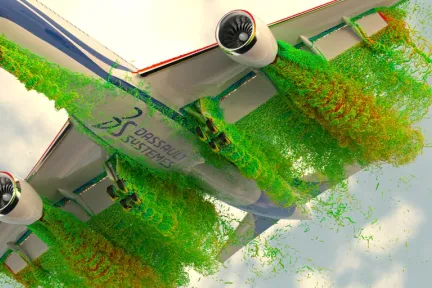
Design faster, safer, and more sustainable aircraft with SIMULIA on the 3DEXPERIENCE platform — integrating high‑fidelity multiphysics simulation and MODSIM.
Optimize defense aircraft design, achieve advanced stealth, aerodynamics, and structural integrity through high-fidelity simulations with SIMULIA solutions.
Speak with a SIMULIA expert to learn how our solutions enable seamless collaboration and sustainable innovation at organizations of every size.
Courses and classes are available for students, academia, professionals and companies. Find the right SIMULIA training for you.
Find information on software & hardware certification, software downloads, user documentation, support contact and services offering