The AI-Ready Lab
Create high-quality, AI-ready lab data from the start with a unified data model
Lab Data Drives AI Forward
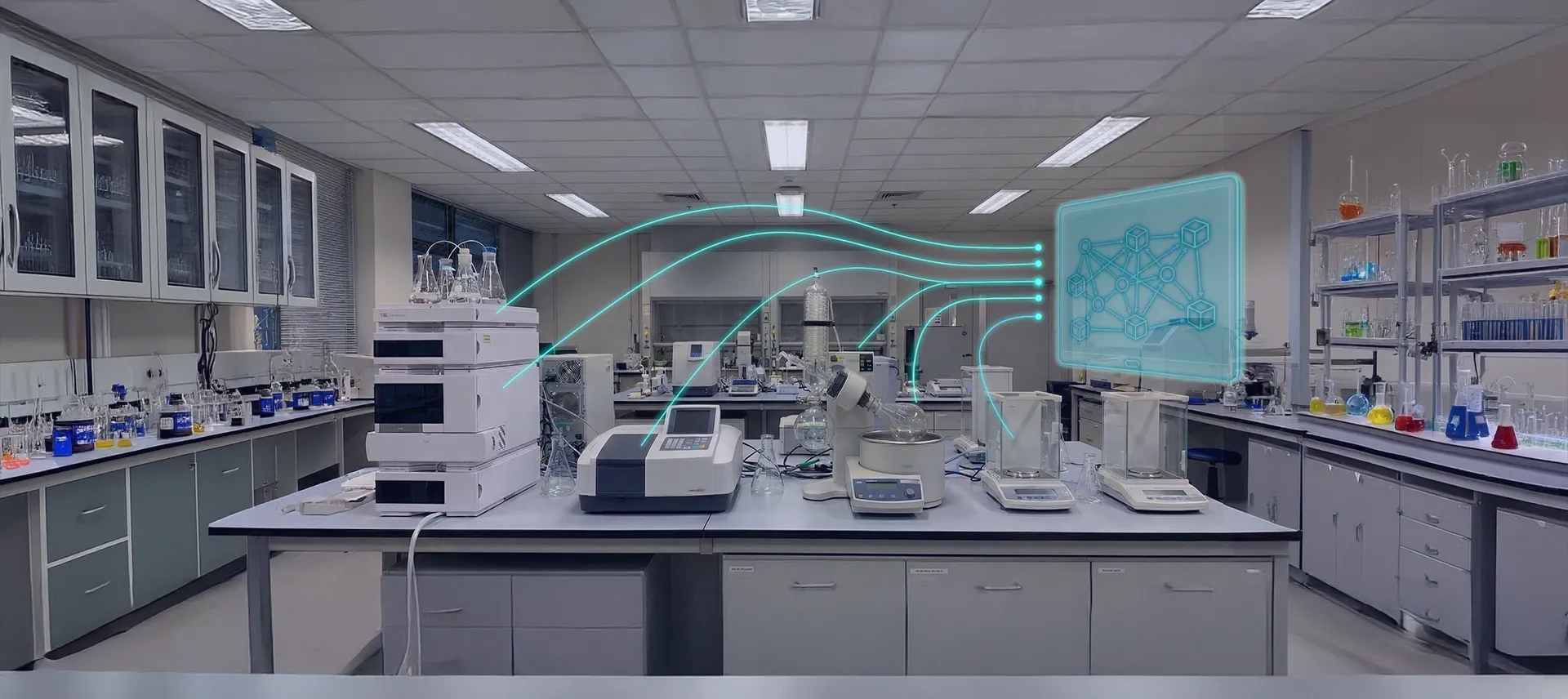
Scientific companies are turning to lab solutions that use a common data model to generate AI-ready data directly from their labs. Let's dive into why, and how they do it.
Most Lab Data is not Ready for AI
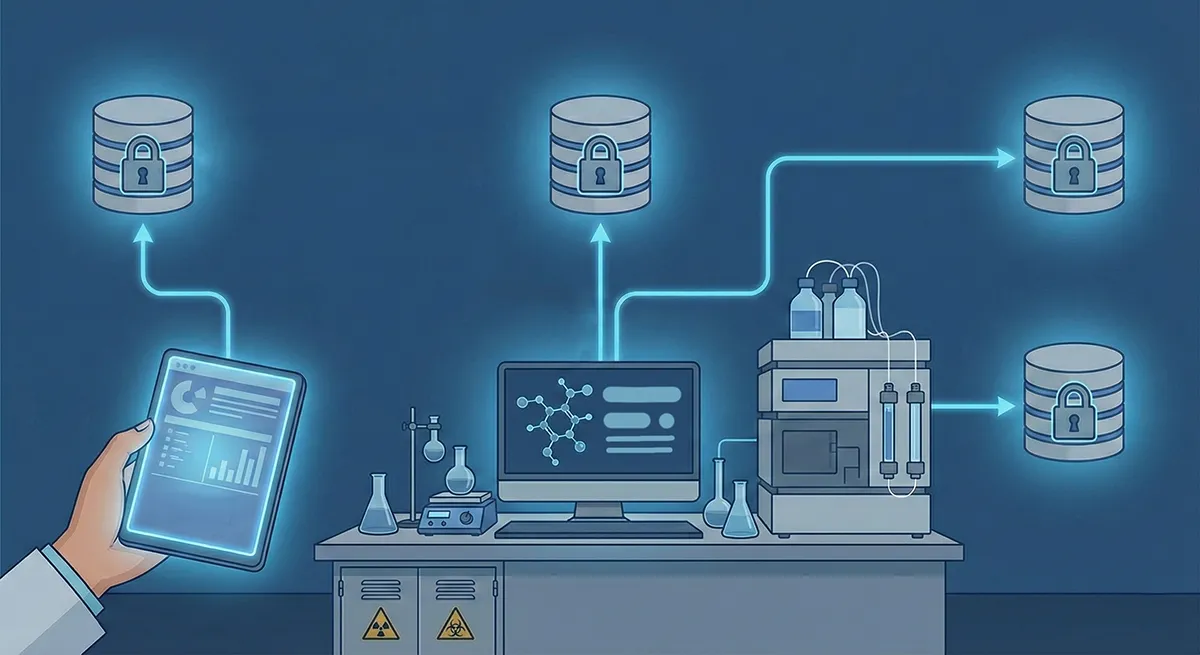
Labs have too many disconnected, specialized systems. An Electronic Lab Notebook (ELN) captures experimental notes, a Lab Information Management System (LIMS) tracks samples, and a Lab Execution System (LES) guides workflows. Data from equipment and inventory systems often lives in separate spreadsheets or proprietary files.
This siloed approach creates a massive barrier for AI.
The Siloed Lab Ecosystem
ELN Data
Experimental notes, hypotheses, and observations that are disconnected from sample IDs in the LIMS.

LIMS Data
Sample metadata, location, and status that are disconnected from the experimental results on the instrument.

Instrument Data
Raw output files (e.g., CSV, .txt) that are disconnected from the reagent batch used in the experiment.

Inventory Data
Reagent batches and expiration dates that are disconnected from the experiments that used them.
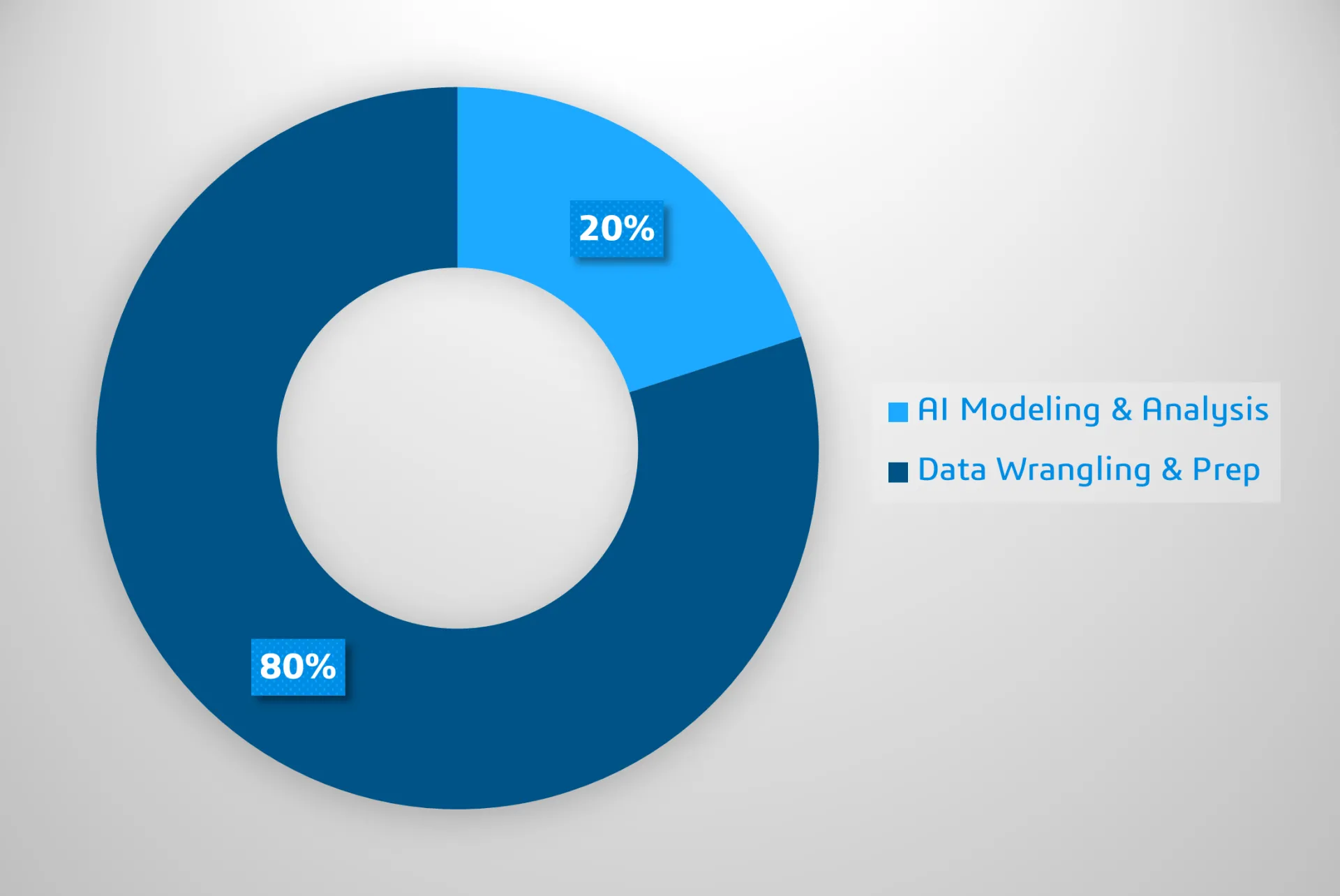
AI Projects Could Be 80% Faster
Before AI can be used, data scientists spend up to 80% of their time finding, cleaning, and integrating this fragmented data.
The context of an experiment—what sample was used, on which instrument, with what reagent batch—is often lost, making the data nearly useless for modeling without heroic effort.
The Solution: A Unified Platform
The solution is a single, unified lab informatics platform that integrates ELN, LIMS, LES, equipment, and inventory. The "magic" that holds this all together is a common data model. Instead of each system having its own database, all data is captured and stored using one consistent structure—creatingAI-ready data from the start.
Common Data Model
All data (experiments, samples, results, reagents) is saved in a single, connected structure.
Context is never lost.
The "How": The RDF Data Model
A highly effective common data model is the Resource Description Framework (RDF). RDF is a graph-based model that stores data in "triples": a Subject, a Predicate, and an Object. This simple structure is incredibly powerful because it captures the *relationships* between data points, preserving context automatically.
The Benefits: AI-Ready FAIR Data
This unified, RDF-based approach doesn't just make data *usable*—it makes it Findable, Accessible, Interoperable, and Reusable (FAIR). This is the gold standard for scientific data and the prerequisite for powerful, reliable generative AI. The 80% data wrangling problem disappears, replaced by a new focus on modeling and discovery.

Findable
All data and metadata are in one queryable system, not spread across 1000s of files.

Accessible
Data is retrievable by standard protocols (like SPARQL for RDF) with proper authentication.
Interoperable
The common data model acts as a "universal language" that all systems and algorithms can understand.

Reusable
Rich context (lineage, instrument, batch) is preserved, allowing data to be confidently reused for new AI models.
Trust All Your Data Equally
To truly take advantage of all your data, you have to trust its validity, regardless of how it was created. Combining virtual (in silico) data and real-world (experimental) data within a common data model is a critical step.
On the 3DEXPERIENCE platform, scientists have a home for both modeling & simulation, and all lab-related work, unifying both virtual and real-world data together. This creates a powerful feedback loop—not only can costly physical experiments be replaced by virtual ones, but models can be continuously improved by real-world experimental data.
Create AI-Ready Data from the Start
BIOVIA ONE Lab standardizes all lab data in a common RDF data model, across ELN experiments, instruments, inventory, samples, tasks and procedures. By automatically capturing, contextualizing, and harmonizing all generated data into a clean, searchable format, ONE Lab eliminates the need for extensive data cleansing and preparation.
Customers consistently report that ONE Lab generates the highest quality, most reliable generative AI-ready data within their organizations, significantly accelerating machine learning initiatives and predictive modeling.
FAQs
Also Discover
Streamline Formula and Recipe Development Workflows on the 3DEXPERIENCE Platform
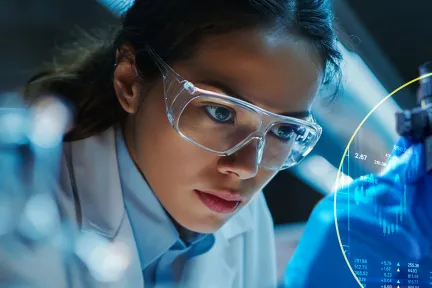
Combine the Power of AI with Physics-Based Workflows for Next-Generation Biologics
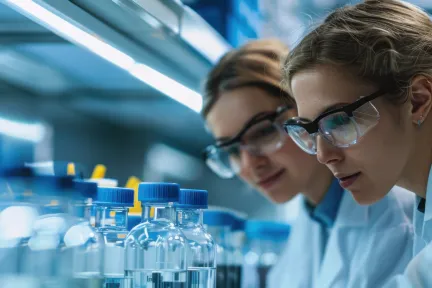
The Only Solution that Combines AI/Machine Learning, Physics-based 3D Molecular Modeling and Lab Informatics in a Single Environment
An Agile, Cloud-based Solution for AI-driven Drug Design
Learn What BIOVIA Can Do for You
Speak with a BIOVIA expert to learn how our solutions enable seamless collaboration and sustainable innovation at organizations of every size.
Get Started
Courses and classes are available for students, academia, professionals and companies. Find the right BIOVIA training for you.
Get Help
Find information on software & hardware certification, software downloads, user documentation, support contact and services offering