# How Teachers Can Develop Tomorrow’s Game-Changers
With our new Education Experience, supported by the virtual twin technology, teachers are creating a new classroom — and a new generation of multidisciplinary engineers ready to take on an increasingly complex future.
**It's tough being a teacher, especially in the times we live in.**
As product development becomes multifaceted and more complex, our engineering graduates find themselves in an uncomfortable situation when entering the workplace — they discover that they’re not yet future-ready.
There are no two ways about it — the skills gap and talent shortage are a reality. The disconnect between what students learn in the classroom and what employers actually require has grown to become a crisis that threatens the long-term viability of multiple disciplines.
59%
of graduates lack the skills for their job1

1/3
of Europe’s workforce lack basic digital skills2

85 million
jobs vacant by 2030 due to the global talent shortage3

Yet, there's an urgent need for new engineering and digital skills to create sustainable innovations that will bolster our future. Teachers now have a unique opportunity to shape this future — by transforming their learning environment and processes to create a new kind of classroom.
There is a growing skills gap, especially in sectors like aviation. Students are taking additional training after graduation by enrolling in continuous professional development (CPD) courses. This highlights a discrepancy between what is taught in standard programs and what is needed in the industry.
Dr. Jafar Jamshidi
Senior Lecturer, Integrated Product Development, Cranfield University

What additional skills are industries looking for?
Electric, connected and autonomous vehicles
**Requires expertise in:**
- Electric powertrains
- Battery technology
- Connectivity systems
- Sustainability (lifecycle assessment materials)
- Artificial intelligence
[Education > Electric, Connected and Autonomous Vehicles](/media/17876)
Aerospace and defense
**Requires expertise in:**
- Lightweight materials
- Efficient propulsion systems
- Lifecycle environmental impact
[Education > Aerospace and Defense](/media/17877)
High-tech and consumer electronics
**Requires expertise in:**
- Electrical engineering
- Mechanical engineering
- Software engineering
[Education > High-Tech and Consumer Electronics](/media/17878)
**Chapter 1**
## **The World Is Becoming Multidisciplinary**
[Education > Experiential Engineering Chapter 1](/media/17879)
Learn more
**Chapter 2**
## **Teaching Must Become Future-Proof**
[Education > Experiential Engineering Chapter 2](/media/17880)
Learn more
**Chapter 3**
## **Building Tomorrow’s Game-Changers**
[Education > Experiential Engineering Chapter 3](/media/17882)
Learn more
**Chapter 1**
## The World Is Becoming Multidisciplinary
[Education > Experiential Engineering Chapter 1](/media/17883)
Consumers now want better, more sustainable and more sophisticated products that require the ingenuity and expertise of engineers across multiple disciplines. It’s no wonder that industries are now on the hunt for skilled multidisciplinary engineers who can work in a collaborative environment.
This is the landscape in which our students will be expected to perform as tomorrow's engineers and game-changers. To thrive in this future, students must become versatile and acquire knowledge that goes far beyond the pages of their textbooks.
What are Dassault Systèmes' Education Experiences?
Comprised of customized learning paths, cutting-edge software, certifications and an active online community, our Education Experiences can help educators provide their students with the skills needed to make them future-ready and boost their employability.
With our Education Experiences, students gain the knowledge, experience, know-how and collaborative skills needed to become job-ready and thrive in the dynamic and multidisciplinary world of engineering.
Thierry Chevrot
Senior Director 3DEXPERIENCE® EDU, Edu Transformation & User Empowerment, Dassault Systèmes

The teachers’ role becomes increasingly pivotal here. They now have the opportunity to push students to think outside the box — by utilizing capabilities such as the virtual twin technology to craft a new, hands-on learning experience made possible through captivating lesson plans, exercises and industry-realistic projects.
However, teachers are encumbered by several challenges:
- **The industry transformation is continuous and fast.** Every day, it changes how people work and the skills they need to tackle complex technological challenges. Teachers have to continuously adapt their curriculum to take these changes into account, but they lack the necessary time to stay informed and update their courses.
- **Setting up a new solution — and being a driver of change — is not easy.** The academic world is also bound by many curriculum-related constraints. Teachers often lack the resources (such as industry use cases and industry data) and the time to implement change of this scope and scale.
- **Students are having trouble staying motivated and engaged during class.** A study by the National Academy of Sciences has shown that students engaged in traditional lectures are 1.5 times more likely to fail in their courses than students engaged in hands-on learning.4 Hands-on learning can positively affect students' curiosity, teamwork and enthusiasm.
**It’s time for a change** — one that can give teachers the freedom to tap into the global knowledge base of the industry and the community, develop lesson plans that are always engaging and up-to-date, and provide students with the right skills to make them future-ready and boost their employability.
Back to top
**Chapter 2**
## Teaching Must Become Future-Proof
[Education > Experiential Engineering Chapter 2](/media/17884)
[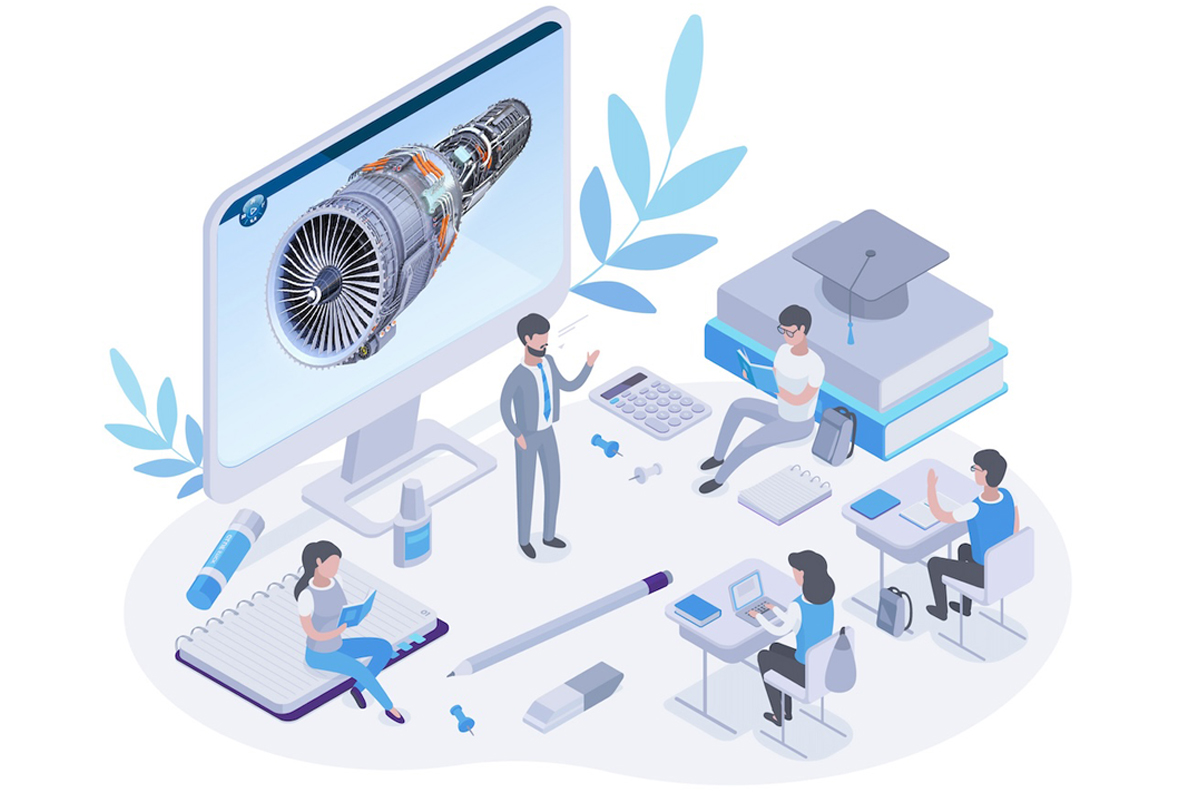](https://www.3ds.com/assets/invest/2024-07/edu-graphic-1200x800.jpg)
Modern engineering projects rarely exist in silos. Truly successful products are developed collaboratively, with engineers from different disciplines working together side-by-side.
Thierry Chevrot
Senior Director 3DEXPERIENCE® EDU, Edu Transformation & User Empowerment, Dassault Systèmes

The future of engineering requires developmental silos between teams to be broken down. As the world becomes circular, sustainable and complex, multidisciplinary engineering becomes the only way to tackle real-world problems and increase the quality and sustainability of products. Collaboration must become de rigueur from the very beginning.
That’s why it’s encouraging to see courses supplementing textbook problems with experience-based projects that connect different disciplines and push students to think critically. Teachers can further nurture this environment — and prepare students for the unpredictability of the working world — by empowering students to develop their knowledge and skills through the following approaches:
Project-based learning
Project-based learning (PBL) is a hands-on, project-based approach that gives students a chance to learn by doing rather than through traditional lectures. Powered by the virtual twin, PBL encourages students to think beyond the confines of a classroom by **conceiving, designing, implementing and operating complex systems and processes in a team-based environment.**
As a result, students can learn faster, better comprehend diverse knowledge and solve critical problems in a real-world environment. They also become more engaged and highly motivated in their studies.
[Education > Project-Based Learning](/media/17892)
Close collaboration with industry partners
Industry partners provide valuable insights into the key elements of various topics, balancing theoretical knowledge with practical application. Their input ensures courses remain practical and industry-focused. By having industry partners involved in curriculum development and providing real-life problem-solving experiences, **learning modules and courses become more aligned with industry needs from the get-go.**
Industries can also provide recommendations or fund research projects that benefit the institution and students. Teachers, in turn, will have more resources to train the next generation of students and to investigate new scientific and industrial issues. Ultimately, this will make graduates job-ready immediately after finishing their programs. It’s a win-win for everyone.
[Education > Close Collaboration](/media/17893)
These approaches can be implemented simultaneously within one collaborative learning environment, seamlessly delivering industry-grade teaching experiences to students.
**This is where our Education Experience comes in.**
Access to industry-standard technologies ensures that what the education students receive is directly applicable in their future careers. This real-world exposure helps students approach problem-solving more realistically and prepares them for actual engineering challenges.
Dr. Jafar Jamshidi
Senior Lecturer, Integrated Product Development, Cranfield University

Back to top
**Chapter 3**
## Building Tomorrow’s Game-Changers
[Education > Experiential Engineering Chapter 3](/media/17885)
Dassault Systèmes has been a catalyst for industrial innovation for over 40 years, providing value to more than 350,000 customers worldwide. Our Education Experience can help teachers develop tomorrow's game-changers by delivering industry best practices and knowledge right into the classroom. This is how we'll help them pull it off:
**Experiential teaching**
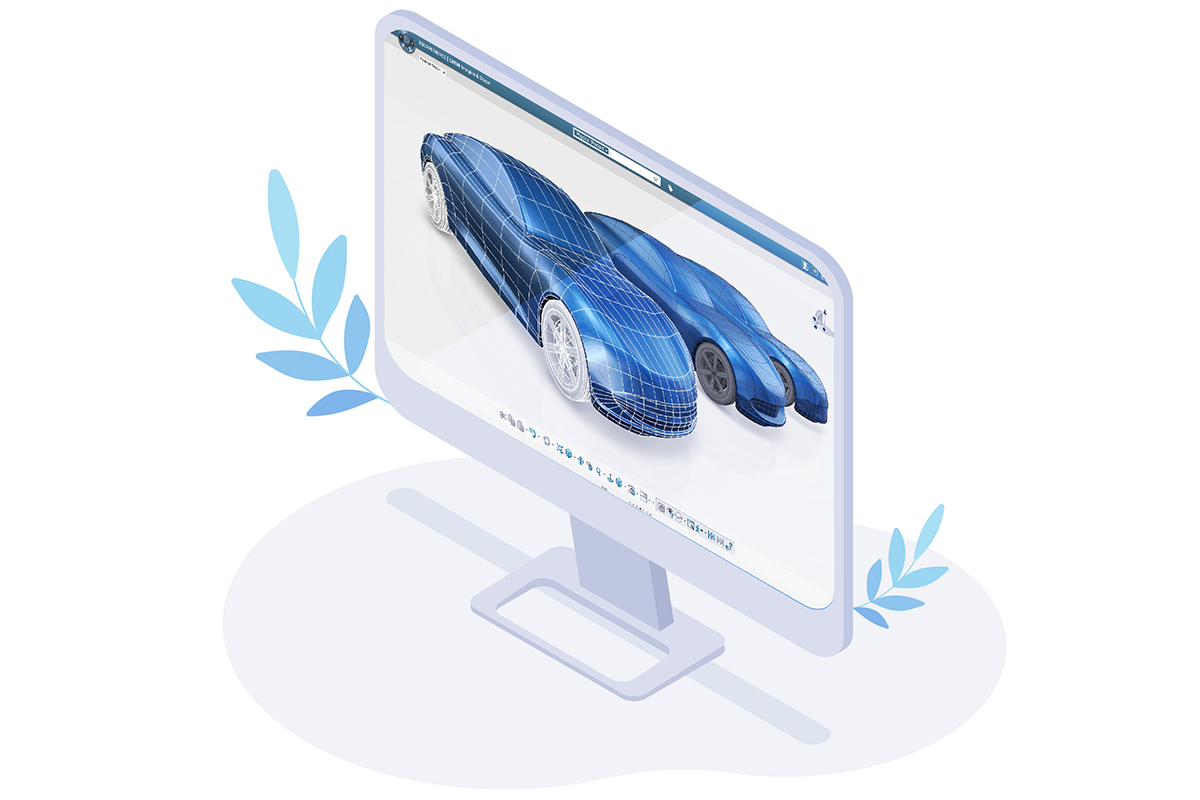
- As part of our Education Experience, **3D**EXPERIENCE CATIA offers a more organized and integrated environment. It is role-based, providing specific tools relevant to different engineering roles. This integration allows digital continuity for seamless transitions between design and simulation tasks.
- Rather than juggling various software across disciplines, students will now have the opportunity to work on a unified platform — and one single source of truth. This approach mirrors industry practices, allowing them to follow the complete product lifecycle from design to manufacturing within the same environment.
Did You Know?
- 90% of cars in the world are engineered with CATIA.
- An airplane engineered with CATIA takes off every 2.5 seconds.
- More than 22,000 companies use CATIA in their daily operations.
[](https://www.3ds.com/assets/invest/2024-07/edu-graphic-02-1200x800.jpg)
**The virtual twin**
- The virtual twin refers to **digital representations of real-world systems or processes shown at scale.** It allows teachers to enhance the learning process by designing, simulating and validating complex products and processes within a virtual environment.
- With the virtual twin, students can experiment with different design approaches and analyze design consequences within a safe, virtual workspace.
Discover the full power of the virtual twin by exploring these game-changing topics:
Virtual Manufacturing
Because virtual twins can slash development time and material usage by up to 50%, students learn about creating designs with manufacturability in mind.
This reduces manufacturing costs and waste, saves time-to-market and increases efficiency in the industry.
Taking product design with manufacturability in mind also goes one step further. It's not just about ensuring the product can be efficiently manufactured. Virtual manufacturing also highlights the importance of designing the manufacturing process to be sustainable and efficient.
[Education > Virtual Manufacturing](/media/17890)
Generative Design [MODSIM]
MODSIM unifies modeling and simulation on a common data model within a single user experience.
With MODSIM, simulation is a vital part of the product development process from beginning to end, from requirement to architecture and all the way to product management.
MODSIM also reduces the risk of late-stage failures and rework by pulling up verification and validation upfront in the design concept stage.
With MODSIM, engineers can ensure that the product meets all quality, sustainability and manufacturability requirements.
[Education > Generative Design (MODSIM)](/media/17891)
Effective collaboration
Accessible resources
Digital continuity
5EDU-D2A1gated-EDUACA-3dxedu-catia-expeng-gated-chapter3end)
[](https://www.3ds.com/assets/invest/2024-07/edu-graphic-03-1200x800.jpg)
Did you know?
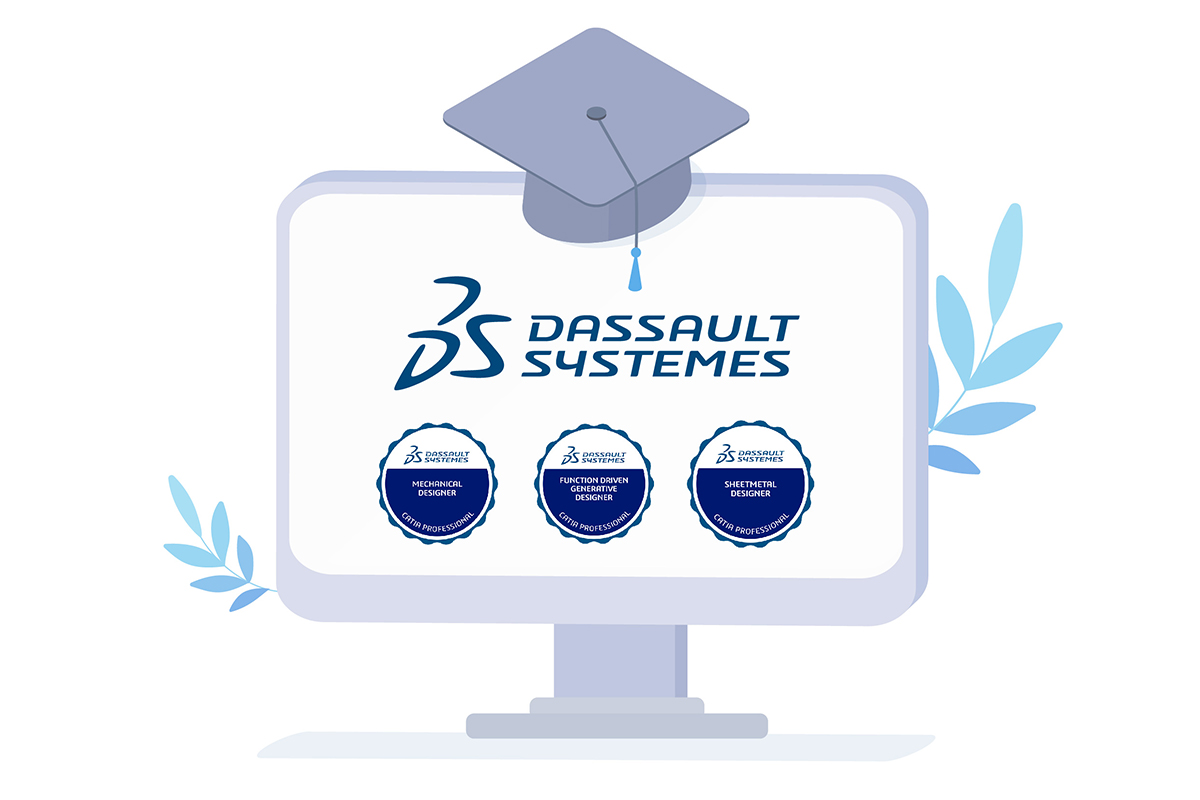
Dassault Systèmes' certification program is a valuable skill differentiator required by the industry.
In addition to being a quantitative measurement of engineering skills, it's also a globally recognized certification program that can make students stand out in an increasingly competitive job market.
Back to top
Conclusion
[Education > Experiential Engineering Conclusion](/media/17886)
Teachers have the power to shape the next generation of game-changers by giving them the skills to thrive in a complex, multidisciplinary world. With our Education Experience and **3D**EXPERIENCE CATIA, they're fully equipped to bring a new engineering classroom to life. This experience offers a no-compromise learning environment for students augmented by a thriving community of leaders, experts and peers.
Tomorrow's classroom is now within reach. All that remains is to set it in motion.
References
1 ["Artificial Intelligence Enters the Workforce: Cengage Group’s 2023 Employability Report Exposes New Hiring Trends, Shaky Graduate Confidence"](https://www.cengagegroup.com/news/press-releases/2023/cengage-group-employability-report/) by Cengage (July 2023)
2 ["Towards 2023: the European Year of Skills"](https://data.europa.eu/en/publications/datastories/towards-2023-european-year-skills) by the European Union (November 2022)
3 ["The $8.5 Trillion Talent Shortage"](https://www.kornferry.com/insights/this-week-in-leadership/talent-crunch-future-of-work) by Korn Ferry
4 ["Active learning increases student performance in science, engineering, and mathematics"](https://www.pnas.org/doi/pdf/10.1073/pnas.1319030111) by Proceedings of the National Academy of Sciences (PNAS) (April 2014)
## **DISCOVER OUR READY-TO-USE EDUCATION EXPERIENCES**
Jump into the **3D**EXPERIENCE with our brand new packages for Education
Teacher Experience: your teaching journey, fully supported!
Meet the new Teacher Experience in **3D**EXPERIENCE for Education: streamline courses, manage classes, and track progress with ease. **Empowering educators, simplified!**
[Teacher Experience keyvisual card](/media/20514)
[Discover](/edu/education/academics/3dexperience/teacher-experience)
Teaching the Future of Engineering with CATIA
Prepare your students for the Future of Industry through the help of virtual engineering experiences
[Edu-3DX-catia-aca-576x488](/media/8698)
[Discover](/edu/education/academics/3dexperience/catia-package)
Education Experience
Teaching the Future of 3D Design with SOLIDWORKS
Prepare your students for the next generation of product development
[Edu-3DX-solidworks-aca-576x488](/media/8699)
[Discover](/edu/education/academics/3dexperience/solidworks-package)
Education Experience
Teaching Modeling and Simulation with SIMULIA
Empowering students with Simulation-driven experiences to solve real-world problems
[Edu-3DX-simulia-aca-576x488](/media/8700)
[Discover](/edu/education/academics/3dexperience/simulia-package)
Education Experience
Teaching Virtual Factory with DELMIA
Build sustainable virtual experiences to re-imagine the future of manufacturing
[Edu-3DX-manuf-aca-576x488](/media/8703)
[Discover](/edu/education/academics/3dexperience/delmia-package)
Education Experience
Teaching Systems Engineering with CATIA
Embrace MBSE with the unique value of the **3D**EXPERIENCE platform to improve your teaching methods and get your students future-ready
[Edu-3DX-systems-aca-576x488](/media/8702)
[Discover](/edu/education/academics/3dexperience/systems-package)
Education Experience
Teaching Construction with the 3DEXPERIENCE
Teach collaborative experiences that develop skills to leverage BIM from planning to completion, revolutionizing construction projects
[Edu Education Experience Construction card](/media/18503)
[Discover](/edu/education/academics/3dexperience/construction-package)
Education Experience
Teaching Sustainable Engineering with the 3DEXPERIENCE
Teach the Life Cycle Assessment (LCA) methodology and bring a new circular mindset for a more sustainable future
[Edu Education Experience Circular Economy card](/media/19302)
[Discover](/edu/education/academics/3dexperience/sustainability-package)
Education Experience
Teaching Medical Device Engineering with the 3DEXPERIENCE
Explore the Future of Healthcare Innovation with the Medical Device Engineering Learning journey
[Edu Education Experience Medical Device Card](/media/20676)
[Discover](/edu/education/academics/3dexperience/medical-package)
Education Experience
Teaching Engineering Sciences with SCILAB
Equipping Students with the Mathematical Skills Behind Modern Engineering
[Edu Education Experience Scilab card](/media/22170)
[Discover](/edu/education/academics/3dexperience/scilab-package)
Education Experience
Stories