
About Dassault Systèmes
We provide Virtual Worlds for Real Life.
When it comes to innovation in goods and services across industries, we mean business. We do this by bringing virtual twin experiences to everyone – including individuals – to help improve life.
What Is Dassault Systèmes?
We like to say our products touch nearly everything in your life! We’re in the business of innovation. We’re not just a software company, a PLM (Product Lifecycle Management) company, DMU (Digital Mock-Up) company, or a 3D Design company. We’re unique in that we’re a science-based and technology-powered company that provides virtual twins to drive human-centric experiences that allow our customers to create innovative new products and services.
Our tagline, Virtual Worlds for Real Life, encapsulates our belief that connecting the virtual and real worlds enables a continuous flow of data and insights to drive real-life progress and innovation. Efficiency, sustainability and innovation are accelerated with our scientifically accurate 3D models and virtual twins. Our virtual worlds are not for entertainment; they’re designed to solve pressing global issues, from optimizing manufacturing to improving healthcare outcomes to and creating sustainable cities.
Learn more about us.
Our Company
Dassault Systèmes provides businesses and people with virtual twins to imagine sustainable innovations capable of harmonizing product, nature and life.
Company Information
We’re a 40+ year old company dedicated to helping improve the products, processes and services, as well as the human life. And we’re doing it through our most important resource: Dassault Systèmes’ people.
Corporate Responsibility
Dassault Systèmes’ corporate responsibility and sustainability commitments are the backbone of everything we do. This is demonstrated through our strong ethics, business practices and programs that promote societal change.

Careers
Join us! We’re always looking for innovative minds to help open new possibilities through the power of virtual universes and help us shape a diverse and inclusive workforce.
News and Insights
Discover what we’ve been up to with the latest Dassault Systèmes news, information and media resources.

Customer Engagement
Our customers are incredibly diverse! We’re proud to count any size enterprise, from global industry leaders to startups, and even individuals, as our customers.
Legal Information
Read Dassault Systèmes’ legal information, including trademarks.

Got Questions? Get in Touch!
We're More Than a Software Provider
Almost everything around you is enabled in some way by Dassault Systèmes.
Our 3DEXPERIENCE platform is the backbone of a company’s product development.
A Game-Changer for Business and Innovation
Dassault Systèmes is innovation-driven. In 2012 we shifted from a software company to an experience company. What does that mean? We provide our customers not only with products but also with services and content that focus on improving end-user experience. We designed our 3DEXPERIENCE platform as a collaborative environment that empowers people and businesses to innovate in entirely new ways.

The 3DEXPERIENCE platform empowers next-generation innovators to enhance the real world through the virtual world: Creating, designing and testing the new experiences needed to create and maintain a sustainable economy from idea to market delivery to usage.

The platform, available both on cloud and on-premise, provides organizations with a holistic, real-time view of their business activity and ecosystem, connecting people, ideas, data and solutions together in a single environment.
Office Locations
Dassault Systèmes is made up of nearly 25,000 passionate individuals spread across 184 offices.
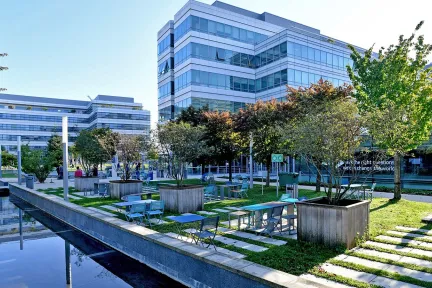
Dassault Systèmes Paris Campus serves as the company’s global headquarters, functioning as a dynamic hub for collaboration and source of innovation for our 25,000 global employees. With 6 buildings across 7 acres, the facilities are purpose-built to operate in harmony with the environment, a clear embodiment of our mission to harmonize product, nature and life.
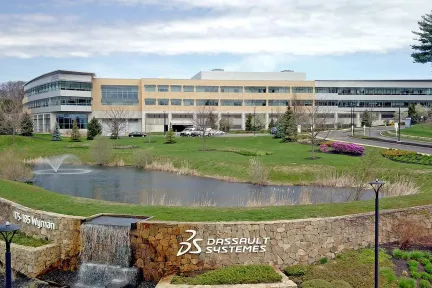
Located in Waltham, Massachusetts, the award-winning 27-acre campus is heralded as a showcase for sustainable innovation, the creation of lifelike experiences using 3D and is Gold LEED® Certified, demonstrating the company’s commitment to conserving national resources.
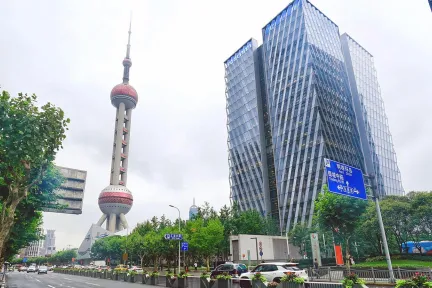
The Foxconn Building is the first LEED Platinum certified high-rise business office building in Shanghai. It's an innovative and intelligent building, with a river view and convenient transportation. The internal design and layout are flexible, providing a comfortable working environment for employees.
You Might Also Be Interested In...
We are innovation-driven
For the past 40+ years, Dassault Systèmes has worked closely with customers to spearhead many technology breakthroughs that have had a profound impact on society and on people’s lives.
Leadership
As the global leader in sustainable innovation, we’re led by an inspiring group of executives who are driven by our long-term vision of addressing the globe’s major challenges and helping our customers transform how they operate.
Virtual Twin Experiences
Dassault Systèmes’ virtual twin experiences let you visualize, model and simulate the entire environment of an experience or product.
Our vision for sustainable innovation
Discover how Virtual Twin technologies can help you rethink your products, processes and even business models to realize radically new sustainable innovations.